
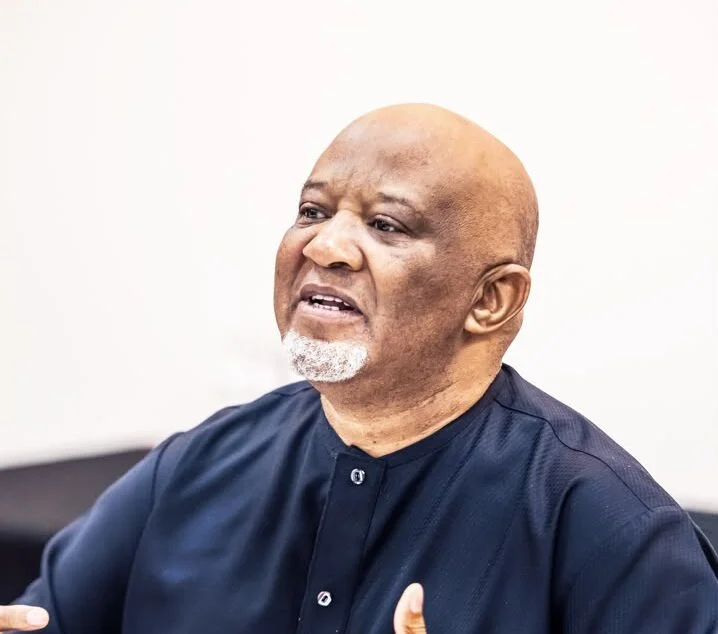
MTN Group Chairman Mcebisi Jonas has attributed the growing xenophobia in South Africa to government failings and warned that attacking foreign nationals will neither alleviate the country’s economic problems or address the root causes of inequality and unemployment.
Jonas made the comments in a eulogy at the funeral of Zimbabwean-born activist and public servant, Thokozani Damasane in Johannesburg.
The statements followed other anti-immigrant protests in parts of South Africa, where protesters reportedly gave foreign nationals an ultimatum to leave the country by June 30. For years now, Nigerians, Zimbabweans, Mozambicans and other African migrants have routinely been the victims of xenophobic violence in the country.
Responding to the question, Jonas said the blame game on the country’s socio-economic difficulties being played out on the back of the influx of immigrants is a distraction from the government’s failure to adequately manage the country’s important sectors.
“Foreigners can go tomorrow but inequality will stay with us. Tomorrow the foreigners will go away, unemployment will be with us. Tomorrow foreigners depart and our police will remain crooked, he remarked.
“The biggest challenge facing the country is the inability of state institutions to deliver good governance,” he said.
“The problem is the failure of State. The state does not regulate immigration. It does not control its borders It doesn’t enforce law enforcement. “It does not manage education,” Jonas said.
He said popular anger at poverty and unemployment had created fertile ground for politicians to seek electoral gain by blaming foreign nationals for the country’s ills, rather than tackling systemic governance failures.
See also Headlines 10 June 2026
Say No to Ethnic Nationalism
The MTN chairman also attacked tribalism and ethnic nationalism, which he described as colonial legacies still dividing African communities.
He advised South Africans to reject identity politics and adopt a wider African unity.
“The tribe is a creation of colonial powers,” said Jonas, adding that ethnic divides are still being used for political gain by modern political actors today.
South Africa’s economy is strongly tied to the development and stability of the African continent, he said.
We are a nation that is rooted in Africa. South Africa is nothing without Africa. And Africa is nothing without South Africa,” he added.
Jonas also said people shouldn’t be judged by where they’re from.
“You can’t judge people by where they come from. “We cannot judge the legal status of people by their origin,” he stressed.
Damasane’s life was a symbol of African unity
The life of the late Thokozani Damasane was a manifestation of the ideas of inclusiveness and common humanity,” Jonas said.
Damasane was born in Zimbabwe and after apartheid moved to South Africa where he got actively involved in community development and public service.
“Damasane was not born in South Africa, but he embraced the country’s struggles and made meaningful contributions to the country’s development,” Jonas remarked in reflection of his legacy.
“He really got inside the struggles, the pains of South Africans, and he became one of us,” he said.
Demand for more African integration
The comments came days after the company’s President and Chief Executive Officer, Ralph Mupita, warned against growing calls in some African countries to boycott pan-African enterprises.
Mupita warned that such moves might put young employment, digital innovation and the broader goals of the African Continental Free Trade Area (AfCFTA) at risk.
“The future of the continent depends on stronger cooperation, inclusive governance and the rejection of xenophobia,” said Jonas, warning that institutional reforms rather than hostility towards foreign nationals, with MTN operating in 19 countries across Africa, are the lasting solutions to South Africa’s socio-economic challenges.
About the Author