

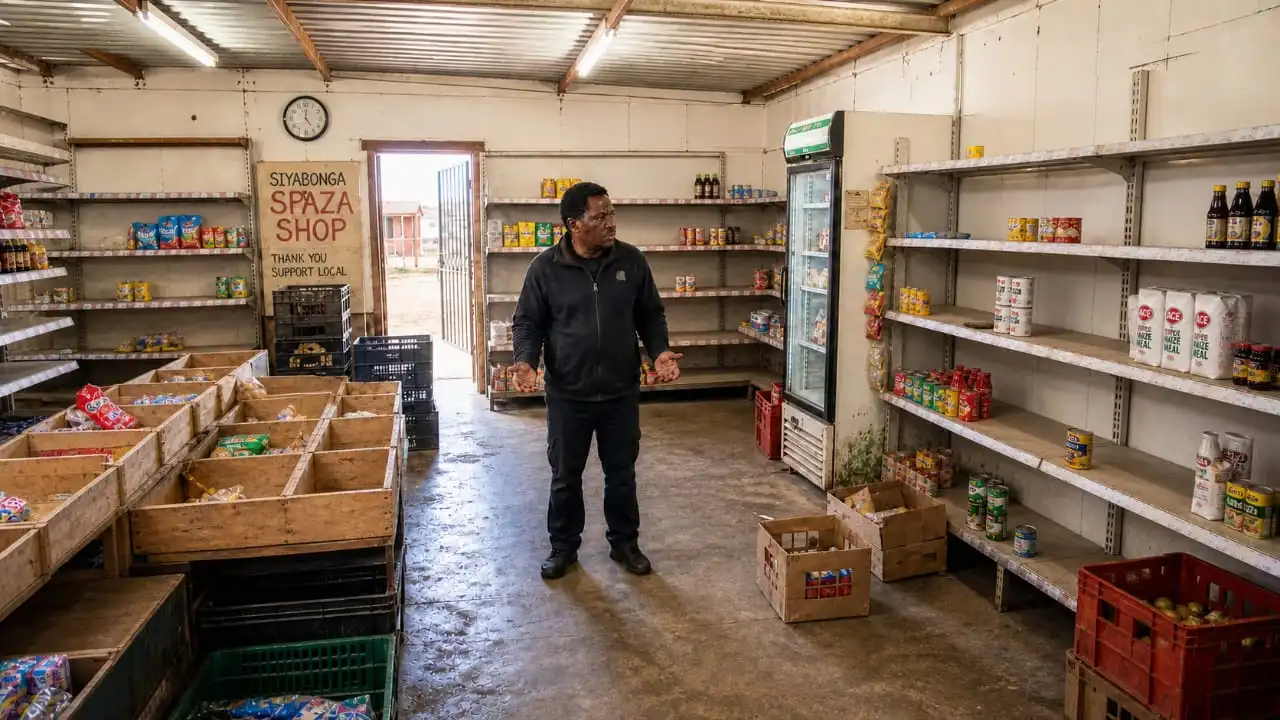
After months of anti-immigrant sentiment and the handover of several businesses from foreign nationals to local owners, many South Africans who took over the shops are now confronting a harsh economic reality: running a small business is proving considerably more challenging than they expected.
Several new shop owners are said to have complained that rents are too exorbitant for their shops. Others say they have run out of their initial stock and are waiting for government help to fill their shelves again.
The move has sparked controversy over longstanding tensions with regard to foreign owned enterprises, notably in township regions where immigrant traders are typically blamed for dominating the retail sector.
A number of the enterprises previously run by foreign nationals had established extensive supplier networks, bulk buying agreements and informal credit systems which allowed them to keep prices low and maintain stock levels. Analysts said the company structures had been built up over many years and were not simply reproduced.
Some of the new owners now concede that the day-to-day reality of running a shop, including rent, transportation, security, inventory management and supplier relations, have become a burden in addition to finding a location.
The government is being asked by some previous recipients of business takeovers to intervene with financial aid, subsidies or stock replenishment initiatives to keep their shops open in some communities.
Economic experts say that ownership is no guarantee of economic success. Sustainable firms need capital, experience, stable supply chains and financial discipline
The scenario has also renewed concerns about the fallout from attacking foreign-owned enterprises. But the grievances about unemployment and economic issues are real, they say, and evicting long-standing traders without solving economic constraints could merely pass those problems on to new owners.
Rather than replacing existing entrepreneurs, several business experts argue that collaborations, skills transfer programmes and access to capital for local entrepreneurs could provide more permanent alternatives.
The problems facing the new shop owners point to a larger reality affecting many small businesses across South Africa – increased operating expenses, sluggish customer spending and limited access to inexpensive funding.
Some shop owners are waiting for government help to resupply their shelves, but the experience is raising hard issues about entrepreneurship, economic opportunity and whether the problem isn’t who owns the shops, but the broader economic realities that affect everyone.
The lesson for many towns may be a sobering one: taking over a business is one thing; keeping it alive is another.
About the Author