
Nepal is planning to lower the water levels of four high-altitude glacial lakes in a major effort to reduce the risk of catastrophic flooding to villages downstream.
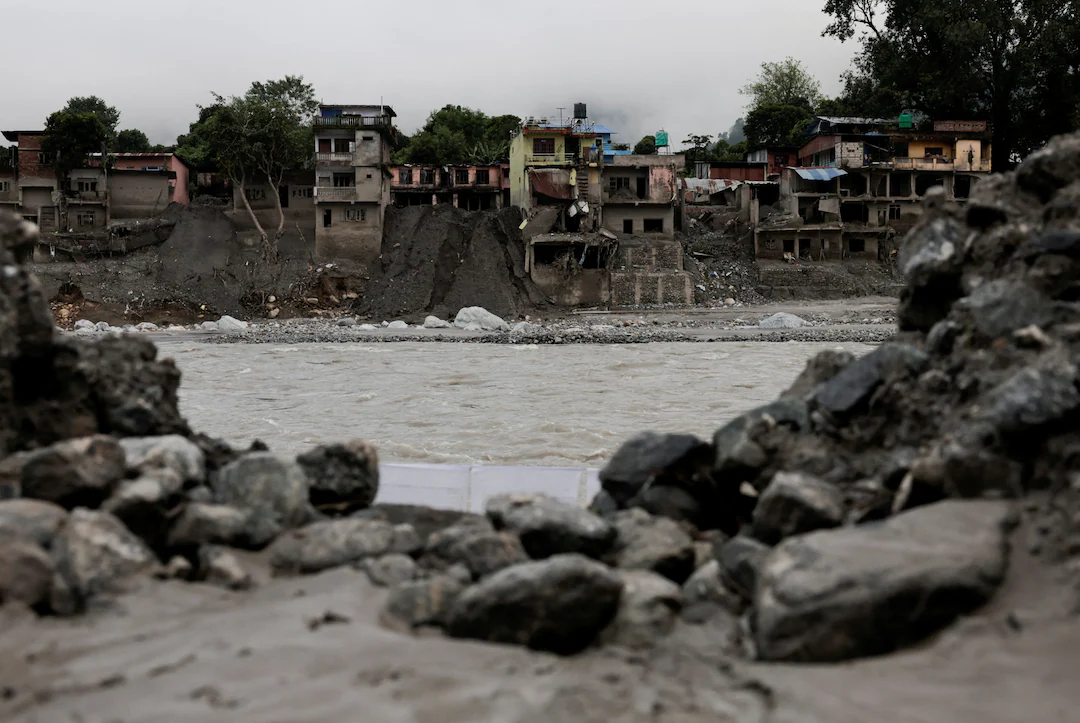
The proposed intervention comes after a terrible glacier tragedy in August that killed more than 1,400 people, while more than 5,000 more are still missing, according to officials reported by Reuters. The calamity triggered landslides and flash floods in valleys of the Nepal-China border area.
The project’s four target lakes are Thulagi (Manang), Lower Barun (Sankhuwasabha), and Lumding Tsho and Hongu II (Solukhumbu). The lakes range from 4,050 meters to 5,483 meters above sea level and have been designated as some of the potentially most dangerous glacier lakes in Nepal.
Instead of emptying the lakes completely, engineers intend to reduce water levels gradually. The project is intended to include gated drainage structures and canals that would allow water to flow slowly into surrounding rivers, relieving strain on natural moraine dams that hold the lakes in place.
The project is projected to cost roughly $50 million and could take as long as six years to complete. Funding will be provided by the United Nations Development Program, the Green Climate Fund and the government of Nepal.
Authorities are also planning to add monitoring devices, reinforce flood forecasting and early warning systems and take measures to boost readiness among people living downstream.
The four lakes were already identified as high-risk areas in an evaluation by the International Center for Integrated Mountain Development (ICIMOD) and the United Nations Development Program (UNDP) in 2020. Nepal contains around 2,000 glacial lakes, and within the country 21 of these have been designated as potentially harmful.
Nepal has experience in dealing with the risk of hazardous glacial lakes. Authorities had dropped the water level of Tsho Rolpa by roughly three meters in 2000 and lowered the level of Imja Lake near Mount Everest about a decade ago.
But scientists have warned that simply reducing the four lakes won’t eradicate the hazard. Experts have advocated for continuing risk assessment, early-warning systems, cautious management of lake outflows and restrictions on construction in regions exposed to potential flood pathways, The Kathmandu Post reported.
ICIMOD has also reported on the risk of Lower Barun Lake, situated at roughly 4,500 meters in the Makalu region. The lake is roughly 2.7 km long and is fed by the melting Barun Glacier. Researchers have cautioned that avalanches, heavy rains and changes near its moraine dam might raise the possibility of disastrous water flows.
The current initiative comes amid rising concern in Nepal over the effect of a changing climate on its Himalayan glaciers. As glaciers retreat, meltwater can collect behind unstable deposits of rock, soil and ice forming lakes that can release massive volumes of water in a short period through glacial lake outburst floods (GLOFs).
About the Author