

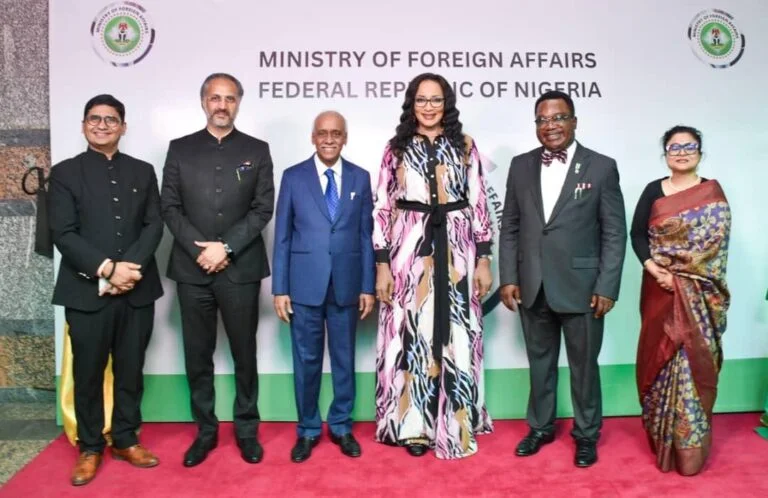
Nigeria and India have signed a new pact to improve collaboration between the respective National Human Rights Commissions in the preservation and promotion of human rights.
A Memorandum of Understanding (MoU) has been established to cement the collaboration which is expected to boost institutional capacity, improve access to justice and foster the exchange of expertise between the two countries.
The pact was reviewed at a meeting between a joint delegation of the Nigerian and Indian National Human Rights Commissions and the Minister of Foreign Affairs, Ambassador Bianca Odumegwu-Ojukwu in Abuja on November 10, 2026.
The team was led by Chief Anthony Ojukwu, Executive Secretary of Nigeria’s National Human Rights Commission and Justice V. Ramasubramanian, Chairperson of India’s NHRC.
The agreement was an essential step in translating the long-standing diplomatic connection between Nigeria and India into real institutional partnership, he added.
She pointed to access to justice, effective complaint processing systems and the protection of vulnerable persons as key areas where closer cooperation was needed.
The minister also advocated for stronger participation between the two nations in the creation of an inclusive international human rights system, stressing that Nigeria and India could play key roles as members of the Global South.
Nigeria has been elected to the United Nations Human Rights Council for the 2027-2028 term and she has reiterated Nigeria’s commitment to international human rights duties.
Odumegwu-Ojukwu thanked UN member states for their support of Nigeria’s election, promising that the country will maintain the values of the UN Charter and the Universal Declaration of Human Rights.
But she expressed worry about the treatment of Nigerians in correctional centers in India and called for due attention to be paid to their wellbeing, dignity and fundamental rights.
The MoU, earlier noted by Ojukwu, would offer a foundation for technical exchanges and institutional development between the two commission.
He cited better complaint-management systems, human rights compliance in security sector governance and joint research on international law and rising human rights challenges as key areas for partnership.

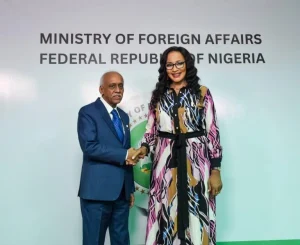
He also pointed out the need for better coordination between the NHRC and the Ministry of Foreign Affairs to enhance the incorporation of international human rights norms into Nigeria’s diplomatic engagements and treaty commitments.
Ramasubramanian, in his remarks, observed that Nigeria and India shared substantial historical and diplomatic relations and commonalities in population, cultural variety, religious mix and democratic ambitions.
“The agreement will allow the two institutions to share experiences, exchange best practices and enhance their capacity to deal with human rights challenges,” he said.
The two countries reaffirmed their commitment to strengthening human rights institutions and international involvement to expand bilateral cooperation and promote fundamental freedoms.
About the Author