
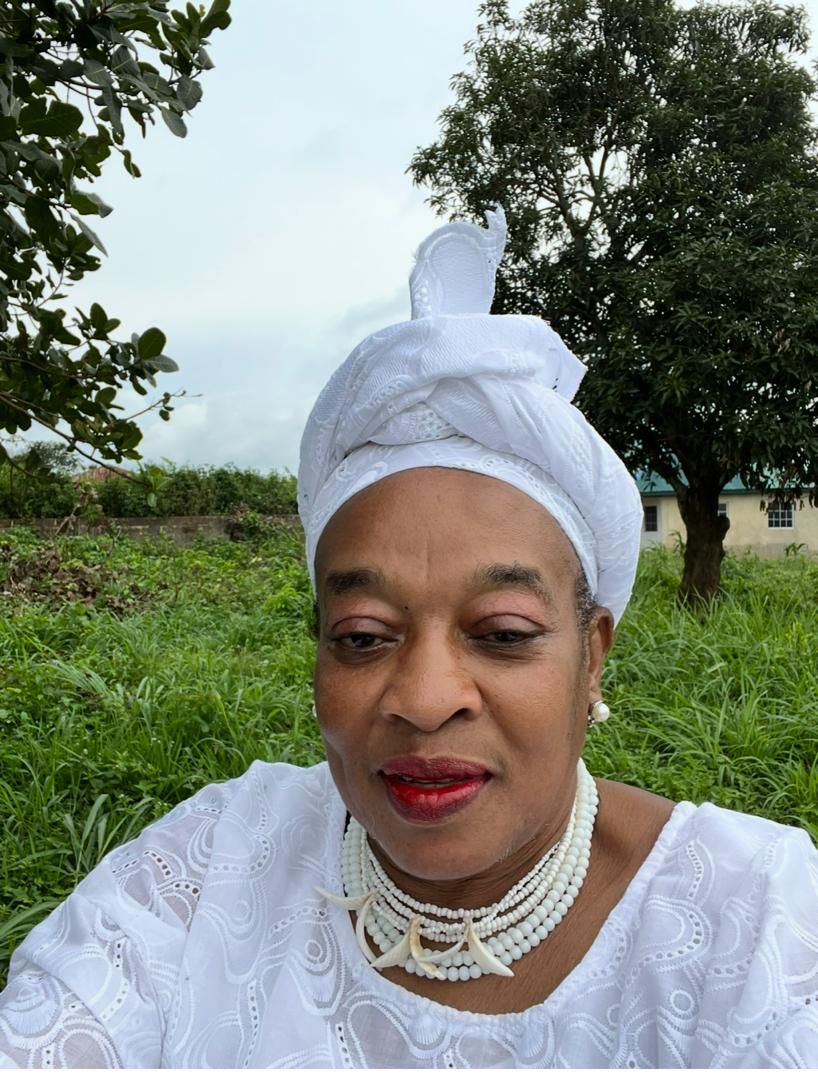
ERELU TÚNWÀṢẸ SERIES
THE OBASANJO–ỌỌ̀NI SEATING INCIDENT
THE MATTER IS GREATER THAN A CHAIR
MY CONSIDERED OPINION
SEPTEMBER 2026
I have received the circulating write-up concerning former President Olusegun Obasanjo and the chair reserved for the Ọọ̀ni of Ilé-Ifẹ̀ from a number of key participants in Yoruba affairs.
They include traditionalists, non-traditionalists and Christians. My opinion has been sought.
Let us remain focused.
FIRST, I COMMEND CHIEF OLUSEGUN OBASANJO
First, I wish to commend former President Olusegun Obasanjo—an elder statesman—for referring to the Ọọ̀ni as a KING and not merely as a “traditional ruler.”
That distinction is important.
Within the English constitutional structure, a King is called a King and a Queen is called a Queen.
The government is His Majesty’s Government when the monarch is a King and Her Majesty’s Government when the monarch is a Queen.
No British monarch is reduced to the administrative description “traditional ruler.”
OBA MEANS KING.
THE ỌỌ̀NI OF ILÉ-IFẸ̀ IS A KING.
The description “traditional ruler” is a colonial and post-colonial administrative classification. It must not be allowed to erase the identity, history or dignity of Nigeria’s ancient thrones.
Chief Obasanjo’s choice of the word KING should therefore be acknowledged, even where we disagree with the manner in which he asserted political precedence.
THIS IS NOT THE FIRST TIME
In September 2023, at the commissioning of the Oyo–Iseyin Road and the Ladoke Akintola University of Technology campus in Iseyin, Chief Obasanjo publicly instructed the Kings present to stand and honour the Governor.
He explained that the constitutional position of a serving Governor was higher than that of any monarch.
Now, at the 60th birthday celebration of the Olota of Ota in August 2026, he has declared:
“NO KING SITS ABOVE A PRESIDENT.”
We must understand what Chief Obasanjo has repeatedly demonstrated.
The elder statesman knows the authority and precedence which Nigeria’s inherited colonial and post-colonial structure grants to political officeholders.
He did not create the original colonial system, but he understands the advantages it gives political leaders.
Why should we expect one individual voluntarily to surrender an advantage which the Constitution and successive governments have refused to correct?
Those making noise should stop concentrating entirely upon Chief Obasanjo.
They should demand that this matter be addressed ONCE AND FOR ALL.
If blame must be invited, whom would an honest examination find guilty?
Would it find only Chief Obasanjo guilty?
Would it find the organisers and their protocol officers guilty?
Would it find successive military and civilian governments guilty?
Would it also find those of us who repeatedly react to individual incidents but fail to demand constitutional reform guilty?
WHY WAS THE ỌỌ̀NI’S PHYSICAL PRESENCE REQUIRED?
Before arguing about where the Ọọ̀ni should have been seated, we must ask a more fundamental question:
WHY WAS HIS PHYSICAL PRESENCE REQUIRED AT THE CELEBRATION?
The Ọọ̀ni is not simply one more person carrying the modern Nigerian label “traditional ruler.”
The Ọọ̀ni occupies the throne of Odùduwà—the ancestral throne of Ilé-Ifẹ̀.
Historically and institutionally, the Ọọ̀ni represents Odùduwà, the ruler of ancient Ilé-Ifẹ̀ and the progenitor connected with numerous Yoruba royal dynasties.
Who, therefore, would the Ọọ̀ni be in the history of Ota?
Ota is an Awori kingdom.
According to widely recorded Awori oral tradition, Olofin Ogunfunminire and his followers migrated from Ilé-Ifẹ̀.
Their journey and the authority they carried were connected to Odùduwà. The beaded crown they carried also came from Ilé-Ifẹ̀.
The crown did not originate from the British colonial administration.
It did not originate from a modern Nigerian Governor.
Its ancestral source was ILÉ-IFẸ̀.
Therefore, at an important celebration of the Olota, the Ọọ̀ni was not merely another King attending the birthday of a fellow King.
He represented the ANCESTRAL SOURCE.
His presence represented Odùduwà at the gathering of his descendants.
He was an ancestral father in the house of his children.
If that historical and spiritual relationship was the reason for inviting the Ọọ̀ni, the organisers should have understood the meaning of his presence before sending the invitation.
Was he invited merely to occupy a chair?
Was he invited only as a social guest?
Was he invited as the Ọọ̀ni of Ilé-Ifẹ̀?
Was he invited as the living institutional representative of Odùduwà?
Was he invited to bless the Olota and affirm the ancestral relationship between Ilé-Ifẹ̀, the Awori people and the Kingdom of Ota?
These questions should have been answered before his attendance was confirmed.
Once the Ọọ̀ni was invited because of the throne and ancestral authority he represents, his reception and seating could not properly be treated as an ordinary contest of personalities.
A former President represents a political office once occupied.
The Ọọ̀ni represents a continuing ancestral institution.
These are different forms of authority.
One does not need to insult the other.
YOU CANNOT INVITE ODÙDUWÀ INTO THE HOUSE OF HIS DESCENDANTS AND THEN FAIL TO UNDERSTAND WHY HE IS THERE.
WHO WAS RESPONSIBLE FOR THE PROTOCOL?
What exactly is the purpose of inviting a political leader to the birthday celebration of a King?
The political leader is invited as an honoured guest:
To celebrate the King.
To honour the occasion.
To strengthen institutional relationships.
To demonstrate mutual respect between political and ancestral leadership.
The invitation is not issued to create a contest for superiority.
The primary responsibility for protocol belonged to the host and event organisers.
Because this was the birthday celebration of a King, the palace protocol officers should have maintained overall control, working closely with the protocol representatives of every principal guest.
Before the event, they should have established:
* Who would attend and in what capacity.
* Who would receive each principal guest.
* Where each guest would sit.
* How every guest should be introduced and addressed.
* The order of arrival and acknowledgement.
* Who would speak and in what order.
* What security and ceremonial arrangements were required.
* What would happen if an unexpected or more highly ranked political guest arrived.
FAILING TO PLAN IS PLANNING TO FAIL.
I served twice as Mayor of the London Borough of Wandsworth, having first served as Deputy Mayor.
As Mayor, I was the First Citizen of the municipality—known in England as a borough—which I represented.
Any member of the Royal Family visiting the municipality—including Her Majesty the Queen—was required to notify the Mayor’s Office in advance.
As Mayor, I was the First Citizen of the municipality—known in England as a borough—which I represented.
Any member of the Royal Family visiting the municipality—including Her Majesty the Queen—was required to notify the Mayor’s Office in advance.
As Mayor, I was required to be present to receive the visiting Royal on arrival.
This was not because the Mayor ranked above the Queen or any other member of the Royal Family.
It was because English civic protocol clearly recognised the office of Mayor and my responsibility as First Citizen of that municipality.
Respect for one institution did not require the humiliation of another.
The Mayor’s Secretary was a trained officer who understood civic protocol.
Part of that officer’s responsibility was to ensure that the dignity attached to the office was properly observed in accordance with English civic culture.
Anyone inviting me to an engagement was required to complete detailed forms before my attendance could be confirmed.
The organisers had to state:
* Who would receive the Mayor.
* Where the Mayor would be seated.
* How the Mayor should be addressed.
* Who else would be present.
* Whether the Mayor would speak.
* When the Mayor would speak.
* Who would accompany the Mayor.
* The expected arrival and departure times.
These arrangements were not based upon my personal demands.
They belonged to the office I occupied.
I carried myself into the role, but an established system protected the dignity of the office.
The same principle should apply to the throne of the Ọọ̀ni.
The protection of the throne must not depend solely upon the personality or immediate reaction of the reigning Ọọ̀ni.
It requires a trained, disciplined and effective protocol structure.
If former President Obasanjo had been properly accommodated, there would have been no reason for him to claim another guest’s reserved chair.
If the chair marked for the Ọọ̀ni conflicted with the organisers’ intended order of precedence, that problem should have been identified and settled before either dignitary arrived.
The failure occurred before the guests entered the venue.
PROTOCOL IS NOT DECORATION.
PROTOCOL PROTECTS INSTITUTIONS.
ORDERLINESS IS NEXT TO GODLINESS.
OFFICIAL PRECEDENCE IS NOT PERSONAL SUPERIORITY
Nigeria’s order of precedence may place a former President above Kings at national, state and certain formal public functions.
However, precedence does not automatically give anyone the right to occupy a chair specifically reserved and labelled for another invited guest.
The occasion was the 60th birthday celebration of the Olota of Ota.
It was not a presidential function.
If the organisers considered former President Obasanjo the highest-ranking political guest, they should have provided a suitable and properly positioned seat for him from the beginning.
That was the responsibility of the protocol team.
At the same time, the presidency and an ancient throne are not competitors.
The presidency belongs to Nigeria’s present constitutional arrangement.
The throne of the Ọọ̀ni belongs to an ancient spiritual, cultural and historical institution which existed long before the creation of Nigeria.
One should not need to diminish the other.
DID THE BRITISH LEAVE THIS CONSTITUTION BEHIND?
Not exactly.
The British colonial administration created the foundation of the subordination.
Through indirect rule, many Kings were converted into instruments of colonial administration, while colonial authorities claimed powers to recognise, control and depose them.
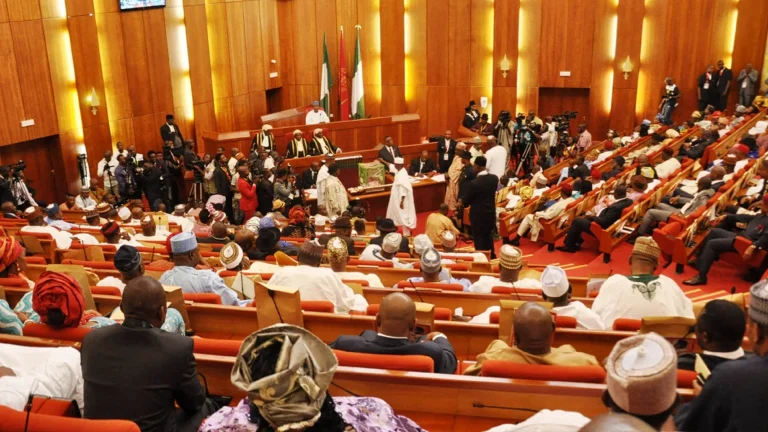
However, the late colonial and Independence constitutional arrangements gave Kings some formal participation in government through Regional Houses of Chiefs.
The 1960 Independence Constitution and the 1963 Republican Constitution retained important places for these institutions.
Those structures were disrupted following military intervention.
The Constitution Nigeria operates today was not simply handed to us unchanged by Britain.
It was produced through Nigeria’s own post-colonial political and military history.
The current constitutional silence is therefore not Britain’s responsibility alone.
The colonial administration created the wound.
Independent Nigeria has allowed it to remain open.
The urgent question is no longer only:
WHAT DID THE BRITISH DO?
It is also:
WHY HAVE SUCCESSIVE NIGERIAN GOVERNMENTS REFUSED TO CORRECT IT?
WHAT HAPPENED TO THE 2014 NATIONAL CONFERENCE?
In 2014, Nigeria convened a National Conference of approximately 492 delegates.
The Conference considered the position of what it called “traditional rulers” and recommended that:
1. The advisory role of traditional institutions should be recognised in the Constitution.
2. A National Council of Traditional Rulers should be established at the federal level.
3. The Council should participate in matters of tradition, culture and dispute resolution.
4. Its membership should include the Chairmen of State Councils and two Kings from every state, including the Federal Capital Territory.
5. Kings should remain outside partisan politics.
The Conference did not merely discuss the matter.
It identified the need for constitutional and legislative action.
Approximately ₦7 billion was widely reported as having been provided or budgeted for the Conference, while subsequent investigation has documented expenditure of at least ₦3.54 billion.
Because the reported figures differ, Nigerians are entitled to ask:
HOW MUCH WAS APPROPRIATED?
HOW MUCH WAS RELEASED?
HOW MUCH WAS ACTUALLY SPENT?
WHERE ARE THE AUDITED ACCOUNTS?
WHAT HAPPENED TO THE RECOMMENDATIONS?
The report was submitted in August 2014.
President Goodluck Jonathan later explained that the approaching 2015 election and the constitutional amendment process left insufficient time for implementation.
President Muhammadu Buhari’s administration declined to implement the report as a whole.
The administration of President Bola Ahmed Tinubu has not implemented its recommendations concerning the constitutional position of our Kings.
More than twelve years later, the recommended advisory role has not been placed in the Constitution.
The constitutional position of our Kings remains unresolved.
Will Nigeria spend more money organising another national conversation while ignoring a report for which Nigerians have already paid?
THE ỌỌ̀NI’S NATIONAL POSITION EXPOSES THE CONTRADICTION
The Ọọ̀ni is identified as a Co-Chairman of the National Council of Traditional Rulers of Nigeria and as Permanent Chairman of the Southern Nigeria Traditional Rulers Council.
Yet even the terminology exposes the problem.
How can a King who represents an ancient civilisation be given national responsibilities while the institution he represents remains without a clearly protected constitutional position?
The issue is greater than one chair, one event, one former President or one King.
It concerns the continuing constitutional subordination of the representatives of our ancestors.
NIGERIA HAS NO STATE RELIGION—SO WHY IS SHARIA IN THE CONSTITUTION?
Nigeria is commonly described as a secular state.
However, the word “secular” does not appear in Section 10 of the 1999 Constitution.
What Section 10 actually says is:
“THE GOVERNMENT OF THE FEDERATION OR OF A STATE SHALL NOT ADOPT ANY RELIGION AS STATE RELIGION.”
Yet the same Constitution expressly establishes a Sharia Court of Appeal for the Federal Capital Territory and permits any State that requires one to establish its own Sharia Court of Appeal.
The Constitution defines their jurisdiction principally in civil proceedings involving Islamic personal law, including marriage, family relationships, guardianship, gifts, wills and inheritance.
How did Sharia enter the Constitution?
Sharia existed in parts of Northern Nigeria before British colonial rule.
The colonial administration retained and regulated aspects of it.
At independence in 1960, constitutional provision was made for the Sharia Court of Appeal of the Northern Region.
The issue became highly controversial during the constitutional debates of 1977 and 1978.
Although the demand for a Federal Sharia Court of Appeal was not accepted in the form proposed, constitutional recognition of Sharia Courts of Appeal survived.
Subsequent Nigerian constitution-makers retained that recognition, and it appears today in the 1999 Constitution.
The Constitution also recognises Customary Courts of Appeal.
I am not questioning the right of Muslims to the constitutional protection of their personal law.
That is not my purpose.
My question concerns equality, historical justice and constitutional consistency.
If Nigeria’s Constitution found room for Sharia, on what basis did it fail to find an appropriate place for the KINGS who represent our ancestral institutions?
It recognises customary law, yet it leaves the ancestral institutions which historically preserved, interpreted and administered the customs of their peoples without a clearly defined constitutional position.
How can the law be recognised while its Indigenous custodians remain constitutionally invisible?
The 1960 and 1963 Constitutions retained Regional Houses of Chiefs.
Even the 1979 Constitution provided a limited route through which State Councils of Chiefs could select representatives for the Council of State.
By 1999, that explicit connection had disappeared.
Sharia remained.
Customary law remained.
The Kings were left without a clearly defined constitutional role.
Their exclusion was not inevitable.
It was a political choice—and a political choice can be reviewed and corrected.
This must not become an argument against Sharia, Islam or Muslims.
It must become a demand for equal constitutional respect for all the historical institutions from which Nigeria was formed.
The proper question is:
IF THE CONSTITUTION COULD ACCOMMODATE SHARIA AND CUSTOMARY LAW, WHY HAS IT FAILED TO ESTABLISH AND PROTECT THE RIGHTFUL POSITION OF NIGERIA’S KINGS?
GOOD GOVERNANCE MUST PROVIDE SOLUTIONS
Good governance uses the instruments of government—the Constitution, legislation, public policy and public institutions—to identify and correct the problems of society.
It should not breed new problems or preserve inherited injustices.
Where a constitutional arrangement creates division, humiliation or inequality, responsible leaders must review and correct it.
A Constitution should bring the people and their institutions together.
It should not recognise some parts of our historical inheritance while excluding others without reasonable justification.
The duty of government is not merely to manage recurring disputes.
Its duty is to remove the conditions which repeatedly create them.
GOOD GOVERNANCE MUST SOLVE PROBLEMS.
IT MUST NOT BREED, PRESERVE OR CREATE THEM.
THE OWNERS OF THE LAND HAVE BECOME SERVANTS IN THEIR OWN LAND
The representatives of those who owned, governed and protected these lands before the creation of modern Nigeria have been reduced to servants within their own ancestral domains.
The present system places temporary political officeholders above ancient institutions.
When a politician tells a King to jump, the system appears to say:
“OBEY—or you may be suspended, denied recognition, deprived of official support or removed from the throne.”
In simple language, the message is:
“DO AS I SAY, OR I SHALL CANE YOU.”
That is the humiliation built into the present arrangement.
A Governor serves for a limited term.
A King represents a continuing institution—its people, history, culture, land and ancestors.
Yet the temporary political officeholder may possess legal and administrative powers to recognise, control, suspend or depose the representative of that ancient institution.
This is not a balanced relationship.
It is the continuation of a colonial master-and-servant arrangement.
Nigeria became politically independent, but the representatives of our ancestors were not fully liberated from colonial control.
The identity of the supervising authority merely changed.
The colonial officer departed.
The political officeholder inherited the cane.
This is not an attack upon democracy.
Good governance does not require the humiliation of Kings.
Democracy and monarchy can coexist where their respective responsibilities, limitations and protections are clearly established by law.
We are demanding a constitutional arrangement that respects elected authority without turning ancestral institutions into political servants.
THE OWNERS OF THE LAND MUST NOT REMAIN SERVANTS IN THEIR OWN LAND.
CHIEF OBASANJO MAY BE TELLING US TO DO THE RIGHT THING
Perhaps we have misunderstood the message of elder statesman Chief Olusegun Obasanjo.
Each time he publicly commands our Kings or asserts the superiority granted to political officeholders, he exposes the continuing weakness of our ancestral institutions under Nigeria’s present constitutional arrangement.
He knows the authority the system gives him.
He knows the system still carries the colonial cane.
As long as Nigerians refuse to remove that cane, he continues—in a symbolic sense—to use it upon the representatives of our ancestors.
Perhaps his repeated actions are telling us:
“IF YOU BELIEVE THIS IS WRONG, DO NOT MERELY CONDEMN ME. CHANGE THE SYSTEM WHICH ALLOWS IT.”
In 2023, he instructed Kings to stand.
In 2026, he claimed the chair reserved for the Ọọ̀ni and declared that no King sits above a President.
How many more demonstrations do we require?
Chief Obasanjo may be holding a mirror before us.
The reflection is uncomfortable, but it exposes the truth:
Our Kings remain constitutionally vulnerable.
The representatives of our ancestors remain subject to political authority.
The owners of the land have become servants in their own land.
Do not merely ask Chief Obasanjo to put down the symbolic cane.
Ask why independent Nigeria has continued to place that cane in the hands of temporary political officeholders.
Demand that the cane be removed from the system permanently.
DO NOT MERELY BLAME THE MAN HOLDING THE CANE.
CHANGE THE SYSTEM WHICH GAVE HIM THE CANE.
WE HAVE FAILED TO IDENTIFY WHAT MUST BE DONE
The Indigenous peoples of Nigeria have repeatedly demonstrated that we remain unclear about what is required to restore the representatives of our ancestors to an appropriate and constitutionally protected position.
Whenever a King is publicly humiliated, we become angry.
We condemn an individual.
We circulate videos.
We compare one ethnic group with another.
We make noise for several days—and then we move on.
The system remains unchanged.
This is not evidence that Nigerians lack intelligence.
It is evidence that we have failed to organise our anger into a clear constitutional demand.
What is required is no longer mysterious:
1. A clearly defined constitutional position for Nigeria’s Kings.
2. Protection from arbitrary recognition, suspension and deposition by temporary political officeholders.
3. Independent and properly constituted Councils of Kings at state and federal levels.
4. Clearly defined advisory responsibilities in culture, peacebuilding, community security, customary affairs and dispute resolution.
5. Respect for the internal histories, succession systems and independence of the different kingdoms.
6. A national protocol establishing how political and ancestral institutions should relate at public functions.
7. A definite commitment from every political party before the 2027 election.
The 2014 National Conference provided a starting point.
Recommendations were made.
Nigerians paid for the Conference.
Yet instead of demanding implementation or meaningful improvement, we continue to react to symptoms while leaving the cause untouched.
We appear clueless because we repeatedly mistake outrage for action.
Condemning Chief Obasanjo will not amend the Constitution.
Insulting other ethnic groups will not protect the throne.
Blaming Christianity will not remove the power of Governors to control Kings.
Social-media arguments will not break the colonial cane.
We must convert our anger into an organised national programme for constitutional reform.
ENOUGH OF OUTRAGE WITHOUT ACTION.
ENOUGH OF NOISE WITHOUT A CONSTITUTIONAL DEMAND.
WE MUST STOP ATTACKING THE SYMPTOMS AND CORRECT THE SYSTEM.
DO NOT TURN THIS INTO AN ETHNIC OR RELIGIOUS WAR
I cannot support statements suggesting that Chief Obasanjo would have been physically attacked had the incident occurred in another part of Nigeria.
We do not need to insult the Fulani, Edo, Itsekiri, Igbo or any other people to defend the dignity of the Ọọ̀ni.
Nor should we blame Christianity for every act of disrespect towards Yoruba ancestral institutions.
Some of the people who brought this matter to my attention are committed Christians who also recognise and respect the historical importance of the Ọọ̀ni’s throne.
The problem is not simply Christianity against tradition.
It is a failure to understand institutions, history, boundaries, courtesy and protocol.
THE QUESTIONS FOR THE 2027 ELECTION
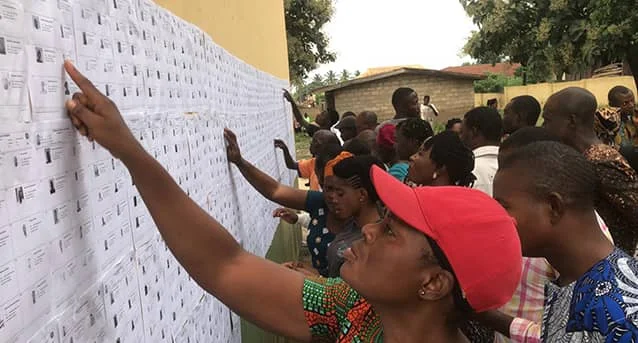
The 2027 elections are approaching.
Once again, political parties will ask Nigerians for their votes.
The governing All Progressives Congress must answer directly:
WHAT IS THE POSITION OF THE APC ON GRANTING CONSTITUTIONAL AND DECOLONIAL FREEDOM TO THE REPRESENTATIVES OF OUR ANCESTORS?
Will the APC support clearly defined constitutional recognition, responsibilities and institutional protection for Nigeria’s Kings?
Will Governors continue to possess inherited powers to recognise, control, suspend or depose the representatives of our ancestors?
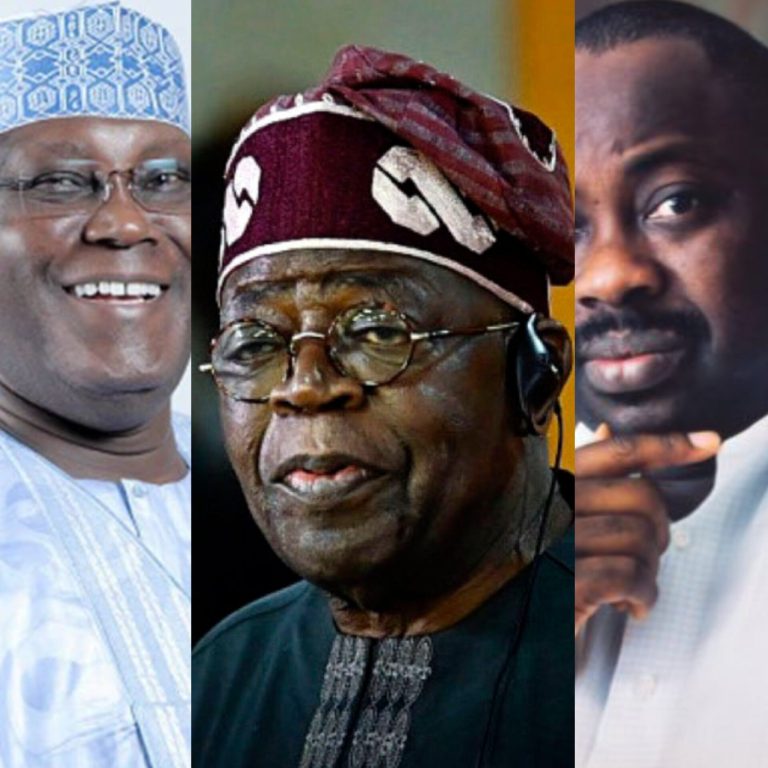
What is the position of the PDP, NDC, SDP, ACCORD and others?
What is the position of every other political party seeking the votes of Nigerians in 2027?
This is not simply a Yoruba matter.
It concerns Kings and ancient institutions throughout Nigeria.
The matter must capture the national headlines before the election—not disappear beneath arguments about personalities and chairs.
ON BEHALF OF MY ANCIENT ANCESTORS
On behalf of my ancient ancestors, I say:
THE TIME TO DO THE RIGHT THING IS NOW.
Our Kings must no longer remain constitutionally invisible, administratively dependent and politically subordinate within a country built upon their ancestral lands.
We cannot change what the British colonial administration did.
We can—and must—change what independent Nigeria has continued to preserve.
This is not a demand to return Nigeria to the past.
It is a demand to correct an inherited injustice and establish a dignified, clearly defined and constitutionally protected position for our KINGS.
Let us thank Chief Olusegun Obasanjo for giving Nigeria another opportunity to confront this unresolved matter.
Let us not waste that opportunity by turning it into a personal attack.
Let us capture the exposure.
Let us place the constitutional future of our Kings on the national agenda.
DO NOT MERELY CONDEMN THE MAN.
CONFRONT THE SYSTEM WHICH GIVES HIM THE AUTHORITY HE CLAIMS.
POLITICAL OFFICES ARE TEMPORARY.
OUR ANCESTRAL INSTITUTIONS ARE HISTORICAL AND CONTINUOUS.
DO THE RIGHT THING.
THE RIGHT WAY.
AT THE RIGHT TIME.
THE RIGHT TIME IS NOW.
THE COLONIAL CANE MUST BE BROKEN.
THE INSULTS UPON OUR ANCESTORS MUST STOP.
THE 2027 ELECTION MUST NOT PASS WITHOUT AN ANSWER.
ERELU TÚNWÀṢẸ
Hon. Alderman Erelu Lola Ajiun AYONRINDE
Former Two-Term Mayor, London Borough of Wandsworth
Stateswoman and Political Leader, United Kingdom
About the Author