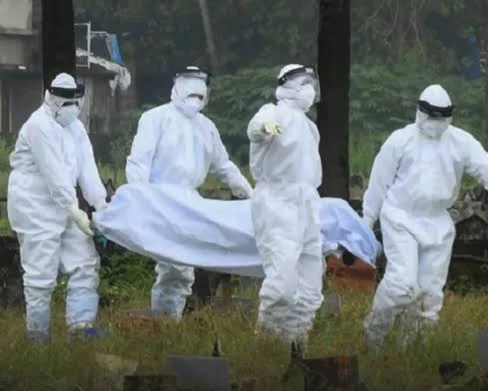

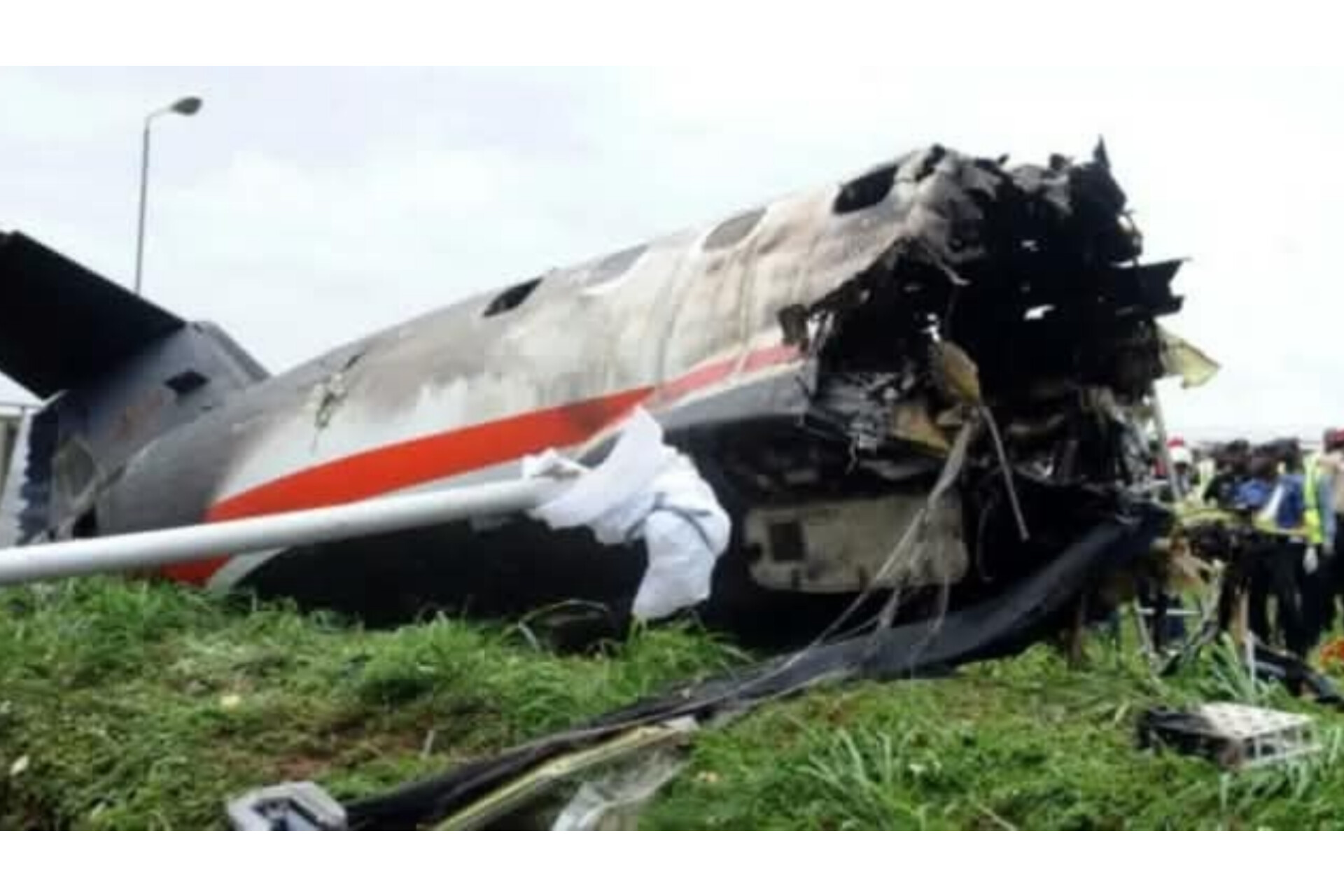
A Nigerian Air Force ATR-42 carrying 25 passengers and seven crew members on a normal support flight from Benin City to Lagos. Then Channels TV reports. Silence.
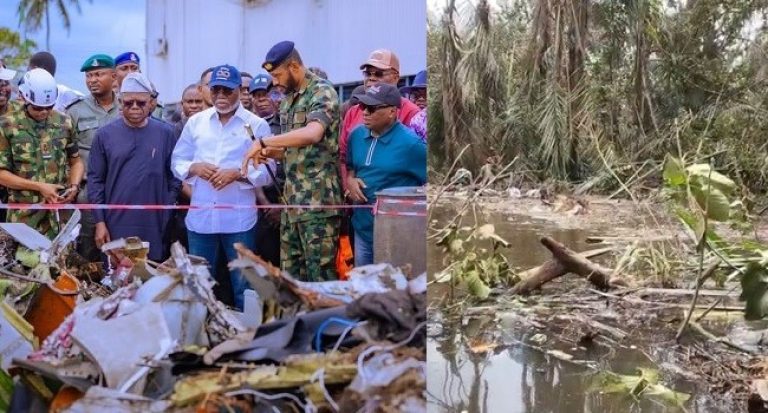
Hours later, debris was found close to the Naval Base in Igbokoda, Ilaje Local Government Area, Ondo State.
President Bola Tinubu expressed his condolences to the families and directed the NAF to investigate.
The plane itself is a story. The ATR-42 is not a fighter. ” It is a workhorse for maritime patrol and Intelligence, Surveillance and Reconnaissance, ISR.
This was no combat run. This wasn’t a training run. And that is why the Ondo crash has struck a nerve.
It’s the latest dot in a 10-year sequence of public NAF missteps. Different planes, different missions, different results. The evidence so far does not show a single reason.
Here is what the record really shows:
AT A GLANCE: 2016 – 2026
10 years of events: ceremonial displays, battle zones, training circuits, ordinary flights. Some without casualties. Some that earned the nation’s top brass.
2016: The Fall of Makurdi
November. NAF Base, Makurdi. A helicopter, an AgustaWestland AW101, recently transferred from the Presidential Air Fleet, lands, reverses then crashes. No fatalities. Mechanical, human or ground handling, it was never made apparent in public statements what the cause was. TrackExec Commands
2018: Clash In Abuja
September 28, 2018 Rehearsal day for Nigeria’s 58th Independence anniversary. Two F-7Ni fighter planes crash over Katampe hills, Abuja
Three pilots parachute out. Two are still alive. Squadron Leader Bello Baba-Ari dies of ejection injuries. Chief of Air Staff orders inquiry. What we do know is that this happened in a ceremony, not in battle. What it indicates about formation flying or supervision hinges on findings that were never fully released.
2019: Two Very Different Frights
Damasak, Borno, January 2. Mi-35M attack helicopter crashes while providing close air support to troops. All five crew are killed. It was during heavy battle in the Northeast but it is not clear from open sources whether it was hostile fire, technological failure or anything else.
Enugu – late 2019. An AW109 helicopter crashes following a normal flight at the NAF facility. No fatalities, but also no public details about the cause or the damage.
The Year of Darkness 2021
Three big losses in five months.
Abuja, 21 February. A Beechcraft King Air 350i reported an engine failure shortly after takeoff and tried to return to Nnamdi Azikiwe International Airport. It crashes . Kills all seven on board. The aircraft was on a surveillance mission in connection with the rescue of abducted students of the Government Science College, Kagara, and was bound for Minna. The engine issue is part of the first report but not a complete causative finding. PlanRoutes
31 March. Northeast. Alpha Jet NAF 475 off the scope. Later, intel says the NAF crashed. Pilots: Flight Lieutenant John Abolarinwa, Flight Lieutenant Ebiakpo Chapele. Boko Haram Says It Has Shot Down. The claim was never independently verified and public documents can not definitively determine whether it was hostile fire, failure or accident.
21 May, Kaduna. Another King Air 350 crashes near Kaduna International Airport. Eleven dead, including army chief Lieutenant General Ibrahim Attahiru. The NAF and the then Accident Investigation Bureau carried out an unusual combined investigation, producing 27 initial findings and eight immediate safety recommendations. The number of applied measures is not specified in public sources but the findings are.
2022: Trainer Down in Kaduna
Kaduna Air Force Base, April 19. A Super Mushshak trainer crashes killing Flight Lieutenant Abubakar Muhammed Alkali and Flight Lieutenant Elijah Haruna Karatu. An Accident Investigation Board is formed No information from the public that suggests the cause was systems, weather, human factors or procedures, only that it was inside the framework of training and that people died.
2023: Three incidents, three results
Makurdi, July 14. A normal drill ends in the crash of an FT-7NI trainer. Both pilots evacuate safely. There were no casualties on the ground. An Inquiry Board is convened. (Vanguard News) Read Daily News
Shiroro, Niger State August 14 An Mi-171 helicopter transporting wounded troops crashes. It was shot down, says armed groups. Witnesses saw it was shot at. NAF warns against terrorist propaganda. Public accounts don’t solve the root cause.
Port Harcourt, Dec. 1. Mi-35P crashes shortly after take-off in Rivers on anti-oil theft mission All five crew survived with minor injuries, said the NAF.
2024: Another Near Miss
March 7, around 3.5 nautical miles from Kadina Military Airfield. Another Super Mushshak was engaged in what the NAF called a “minor mishap.” Two pilots were unharmed. Ordered investigation. No public relation to deadly 2022 Super Mushshak crash.
2025: An alleged turnaround, then an emergency
July 2025, the NAF reports a full year without a mishap, applauding greater training, inspections and safety management. This is an official claim that is not independently audited in the source studied. (Nigerian Air Force) ShopAfrican Arts
6 December, NAF Base Kainji. Alpha Jet creates emergency after takeoff following post-inspection check flight. The crew turned it away from houses and ejected safely. Nobody died. A Board of Inquiry is constituted. (Niger Air Force)
The language is important here. Mishap, accident, incident and emergency are all different words in the Air Force. It is impossible to compare one year with another unless definitions are clear.
2026: Ondo – The Routine Flight That Wasn’t Routine
Public pressure on safety advances as ATR-42 crashes on Benin to Lagos leg. Not fight. Not a boot camp. Just a typical mission.
“Wreckage has been discovered near Igbokoda. We know the route, loss of contact at about 9:13 AM and the location of the wreckage. (AP News) The cause will be determined by wreckage, flight data, maintenance logs, weather, crew records and air traffic data. Not guesswork. Daily News Read
So what does a decade really tell us?
1. There is no one smoking gun.
combat. training. test flights. suspected engine failure. mid-air collision. approaches in contested airspace. The amount of things involved makes it dangerous to blame everything on one thing. And if you count incidents you don’t know the fleet size and flight hours and mission intensity and you can’t tell if the rate is high or low.
2. Operational risk is real. But it is no answer.
Austere strips, low flying, surveillance under threat. The NAF’s statement that its counter-insurgency tempo elevates risk is relevant. But tempo has to be balanced against crew rest, maintenance intervals, spare components and mission planning. Risk is context, not an excuse for preventable failure.
3. For maintenance questions, receipts are needed, not hearsay.
Public reports indicate engine failure in February 2021 and other emergencies. But the sources evaluated do not indicate a fleet-wide maintenance failure. The questions are testable . Were the inspections done timely? Were faults recorded? Are parts available? Cleared for aircraft?
4. Training and test flights keep popping up.
2018 Abuja crash in a rehearsal, trainer crashes, fatal and non-fatal, and an emergency during a post-inspection check flight. That pattern requires a look at training methods, simulator time, instructor supervision and how test flights are cleared. There are no inquiry reports, but that does not mean the training was bad. Plan Routes
5. Evidence needed for shoot-down allegations.
Some losses were in war zones and were claimed by factions. Such accusations require wreckage analysis, radar, weapons proof and convincing witnesses. But a crash in a combat area is not necessarily a shoot down any more than it is necessarily a mechanical fault.
6. Investigations are underway. Transparency doesn’t.
Boards of Inquiry are usually appointed. The Kaduna investigation was in May 2021 and it was done by civilian investigators with 27 findings and 8 quick recommendations. (Nigerian Airforce) But the full final findings are hardly provided to the public. Without them, there is no way to know if lessons were learned, repeated or assigned.
Redaction can be justified on national security. It should not be an excuse for silence on maintenance, training and safety management.
What the Ondo Probe Needs to Improve
To be credible, the ATR-42 probe must go beyond cause and answer process:
• Secure and forensically analyse the wreckage.
• Pull and analyse flight data and air traffic comms
• 9:13 a.m. Weather and operating conditions check.
• Check maintenance records and recent inspections
• Analyse crew qualifications, duty times and actions
• Verify that procedures were followed, not merely documented
• Confirmed evidence from claims, clarify
• Issue non-sensitive safety advice and monitor their execution.
Behind every hull number there’s a name. Soldiers, pilots, engineers who never came home. Ondo added another 32. The question is not only what brought down one ATR-42 over Ilaje. It’s the question of whether a decade of losses has actually been converted into permanent safety.
About the Author