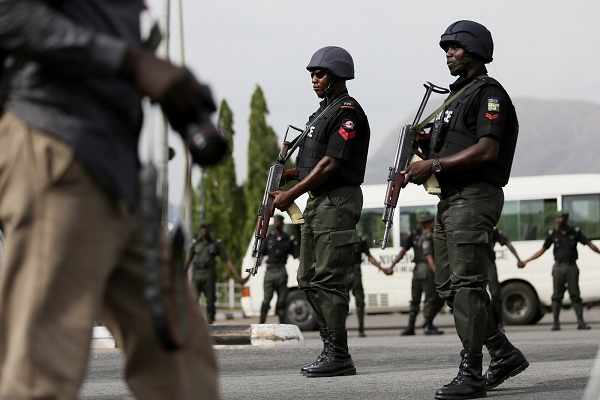

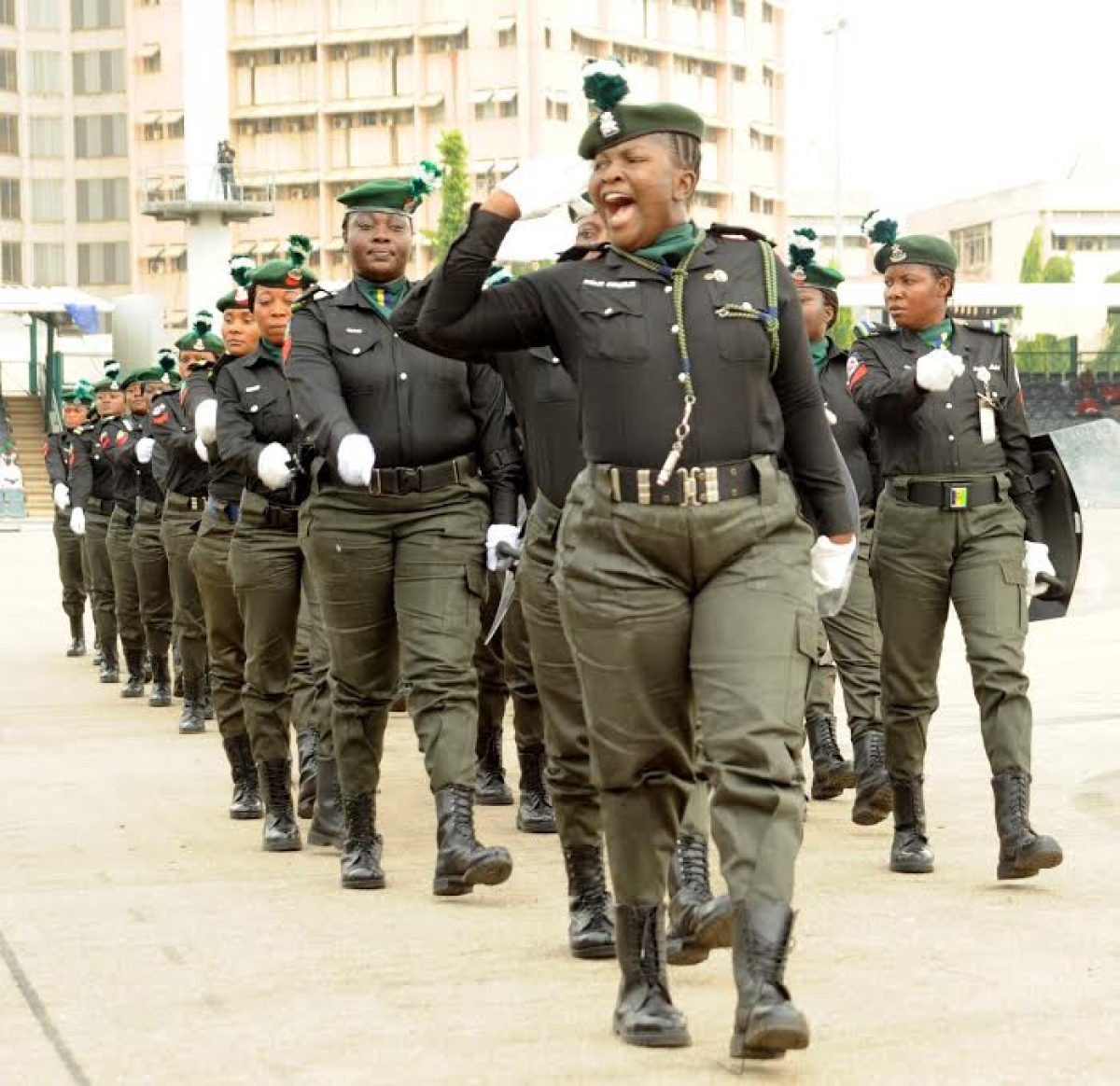
Nigeria took a step closer yesterday to establishing a state police force when the Senate passed the controversial Constitution Alteration Bill seeking to decentralise policing. The battle for the landmark reform now shifts to the 36 state Houses of Assembly where at least 24 legislatures must endorse the proposal before it can become law.
The passage of the bill by the Senate is a major breakthrough in a debate that has dominated Nigeria’s security discourse for decades. The passage comes amid worsening insecurity across several parts of the country, including terrorism, banditry, kidnapping, communal violence and organised criminal activities, reports The PUNCH.
The legislation, which aims to create state-controlled police services to complement the existing Nigeria Police Force, was passed after senators attained the constitutionally mandated two-thirds majority through a manual voting process adopted after technical glitches hit the chamber’s electronic voting devices.
The measure has already been passed by both chambers of the National Assembly and the focus is now on the state assembly whose support will determine whether or not Nigeria would at long last jettison its decades-old exclusive federal policing system.
Many consider the amendment to be one of the most significant constitutional revisions since the return to democratic governance in 1999.
At the heart of the change is a provision to empower governors to choose Commissioners of Police for their states, subject to ratification by state Houses of Assembly.
In Clause 17 of the proposed constitutional amendment, “while the Federal Police Service will continue to be headed by the Inspector-General of Police, each State Police Service shall be headed by a Commissioner of Police appointed by the governor and confirmed by the legislature of the state.”
The formation essentially creates a dual-policing system, where state police formations would work alongside federal police authorities.
The bill was passed by the Senate after the consideration of the report of the Senate Committee on the Review of the Constitution submitted by Deputy Senate President and committee chairman, Barau Jibrin.
The legislation was initially discussed in the Committee of the Whole, after which parliamentarians approved its provisions and moved to a final vote.
Senate Leader, Senator Opeyemi Bamidele, who led debate on the legislation, said the plan was a well-structured framework aimed at striking a balance between local policing authority and national cohesiveness.
“The bill is to preserve the Nigeria Police Force for federal policing functions and also to make provision for the establishment of state police services in states that desire to establish them,” he said.
Bamidele said the suggested organization clearly demarcates the responsibilities of the federal and state police services.
State police will enforce state laws, preserve the public peace and public order, prevent and detect crime within their respective areas, defend lives and property and perform other local policing functions, he said.
Bamidele said that the federal police will be charged with protecting federal institutions, fighting terrorism, organised crime, cybercrime, border security, arms trafficking, interstate criminal activity and other national security issues.
The Senate Leader also explained the circumstances in which federal police authorities could become involved in security matters within states.
He said intervention would only be made where there “is outright breakdown of public order at a particular subnational entity; when state police are incapable of functioning; when there is serious violation of fundamental rights; when there is an established record of electoral intimidation and when national security is under threat.”
He said any involvement would require explicit approval from the President and Commander-in-Chief, and would be subject to oversight by the Senate and review by the courts.
Security measures
Separation of powers was one of many measures passed to ease long-standing fears that governors may deploy state police formations for political ends. Politics.
Indeed, one of the strongest arguments against decentralised policing has always been the fear that state police might be used to intimidate opposition politicians, critics and civil society groups.
To allay such worries, lawmakers included clear anti-abuse measures in the constitutional amendment.
One of the important safeguards agreed by the Senate is that “a state Commissioner of Police shall not arrest, detain, investigate or deploy force against any person, political party or group for merely criticising the government except in accordance with the law.”
The measure is designed to serve as a constitutional protection against politically motivated arrests and abuse of authority.
And parliamentarians suggested the National Assembly should have powers to set minimum national standards for state police services in relation to recruitment, training, vetting, promotion, discipline, use of force, firearms, complaints procedures, accountability mechanisms, data management and professional conduct.
Bamidele said the new framework is usually intended “to balance local policing autonomy with national cohesion, accountability with operational effectiveness and federal oversight with state responsibility.
“The bill provides strong protections against abuse, maintains federal authority where appropriate, protects constitutional rights and establishes a modern law enforcement framework capable of meeting current security challenges.”
The state police idea has been one of the most controversial constitutional problems since the Fourth Republic.
The notion has been explored repeatedly by successive administrations, constitutional conventions, security experts and governors who have argued that Nigeria’s highly centralised policing setup has proven more and more inappropriate for a federation of over 200 million people.
Supporters say local recruitment will provide officers a greater sense of their surroundings, language, culture and security dynamics, which will help in information gathering and crime prevention.
They also say state governments, which currently pay billions of naira to support federal security agencies, should have greater influence over policing within their territory.
But critics warn that powerful governors may use state police to settle political scores, intimidate opponents, and influence elections. Politics
These anxieties have frequently thwarted past attempts to change the Constitution.
Thus, yesterday’s Senate approval signals a big political milestone.
The significance of the exercise was clear in the peculiar voting mechanism chosen by the parliamentarians.
The Senate had planned to carry out the constitutional amendment exercise through electronic voting.
Legislators had to scrap the plan and turn to manual voting because of technical problems with some of the voting machines.
Bamidele, who moved a resolution on the floor, contended that all senators should be allowed to contribute to the historic vote.
“Rather than going through electronic voting which is obviously now going to disenfranchise a few or some of our colleagues whose machines are not working, I am moving we allow every distinguished senator to answer his or her father’s name by doing manual voting,” he added.
Senate President Godswill Akpabio approved the idea.
“Going into manual voting is good for us, for transparency and the need for constituents to know where you stand on every issue,” Akpabio added.
After the approval of the motion, individual senators were invited to express their viewpoints on the constitutional amendment measures at the time of the clause-by-clause deliberation.
The Senate suspended the related provisions of its Standing Rules by voice vote to expedite the procedure.
The drill attracted key government officials and governors who watched the operations from the gallery.
Those present included Kaduna State Governor, Senator Uba Sani; Ogun State Governor, Dapo Abiodun; Ondo State Governor, Lucky Aiyedatiwa; and Chief of Staff to the President, Femi Gbajabiamila.
Their presence highlighted the huge political and security stakes at play in the transformation being advocated. Political arena
Ex-cop supports bill
The law was also backed by a retired Assistant Inspector-General of Police, Aare Tunji Alapinni, outside the National Assembly, who said state police was an opportunity to boost grassroots security and bring back community policing.
Alapinni, who spoke during an interview on Frontline, a current affairs programme on Eagle 102.5 FM, Ilese-Ijebu, Ogun State, asked Nigerians to embrace the effort.
Not saying it was a failure. It has not failed us. But people are begging to see that it could be better. There is always room for improvement in anything. So if there’s opportunity to improve, there’s room for state police. And I think that’s the way it is,” he said.
He said Nigeria’s security concerns call for new measures.
“The security situation in the country calls for doing same thing in a different manner and I think the introduction and the clamour for state police is a welcome development, nothing ventured, nothing gained. Whatever, we will profit from it if we go and see how it works. Forget the advantages and the negatives. “We have lived with entry policing through the years,” he remarked.
Alapinni downplayed fears that finance and training challenges could derail the reform.
“The problem of funding and lack of training or retraining has been part of the malaise that has been affecting the constitutional responsibility of policing in the country.
We have to see it from the point of view of what can we do to make police solid, financing or no funds. “And I think the current inspector-general of police is doing his best by giving directives and that is fine,” he said.
One of the biggest benefits, the retired police chief said, will be the resurrection of community intelligence networks.
“Twenty years ago, if a stranger comes into town, people walking around will notice that this man is a stranger and the community will watch him. That is part of the loss we have suffered. That’s what we want to get out of community policing,” he said.
Amotekun
Similarly, the Western Nigeria Security Network, also known as Amotekun, has said the South West is in a good position for a smooth transition to state policing.
The chairman of Amotekun commanders in the region, Adetunji Adeleye, while announcing full operational preparation for the long anticipated security reform, highlighted that the decentralisation of Nigeria’s security architecture is the most viable answer to the country’s insecurity crisis.
Set up in 2020 by the six South-West governors, Amotekun has been a regional security outfit to support the Nigeria Police Force in fighting crimes including kidnapping, banditry, and armed robbery, among others.
Adetunji, the corps commander in Ondo State, said the success of the Amotekun program had proved that community-based security frameworks were more effective in identifying and arresting offenders at the community and state levels.
“On the issue of state policing in the last couple of years, the position of the Council of Amotekun Commanders of the South West has always been that state policing remains the only viable solution to the present insecurity in the country because it’s easier, especially by adopting the Amotekun initiative, to identify criminals.
“That is why you will see that this year alone we have arrested and prosecuted well over 500 alleged offenders, and in so many of those cases we have been vindicated. Some of them are serving different jail sentences.
“I think adopting state policing as a way of decentralising the security architecture of the country is a giant stride in the right direction.
“We are ready to adjust and conform to whatever is put in place to ensure the smooth takeoff of state policing as far as the south-west is concerned as per our readiness.
Also, a former Speaker of Ondo State House of Assembly, Jumoke Akindele, said the success of Amotekun in Ondo State is sufficient justification for state police to commence in Nigeria.
“As for the quest to have the requirement of state police entrenched in our Constitution, suffice it to say that methinks that the success of the Amotekun Corps of Ondo State is the strongest case for state police in Nigeria,” she stated.
Assembly-houses
Yet despite all the hoopla surrounding the Senate vote, the law could yet face its biggest hurdle.
The Constitution says no change may take effect unless two-thirds of the country’s state legislatures approve.
This means that a minimum of 24 Houses of Assembly must pass the state police proposal before it may be forwarded to President Bola Tinubu for assent.
The next step is consequently likely to trigger significant consultations among governors, parliamentarians, security stakeholders and political players across the federation. Political 2.
If the idea gets the necessary support, Nigeria would embark on one of the most revolutionary security overhauls in its history.
For advocates, state police are the long anticipated solution to a mounting national security dilemma.
The difficulty for opponents is to see that constitutional protections are sufficiently strong to prevent abuse.
Either way, the argument has now shifted from the National Assembly to state capitals where 24 assemblies hold the key to the future of state policing in Nigeria.
Also, the Director-General of Development Agenda for Western Nigeria Commission, Seye Oyeleye, has described the passage of the state police bill by the National Assembly as a major step towards tackling Nigeria’s security challenges. He said it is not a “silver bullet” but would significantly improve policing across the country.
“Decentralising policing will strengthen the security architecture by bringing law enforcement closer to local communities,” Oyeleye added, welcoming the initiative.
State police is not the silver bullet to our security concerns, Oyeleye told our correspondent yesterday. “There is no silver bullet at the moment, but it will go a long way,” he remarked.
Nigeria’s centralised policing approach is no longer sufficient for a country of nearly 230 million people with various security issues, he said.
“We are a nation of 230 million people with different ethnic groups. He said that “one-size-fits-all policing is no longer sufficient”.
“Many communities are still vulnerable because there is no security personnel in the area; in some places the nearest police presence is several hours away,” he said.
“Some of these places that the bandits invade to kill people, they don’t know any security presence. In some villages the closest police station is three hours distant. “When states have their own police forces they know the crucial areas and where to deploy officers and people will feel more safe,” he continued.
The DAWN Commission boss said state policing will also enhance the country’s policing capabilities. He estimated that if the 36 states recruited an average of 5,000 policemen each, Nigeria would gain around 180,000 policemen.
He described the bill as a major milestone in Nigeria’s journey towards true federalism.
“This is a monumental day and epochal day for Nigeria. “This is a great day for those who have been clamouring for true federalism over the years,” he added.
Governors, though constitutionally regarded as chief security officials of their states, have little operational influence over policing as commissioners of police follow directions from Abuja, Oyeleye said.
“We keep calling governors chief security officers of their states but that is only on paper. “The state commissioner of police still takes orders directly from Abuja, even though the state government provides vehicles, equipment and other logistics for the police,” he said.
He lauded President Bola Tinubu for backing the creation of state police after years of rejection from past administrations.
“The courageous initiative of President Bola Tinubu to take this course has to be commended. “The reality today is totally different from the 1970s and 1980s when we could get away with a single police force,” he remarked.
“The system can have adequate safeguards to address concerns that governors might abuse state police and can be strengthened in future amendments where needed,” Oyeleye added.
There have to be safeguards and if we find places where we need to do better, they can always be adjusted. The likelihood of governors abusing state police is really distant in this age of information and modern communication,” he said.
He mentioned the operations of the South-West Security Network, Amotekun, saying no governor in the region had been accused of exploiting the outfit since it was established around six years ago.
When asked if Amotekun should be incorporated into the planned state police structure, Oyeleye said he had no personal opinion on the matter, noting the decision is that of the South-West governors.
“I wouldn’t want to pre-empt my principals, so I will leave that to the governors of the states.
About the Author