
“Africa must urgently ramp up its fish farming sector to feed itself,” the chief of the UN’s fisheries division said today, even as its latest report revealed record output levels internationally.
AFP writes that, according to the State of World Fisheries and Aquaculture report of the United Nations’ Food and Agriculture Organization (FAO), launched at the Our Ocean Conference in Kenya, fish and seafood is now a $184-billion commerce.
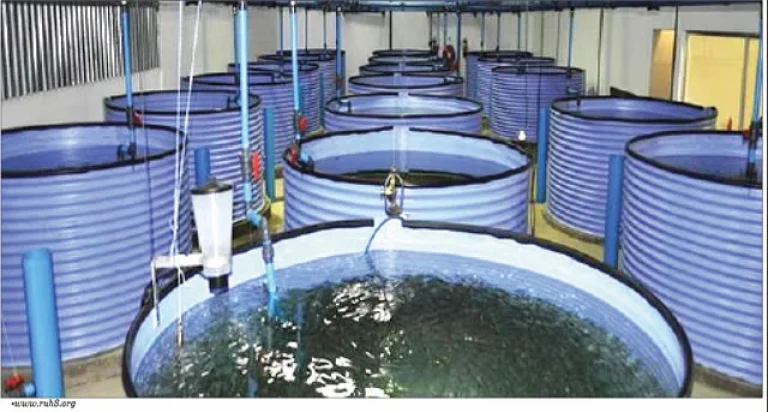
Aquaculture, or fish-farming, has surpassed traditional “capture” fishing as a source of food supply, breaking through the 100 million tonne barrier for the first time, in 2024, the latest year for data, and has continued to rise.
But Africa is trailing behind the rest of the world with only 18 per cent of its fish coming from farms, compared to almost half elsewhere.
The FAO noted that Sub-Saharan Africa needs to increase its fish production by 68 percent between now and 2050 to match its fast-growing population.
“It is an opportunity to be exploited… but it is whether the timing is fast enough to catch up with that demand,” Manuel Barange, director of the FAO’s fisheries division, told AFP.
“Aquaculture can really be a game-changer,” he told.
‘If we can grow aquaculture in Africa there are plenty of prospects.
But Barange said governments need to swiftly put in place policies and incentives to bring investors.
More than 700 different species of fish are bred for eating on aquaculture farms throughout the world and the FAO claims it is a more predictable and sustainable strategy than conventional fishing at sea.
It is also more adaptive to climate change which is producing fast shifts in the amounts and locations of ocean fish.
“Climate change is a disruptor of everything we do,” Barange remarked.
More has to be done to reduce over-fishing: the survey found that just 62 percent of world fisheries are fished responsibly.
The 11th edition of the Our Ocean Conference opened Tuesday in the Kenyan port city of Mombasa, the first time the event has been held in Africa, and bringing together politicians, NGOs, investors and entrepreneurs.
Organisers said it has led to more than 2,900 commitments worth more than $169 billion, including in marine conservation, sustainable fisheries, climate adaption, security and pollution reduction since its first edition in 2014.
About the Author