
The United States Secretary of State, Marco Rubio, has snubbed a high level Nigerian delegation from a face-to-face meeting in Washington. The diplomatic snub comes on the heels of the US Department of State’s statement that Nigeria has not met minimum fiscal transparency requirements for the second consecutive year.
The Nigerian delegation, led by National Security Adviser Nuhu Ribadu and Minister of Foreign Affairs Bianca Odumegwu-Ojukwu, was in Washington for high level talks on security and bilateral cooperation thru the US-Nigeria joint working group.
Rubio did not attend the meeting, but Nigeria’s foreign minister was there. Instead, the group was greeted by the US Under-Secretary of State, Allison Hooker, a breach of diplomatic procedure which normally allows the Secretary of State to host such meetings.
The rejection came shortly after the US Department of State released its 2026 Fiscal Transparency Report which listed Nigeria among 67 governments that failed to achieve the minimum fiscal transparency requirements and failed to make sufficient progress in correcting shortcomings in public financial management.
The audit claimed Nigeria’s budget documents did not present a substantially full picture of government revenues and expenditures, and actual revenues and expenditures did not reasonably reflect amounts in the approved budget.
The United States also expressed concerns about the independence of Nigeria’s top audit organization, which it said did not fulfil international requirements for independence or for issuing meaningful audit reports in a timely manner. The report also critiqued the paucity of information available on public procurement contracts.
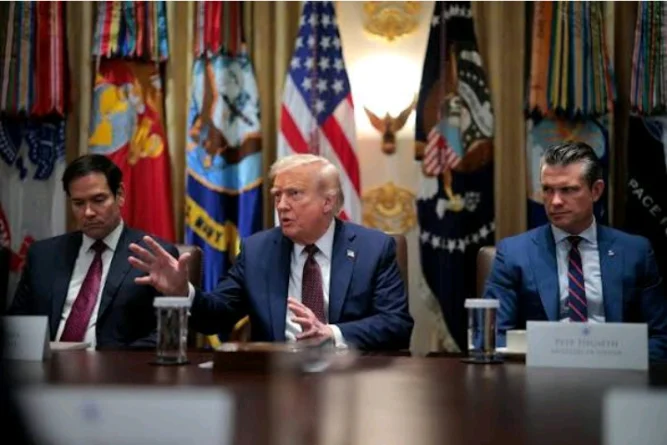
The low-level participation was a deliberate statement of the Trump administration’s attitude toward the current Nigerian leadership, said Washington-based lobbying firm Von Batten-Montague-York, which reported the diplomatic insult.
The firm said that while the U.S. shares regional interests with Nigeria and cooperates bilaterally, the Trump administration will not give political backing for President Bola Tinubu, citing decades-old allegations and court records related to forfeiture proceedings by the U.S. Department of Justice.
The delegation was in Washington for the second meeting of the joint working group set up after President Donald Trump’s decision to redesignate Nigeria as a “Country of Particular Concern.” Security cooperation and counterterrorism measures dominated the agenda.
The US Government called on Nigeria to promote fiscal openness by extensively and easily providing the public, especially on the Internet, with the executive budget plan, the full breakdowns of income and expenditures, and making the Auditor-General’s office more independent.
As of the time of writing, there was no official reaction from the Nigerian Ministry of Foreign Affairs, the Office of the National Security Adviser or the Presidency to the reports of the diplomatic snub.
About the Author