
The Nigeria Labour Congress has drawn a bleak picture of the situation of the country and its workers, saying that increasing insecurity, greater poverty and worsening economic conditions are pushing residents to the wall.
Recall that NLC and other stakeholders in the Nigerian project had always blamed the suffering in the country on the manner in which the present government eliminated the fuel subsidy, Vanguard writes.
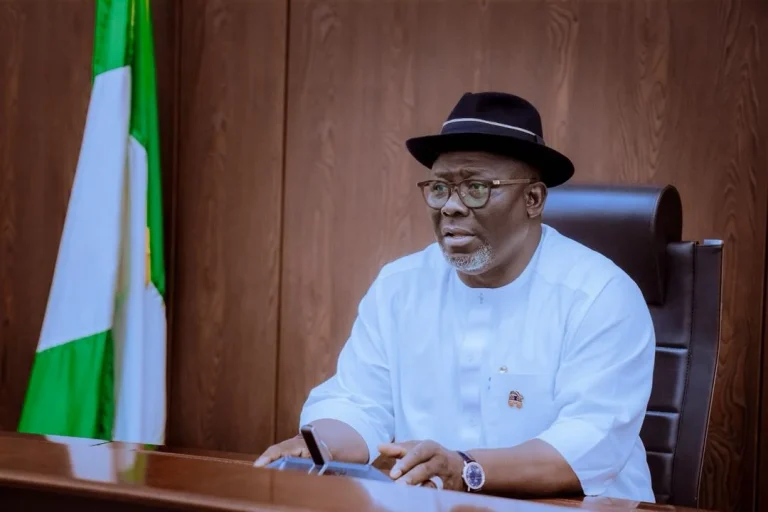
However, despite the public uproar on effect of the withdrawal of fuel subsidy on cost of living, the Minister of Finance and Coordinating Minister of Economy, Taiwo Oyedele, has stated that the Presidency will not bring back the subsidy.
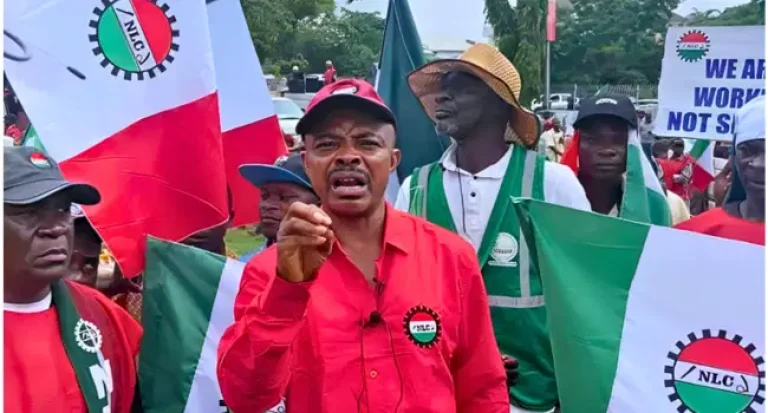
“The situation has degenerated to a level where survival, not productivity, has become the priority for many Nigerians, particularly workers,” NLC President, Joe Ajaero, stated in an interview.
“There is a broad consensus throughout the country, including government officials, that insecurity has severely undermined livelihoods, disrupted economic activities and exacerbated hardship,” he said.
He said workers can no longer work in an atmosphere of fear, dislocation and uncertainty, with many of them having to leave their homes and sources of livelihood behind.
“Everybody in this country will tell you that insecurity has finished the country,” Ajaero remarked. It is not about whether I am in government or not. Even those in the government are crying. This is a concern for all of us. Workers cannot work those places and that is very significant.
The psychological fear of shifting from one place to another is increasing and that cannot be defined too. “People are moving from their communities to Internally Displaced Persons, IDP, camps. Insecurity has really handled us.”
The NLC president linked insecurity to poverty, saying that the situation has gone beyond the issue of decent work to the issue of jobs availability altogether.
“When you now talk of challenges, is it decent work or even work? The insecurity has hampered employment in the country. Besides lives lost people can’t invest. Not even Nigerians living abroad would say it is too much insecurity to come home.
“People are running to places where they think they’ll be protected. This means employment are being lost and poverty is rising. Most Nigerian laborers rely on their farms, especially in rural communities. “If they can’t go to farm, their livelihoods fall apart,” Ajaero said.
Economically, he slammed the disparity between macro-economic indicators and the lived experience of citizens.
“If you say the economy has grown and I can’t move from where I am because transportation is high, how has that translated to my life?” he said. “We are not seeing that.”
The NLC President also said that global events impacted local hardship, noting that “the moment there was tension between Iran and America, fuel prices jumped to about N1,300–N1,400.
That demonstrates we are not insulated. “But when crude prices go up and government makes more, how does it help the worker?
Ajaero lamented that the additional revenue from the government had not translated into greater salaries.
“Did you increase the earnings of the workers by N50,000 or N100,000 to cushion the effect? “Salary is the same and the worker now pays fuel at N1,400. “The government is making a profit, but the worker is in deficit,” he remarked.
Rising pressure on workers
The union leader added that “with the amount of taxation increasing the burden on workers is increasing. “The level of taxation presently is an issue. You have formal and informal taxes. The market women are paying levies before they start working, Okada riders. Nigerians are moaning.
On solutions to growing fuel costs, he said, “We thought Compressed Natural Gas, CNG, will stabilise transportation, but where are the stations? How many people have been turned? The same is true of electric cars – there is no infrastructure. People have no choice.”
On human rights issues, Ajaero said economic suffering itself is a serious violation.
“What human rights are worse than starving? “When you don’t pay people adequately, their very rights are already compromised,” he added.
Ajaero also spoke about the state of employment in some areas of the private sector, saying “some employers have very harsh conditions for workers.
“Sometimes workers are made to live in hostels and do excessive labour. “The Ministry of Labour should reinforce its inspectorate because accidents and dangerous conditions are common.”
He denounced efforts to curtail nonviolent protests on civic space and workers’ rights.
“Even May Day, in some states, police warned against processions. In the meantime, people are not compensated. When workers ask inquiries, they are told of rules that prohibit protest,’’ added Ajaero.
“Even the police are protesting now, which is quite ironic,” Ajaero remarked. The same people who used to crush protests are now expressing complaints of their own. That tells you how deep the problem has become.
“There are many ways in which workers’ rights are being violated, particularly in the private sector where there is little protection. “Unless urgently addressed with more effective policies and accountability, these challenges will persist.”
NLC blames Oyedele over fuel subsidy removal
An official of NLC said the claims by Minister of Finance, Mr Taiwo Oyedele, that the federal government would not review fuel subsidy despite the sharp rise in global fuel prices, was both disappointing and lacking in responsiveness to the current economic realities facing Nigerian workers and citizens.
Speaking to Vanguard yesterday on condition of anonymity, the NLC official said: “At a time the Middle East crisis continues to drive volatility in global energy markets, governments across the world are adopting pragmatic measures to cushion the impact on their people.
It is also disturbing that our own administration seems unwilling to consider new types of action beyond the narrow framing of fuel subsidies as a closed chapter.
“In practice, subsidy is not a one-dimensional policy. There are certain focused and more lasting ways government might take to relieve the load on Nigerians. There are strategic subsidies which could be expanded to key industries such as transportation, manufacturing, pharmaceuticals and food and beverage industry.
‘’These actions would directly reduce the cost of production and distribution which would eventually reduce the price of goods and services for the common citizens.
“Moreover, a temporary freeze or reduction in taxes on basic commodities and production inputs will go a long way in stabilising the economy and protecting buying power. These are pragmatic people-centered solutions which can provide immediate relief without having to go back to the outdated structure of the prior fuel subsidy regime.
“In addition, the government can take a proactive supply-side measure by earmarking a certain volume of crude oil for local refineries for domestic consumption. This, with stringent monitoring and transparent distribution methods, would help stabilise local gasoline supply and pricing, at least as an interim measure, until geopolitical concerns in the Middle East are resolved.
“The reality is that Nigerians are suffering the consequences of global shocks with very limited institutional support. A responsive government has to be ready to think outside the box and respond decisively in order to mitigate these repercussions.
“A wholesale rejection of subsidies without workable alternatives adds to the socio-economic burden on citizens. “What is needed now is not rigid policy posturing but adaptive leadership that puts the welfare of the people first.”
Oyedele says Presidency will not reinstate fuel subsidy
The Presidency would not bring back gasoline subsidy, Minister of Finance and Coordinating Minister of Economy, Taiwo Oyedele declared while speaking with global investors in France where President Bola Tinubu is now on a state visit.
He said subsidies generated economic “distortions” and petrol prices would not be controlled as the Presidency believed the market was capable of regulating itself.
“The inflation rate in Nigeria has risen since the removal of the petrol subsidy in May 2023, reaching a 19-year high. Inflation rose from 22.41% in May 2023 to 34.19% as at June 2024, fuelled by a sharp rise in the cost of fuel, food and transportation.
“We are not going to bring back fuel subsidy because it creates distortions for the economy and we are not going to introduce price control because we believe in the market… the situation in Iran presents new opportunities for us as the world is looking to diversify sources of energy and invest in new markets,’’ he said.
He also pointed out Nigeria’s impressive GDP growth in dollar terms in 2025, saying Nigeria had an 11.2% GDP growth in dollar terms last year, a record that further spurred the country’s desire to become a $1 trillion economy in 2030. Oyedele stressed the government’s immediate goals of turning reforms into outcomes for the Nigerian people.
About the Author