
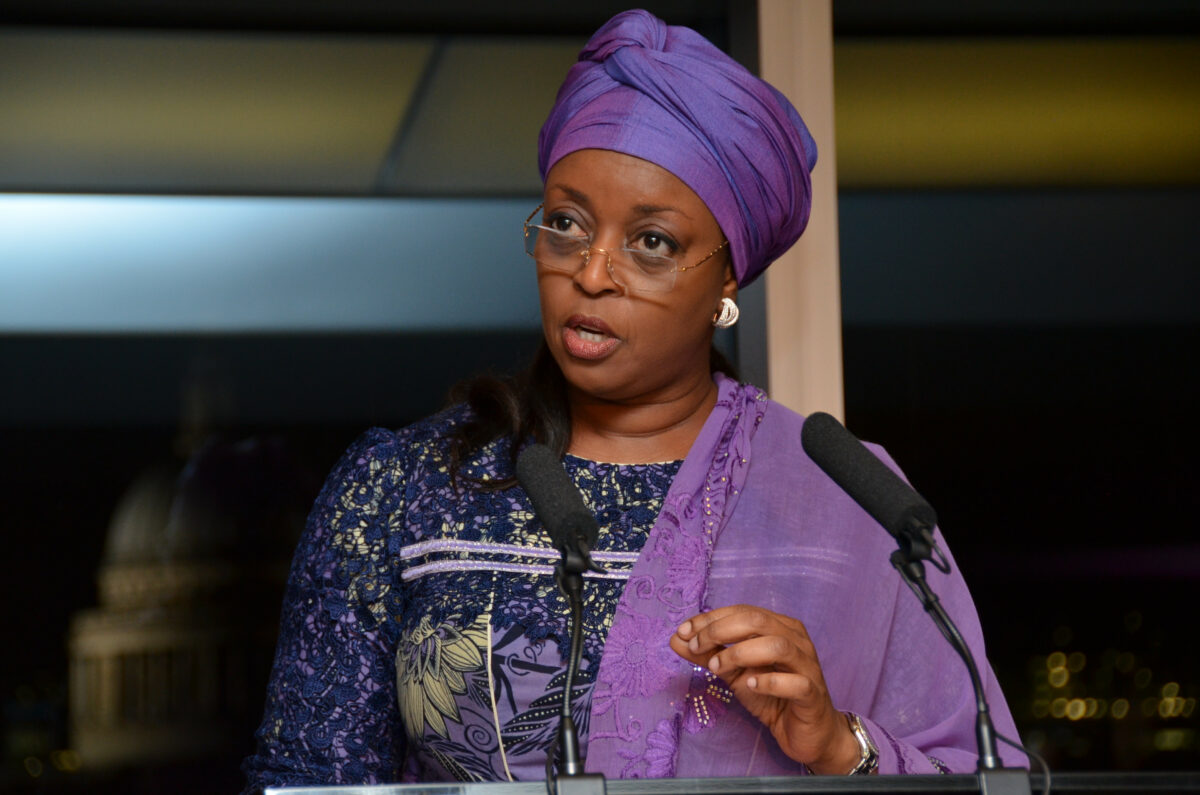
Diezani Alison-Madueke, the former Minister of Petroleum Resources, told a UK court that her job approving oil contracts while she was in office was mostly procedural. She said that important decisions were made before the documents reached her desk.
Alison-Madueke told the Southwark Crown Court in London that she didn’t have as much direct influence over Nigeria’s oil business since the Nigerian National Petroleum Corporation (NNPC) was in charge of operations, according to Daily Trust.
She told the court that “the system was already in motion before files came to me.” She also said that the size and complexity of the petroleum sector made it impossible for ministers to be directly involved.
She said that she rarely turned down contract clearances because the recommendations had usually been through a lot of technical and regulatory review before they got to her office.
“I was, in many cases, just a rubber stamp in the process,” she claimed.
The ex-minister also talked about a time in 2014 when she said she found a suspicious crude oil lifting deal that was supposedly connected to businessman Igho Sanomi. She said that the finding came after a whistleblower complaint and that she then took steps to cancel the deal.
But she said that influential groups fought back against the plan, and complaints were reportedly sent to then-President Goodluck Jonathan.
Alison-Madueke spoke out against former Central Bank Governor Lamido Sanusi’s accusations that $20 billion could not be accounted for in the long-running dispute over missing oil money.
“There were no missing funds as widely reported,” she stated. “Subsequent audits and legislative reviews showed that the numbers were due to subsidy payments and operational costs, not unaccounted revenue.”
She said that investigations she led showed widespread exploitation of the fuel subsidy system, with some merchants submitting repeated claims.
She claimed that steps were taken to fix the problems, which greatly lowered the number of fake payouts.
She said that her efforts cost her personally.
Alison-Madueke told the court that she was in danger of being kidnapped and that she linked these threats to her efforts to challenge entrenched interests in the sector.
She also said that political and commercial leaders often put pressure on her office to get special access to oil allocations.
“I turned down requests that didn’t follow the rules,” she stated.
When asked about her finances, the former minister replied that she used bank cards provided by Nigeria for all of her transactions, even when she was on official travels overseas. This was in keeping with rules that say public officials can’t have foreign accounts.
She also said that there were times when the cards didn’t work overseas, so other people had to pay for things for a short time.
The court also looked at her official travel records from 2011 to 2015, which included letters and passport information.
Alison-Madueke claimed that when she traveled, she usually had roughly 30 officials with her, including technical assistants, security personnel, and protocol officers.
She claimed, “All movements were documented and archived in ministry records.” She also said that both commercial and chartered flights were used, depending on the type of official business.
Despite the accusations against her, the former minister said that her time in office was focused on getting more people involved in Nigeria’s oil industry and making things more open. She said that the media had unfairly depicted her.
Alison-Madueke is on trial with Olatimbo Ayinde and Doye Agama for five counts of bribery.
All of the defendants have said they are not guilty, and the case is still continuing on in London.
About the Author