
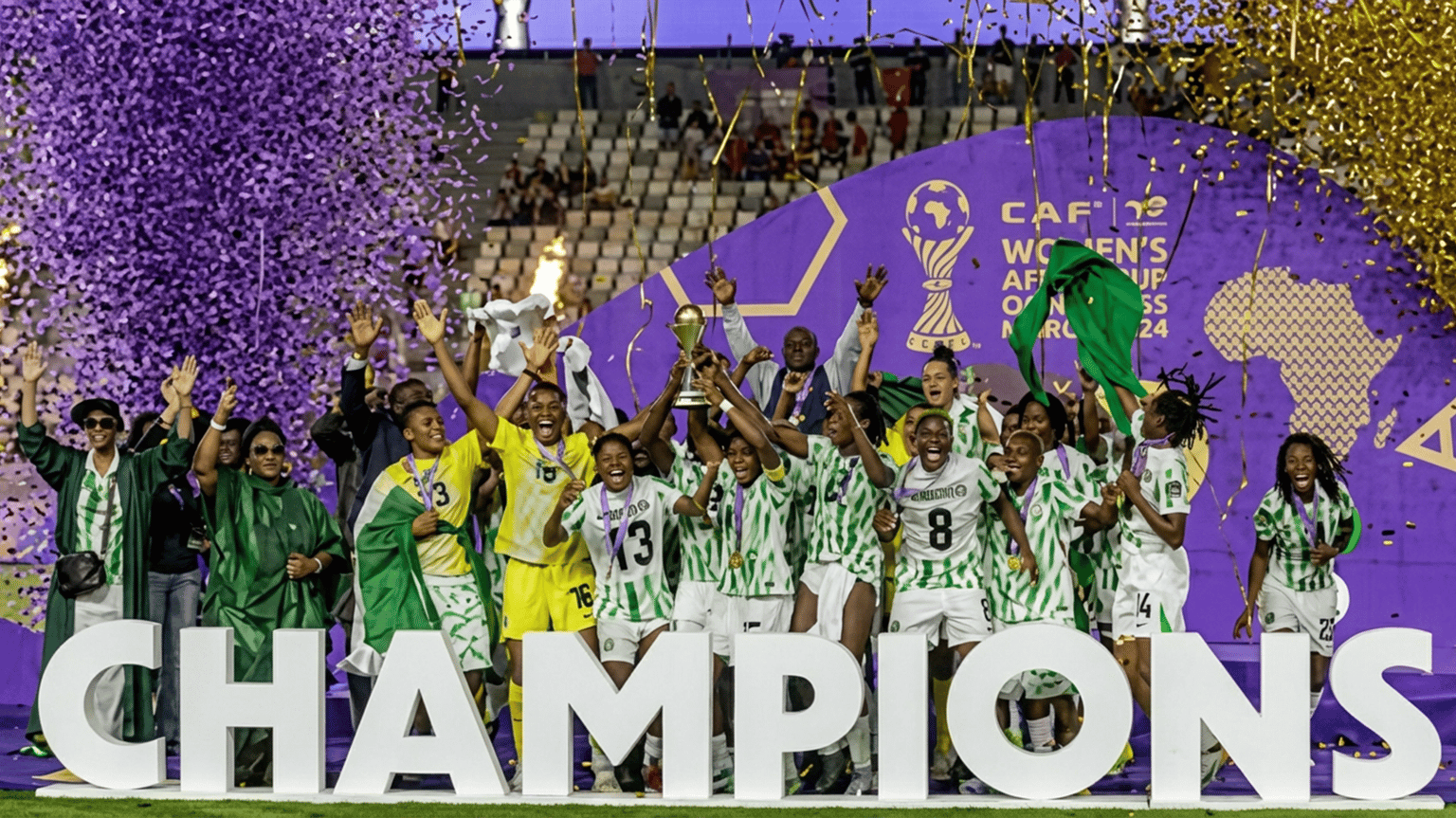
On Sunday night, African football was thrown into chaos when South Africa said it would host the 2026 Women’s Africa Cup of Nations (WAFCON), taking Morocco’s place less than seven weeks before the tournament was supposed to start.
Peace Mabe, South Africa’s Deputy Minister of Sport, Arts, and Culture, announced the news on national television. He said that South Africa stepped in after Morocco said it could no longer host the tournament.
Mabe added, “We took advantage of an opportunity that came up because we have the right infrastructure and support.” “When Morocco said they couldn’t do it, we said South Africa is ready and willing to host.”
The competition was supposed to take place from March 17 to April 3, but it might be pushed back by up to two weeks so that South Africa has enough time to be ready. But there has been no formal confirmation of new dates.
There has been no official explanation from either the Moroccan government or the Confederation of African Football (CAF) for the abrupt withdrawal.
Many people are startled by the decision, especially because Morocco had previously chosen venues in Rabat, Casablanca, and Fez.
There are rumors that political reasons or tensions from the disputed 2025 Africa Cup of Nations final versus Senegal may have played a role in the withdrawal, but these assertions have not been proven.
In the past, CAF has punished host countries who pull out of a tournament just before it starts. Morocco was banned and fined in 2015 for not hosting the men’s AFCON because of fears over Ebola. The Court of Arbitration for Sport eventually overturned these penalties.
But other people think that CAF would be more lenient this time because CAF President Patrice Motsepe and Vice President Fouzi Lekjaa of Morocco are close friends.
Even though Morocco’s women’s national team is no longer hosting the event, they are still anticipated to compete. They are tentatively placed in Group A with Algeria, Senegal, and Kenya, although CAF still needs to clarify this.
South Africa now has to figure out how to put together Africa’s top women’s football tournament on short notice, while CAF is under pressure to make sure that participating teams, sponsors, and supporters know what’s going on and feel safe.
Morocco’s late withdrawal raises issues about its future status and trustworthiness as a big host in African football, and the continent is closely watching how things develop.
About the Author