
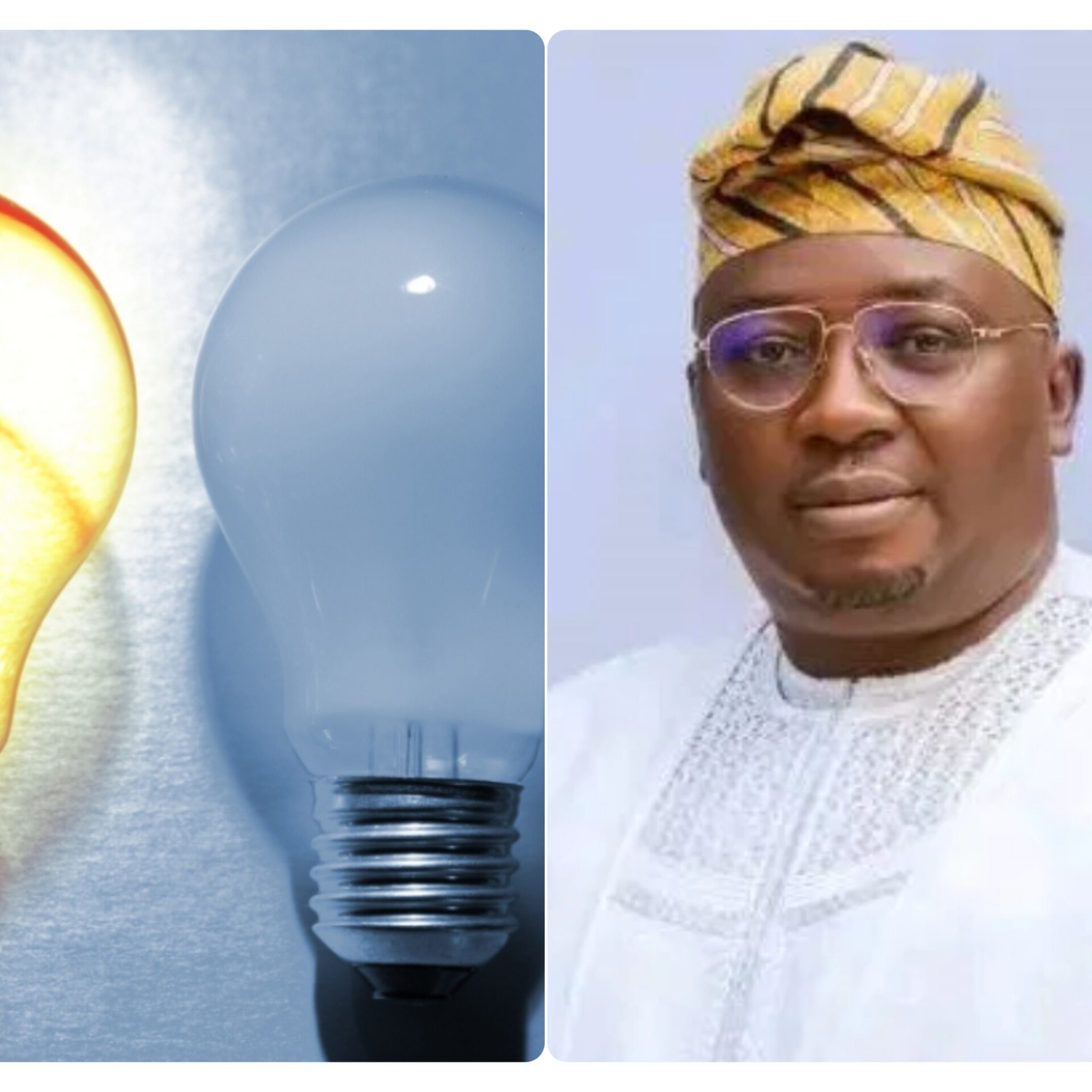
The federal government has claimed that Nigeria’s power sector is on the right track to being self-sufficient.
According to Daily Trust, Minister of Power Adebayo Adelabu said this in Abuja during the opening of two blocks at the National Power Training Institute of Nigeria (NAPTIN). The blocks house five training workshops and a 104-room dormitories.
He noted that this achievement is a big step forward for both the institute and the sector. He also said that President Bola Tinubu’s administration had shown real dedication by “walking the talk and turning vision into action.”
He said that the government’s work was already paying off, as the country was making and sending more electricity than ever before.
“In no time, we’ll see a country where the power is always on.” He stated, “This is possible, and we have definitely seen the signs.”
The minister said that the government was providing electricity to universities, teaching hospitals, primary health centers, public institutions, and communities. He also stressed that power supply was still the most important thing for other important parts of the economy, such as education, health, and aviation.
“We have everything it takes to make our own batteries, meters, cables, transformers, and transmission transformers. We have the mind. We have the people. “We need to be able to take care of ourselves and be able to keep going. We’re almost there,” he remarked.
The minister stated that the new facilities showed that the government was serious about building a highly skilled workforce that could handle problems in the energy sector as it changes quickly.
He went on to say that the training centers and hostel would give young Nigerians the modern tools and expertise they need to come up with new ideas and start businesses.
Ahmed Nagode, the Director-General of NAPTIN, said that the initiatives were a step toward a better future in the electricity industry.
He said that the institute wanted to look into collaborations to carry out the Next Generation Rescue Programme, which would train and develop future Nigerian leaders.
Nagode complimented the European Union (EU) and the French Government for giving money and technical help to the facilities through the Agence Française de Développement (AFD).
Gautier Mignot, the EU’s ambassador to Nigeria, announced that the EU has pledged €8 million to the project as part of its support for Nigeria’s power sector reforms. He stated that since 2008, the EU has put more than €200 million into Nigeria’s power sector and helped NAPTIN create 95 courses, 65 of which are technical and 30 of which are not.
Mignot added that the EU’s most recent €100 million renewable energy plan for Nigeria was meant to add 400 megawatts of renewable energy by 2027, which would help more than five million Nigerians.
About the Author