
To the uninitiated, 7A Otto Causeway, Otto, Lagos, seemed just like another warehouse in a busy commercial district. There was nothing to indicate, by suspicious marks or otherwise, that the warehouse was anything other than a regular commercial facility.
But detectives believe that it was allegedly used for more than two years to repackage suspected contaminated drugs for distribution across Nigeria and beyond, Vanguard writes. Africans & the Diaspora
To residents, the routine wasn’t worth writing home about. There were no strange symbols on the warehouse, or anything else to indicate it was anything but an average commercial facility.
To the locals, everything was just ordinary. Trucks came and went, workers queued, automobiles were loaded and the business went on as usual.
But what many did not realise was that police were slowly building evidence of a larger pharmaceutical network.
The breakthrough came when operatives of the Lagos State Police Command’s Violent Crime Response Unit (VCRU) led by CSP Oyindamola Oremosu, acting on intelligence received over several weeks, intercepted a truck suspected to be carrying second-hand garments.
Detectives found no clothing.” The truck, rather, was said to be carrying suspected counterfeit and contaminated medicinal supplies.The revelation resulted in the arrest of two individuals, Eze Okwudilichukwu, 52, and Chukwudi Mba, 42.
Detectives were working to determine where the products were allegedly produced and identify others thought to be involved in the business. Police questioned the suspects. But detectives apparently met opposition when trying to get information about the origin of the drugs and the putative masterminds behind the scheme.
And what they uncovered sparked new questions about the scale of the operation, police said.
Investigators said the facilities was being utilised to repackage suspected contaminated pharmaceutical supplies reportedly intended for distribution across Nigeria and adjacent West African countries. Africans and Diaspora
The revelation poses a troubling question for millions of Nigerians who buy drugs over the counter, hoping that the stuff they swallow would cure rather than kill: How easy can a harmful substance go from an obscure warehouse into the hands of an unwary patient?
Speaking on the operation, the Commissioner of Police, Lagos State Command, CP Tijani Fatai, said that the suspects led investigators to another warehouse where a legally executed search warrant was carried out after their arrest and interrogation.
The search led to the recovery of a vehicle filled with substantial numbers of suspected contaminated pharmaceutical products with registration number KFR 241 XA (Katsina) and other exhibits, he said.
Recovered items
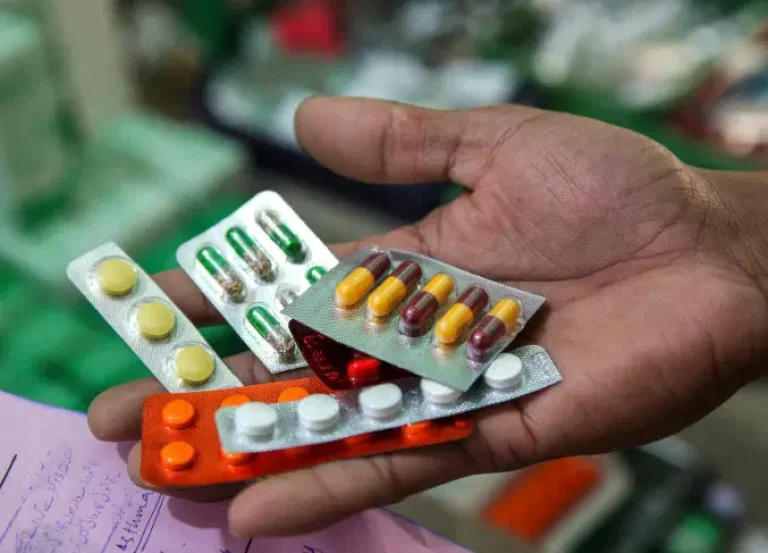
They recovered about 300 cartons of suspected adulterated Omeprazole, six bags containing unpackaged suspected adulterated Viagra, Ampiclox, Septrin, Piriton and other pharmaceutical products and about 10 cartons of suspected adulterated Ampiclox, Viagra and other drugs.
More than 300 empty printed packets and cartons allegedly used to re-pack the suspected counterfeit drugs were also seized.
The packaging materials may be relevant to investigators, possibly providing information about how the products were allegedly produced and displayed before reaching the market.
A network outside Lagos
The operation was not new and was not restricted to Lagos, the inquiry, CP Fatai said. Preliminary investigations revealed that the criminal ring had been involved in the repackaging and distribution of suspected contaminated pharmaceutical products for over two years,” he said.
“Investigations also point to the fact that the suspected adulterated drugs are being manufactured somewhere in Lagos State,” he said.
He said subsequent research revealed that the pharmaceuticals were allegedly moved to other parts of Nigeria, with large numbers supposedly bound for Lomé, Togo, indicating a likely international distribution network. Africans & Diasporas
“Detectives had intensified efforts to find the suspected facility, dismantle it, arrest those involved in the operation and bring them to justice,” he said.
N3m pressure claim
But soon the probe took a different direction. “It is pertinent to state that since the arrest of the suspects, desperate attempts have been made thru different channels to compromise the investigation by inducing officers of the Violent Crime Response Unit to release both the suspects and the recovered exhibits,” he said.
“I want to state categorically that these attempts were strongly resisted. “The Lagos State Police Command is committed to professionalism, integrity and the rule of law and no amount of pressure or inducement will derail the course of justice,” he added.
Medicines that can kill rather than cure
If lab tests prove police suspicions correct, the fallout might spread well beyond criminal punishment and into public health. This is because fake and adulterated drugs can be especially harmful as they are often manufactured to seem like real medicines.
While illicit drugs are purposely hidden, counterfeit pharmaceuticals can be disguised in the same packaging as real pharmaceutical products and can enter the supply chain unbeknownst to consumers.
The current find has consequently rekindled fears about the proliferation of fraudulent pharmaceuticals in Nigeria, especially sexual enhancement drugs. Africans & Diaspora
An prior investigation by our correspondent of fake Viagra and other sexual enhancement items highlighted concerns from medical authorities about the hazards of counterfeit versions of such pharmaceuticals.
Fake Viagra might give users significant issues including long-lasting and painful erections, medically known as priapism, experts warned. It could also cause circulation damage that could lead to impotence, kidney failure, heart problems and death in extreme situations.
But the threat is not simply about medications for sexual enhancement.
Fake antibiotics like Ampiclox and Septrin may not treat infections, leading to the worsening of illnesses and possibly contributing to antimicrobial resistance.
For those with hypertension, diabetes and other chronic conditions, taking the wrong or inadequate medication can be equally harmful.
So the question is not just whether a drug is bogus. It is what the one who takes it believes it to be.”
NAFDAC steps in
The Lagos State Police Command, during its probe of pharmaceutical items, forwarded the suspects, recovered exhibits and case file to the National Agency for Food and Drug Administration and Control (NAFDAC) for further investigation and regulatory action.Monday, August 2, 2026 was the day of the handover.
Fatai explained, “In view of the nature of this case and its direct relevance to the regulation and enforcement of standards relating to pharmaceutical products, I formally handed over the suspects, the recovered exhibits and the case file to the Director of NAFDAC, Dr. Martins Iluyomade for further investigation and necessary regulatory action,” he said.
He said the handover was a demonstration of the command’s commitment to ensuring that all aspects of the alleged operation were thoroughly probed and that anyone found accountable was brought to justice thru the right legal and regulatory systems.
For NAFDAC, the next level is not just arrests.
Laboratory investigation of the recovered drugs is intended to confirm their real composition, potency and safety and identify if they are counterfeit, adulterated, substandard or otherwise unfit for ingestion.
Those discoveries could also supply authorities with vital evidence as they continue to look for the likely source of production.
Another Finding
But even as police were giving over the suspects, exhibits and case file to NAFDAC, the investigation apparently took another turn.
It was revealed that during the transfer, other suspected members of the accused conspiracy were believed to be loading two trucks with similar suspected pharmaceutical supplies.
The development was said to have attracted the notice of investigators and police moved in and seized the two trucks.
The Police seizure has now broadened the scope of the inquiry, with new concerns emerging regarding the scale of the accused network, its distribution channels and the volume of suspected contaminated pharmaceuticals that may have been lying in wait to enter the market.
About the Author