
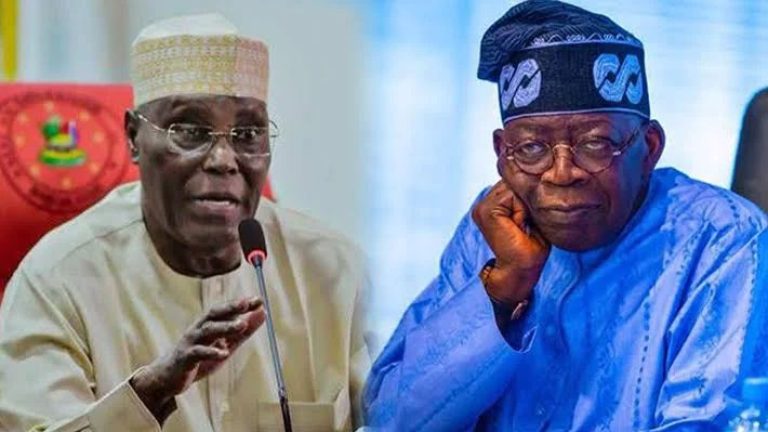
Former Vise President and Presidential Candidate of the African Democratic Congress (ADC), Atiku Abubakar has blamed President Bola Tinubu of presiding over the collapse of agricultural export revenues as farmers battle with insecurity and industrialists deal with punishing production costs.
He told Daily Trust that an administration that pledged to establish a productive economy has left Nigeria exporting crops without capturing enough of the processing employment and value that may be generated at home.
“Tinubu can’t call this reform when those who grow our food and the businesses that ought to process it are being squeezed from both sides,” Atiku added.
The trade numbers show the extent of the failure, Atiku stated in a statement issued by Phrank Shaibu, Director, Strategic Communication, ADC Presidential Campaign Council.
Nigeria’s agricultural trade turned around from a ₦740.27 billion surplus in the first half of 2025 to a ₦56.13 billion deficit in the first half of 2026 – a ₦796.40 billion swing in a year. Agricultural exports decreased 33.3 per cent, faster than imports, which also fell.
“The excuse of Nigerians importing too much will not hold. The Tinubu government will be held accountable for the failure of what Nigeria sold to the world. The country is losing export profits and the President owes farmers, workers and companies more than another speech on prosperity.
“What has his administration done to make it safer to farm, cheaper to move produce, easier to keep a processing plant running or more profitable to sell a finished Nigerian product abroad? Farmers cannot grow promises. Speeches don’t run factories. Manufacturers can’t run factories on speeches. “Workers cannot feed their families on promises of prosperity to come.”
He added cashew nuts in shell and cocoa beans are remain Nigeria’s largest agricultural exports, which shows the value Nigeria can keep by increasing local processing.
“We grow the crop. Someone else handles most of the processing, builds a business around it, and gets the bigger profit. Then Tinubu talks about jobs while Nigerian factories can’t compete. He has created such an expensive production that he has called the consequent hardship reform.
“A trade deficit by itself does not explain all the problems on our farms. But three years in office and the President has to own the mistakes that have left farmers unprotected and producers overburdened. “He cannot take credit for every positive statistic and distance himself from a reversal of N796.40 billion when the numbers are against him.”
“Atiku said his proposed production subsidy of petroleum products refined in Nigeria is based on the same principle: keep more production, work and value at home. The funding would include eligible products of Nigerian refineries including modular refineries. Politics Follow:
Imported products would not be eligible. It would be capped, budgeted and independently audited, with measures to monitor whether savings are being passed on to consumers and companies.
“The Tinubu administration’s CNG initiative has woefully failed as a palliative measure. The cost of conversion of vehicles is beyond the reach of many poor Nigerians. Conversion kits are hard to come by. The buses touted as palliatives are not available to many of the people who need them,” he said.
“Local refining is more than the price at the petrol pump. Aviation fuel impacts fares. LPG is the expense of cooking. Petroleum products and feedstocks impact the industries and the people who work in them. What Nigerians need is real relief that they can actually achieve, not schemes whose costs and shortages make promised benefits impossible to reach. Our resources must be of value to Nigerians outside the refinery gate. Buy Map
“From Day One, my administration will begin to restore a transparent production subsidy. We will support farmers and processors with the same resolve. Plant it here. This process is done here. Edit it here. Generate the jobs here. Make life less expensive here.
“This is the Tinubu record that is painfully becoming clear, Nigeria supplies raw crops and crude oil and Nigerians pay dearly for finished goods. A government that cannot convert our resources into inexpensive products and decent jobs has failed the people it was elected to serve.
About the Author