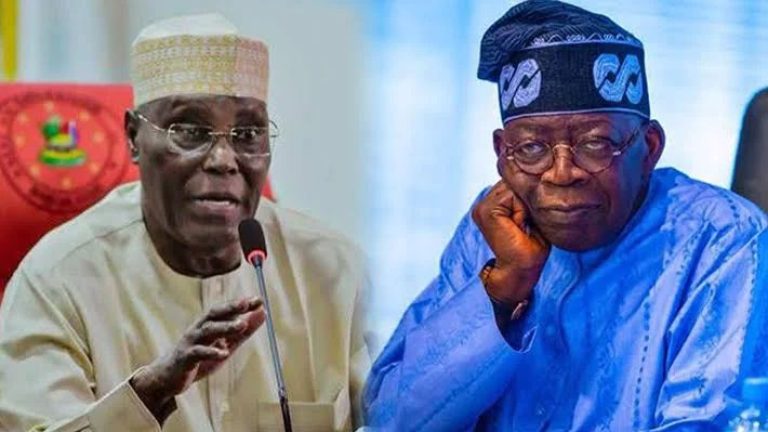

The ADC presidential candidate, Atiku Abubakar, has issued a challenge to President Bola Ahmed Tinubu, claiming that Tinubu has the power to release former Kaduna state governor Mallam Nasir El-Rufai from the custody of the Independent Corrupt Practices and Other Related Offences Commission (ICPC), just as he has done with the Economic and Financial Crimes Commission (EFCC).
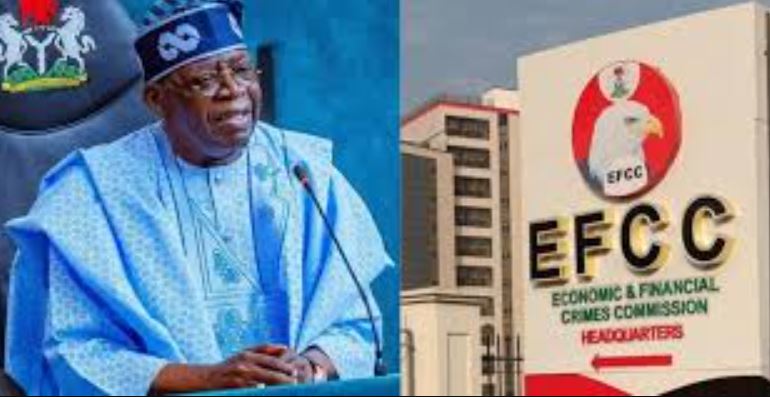
President Tinubu’s statement, according to Atiku’s Senior Special Assistant on Public Communication Phrank Shaibu, has permanently dismantled the long-standing assertion that anti-corruption agencies function independently of the presidency. Atiku claimed that the statement ordered the EFCC to vacate what Tinubu interpreted as a court order freezing the account of the Osun State government.
There are more questions than answers brought up by President Tinubu’s statement. The EFCC meticulously detailed the reasons for freezing the Osun State Government’s account in its formal announcement, yet the necessity of a court order was completely absent. The President asserts that he ordered the EFCC to dismiss the court ruling, yet his intervention hinges on its existing.
Why did the EFCC leave out such a crucial detail from its official report if a court order really did exist? If there wasn’t, the president has brought up a legal procedure in the public eye that isn’t even mentioned in the EFCC’s story. Instead of contradictory claims made by the same administration, Nigerians should have a unified narrative.
The president had revealed the myth of institutional independence under his government, according to Atiku. He may have done so unknowingly.
“President Tinubu is unable to maintain a dual position. In the same breath that he announces that he has asked the Commission to cease its action and return to court, he cannot simultaneously assert that he was unaware of and did not interfere with the EFCC’s operations. If the EFCC follows that order without delay, it will be clear to Nigerians that the Commission is not as autonomous in its operations as the president would have them believe.
No one can claim to support autonomous institutions while simultaneously having hands-on influence over their day-to-day operations. There can be no political will for institutions to remain autonomous and responsive to presidential orders in times of crisis. What you have there is really an attempt at administrative control masquerading as independence, not institutional autonomy.
By interfering, the president has established an immutable constitutional and moral duty, according to the former vice president.
It is only fair that Nigerians know why President Tinubu can’t use his power to fire Mallam Nasir El-Rufai now that he’s shown he can order anti-corruption agencies to do whatever he wants.
If he can order the EFCC to stop acting today, he has no right to claim tomorrow that he has no control over the ICPC. Institutional independence is only brought up when it’s convenient for the President, but executive power cannot be used selectively for political gain.
Osun State and El-Rufai’s incarceration are just the tip of the iceberg, according to Atiku.
The rule of law and the legitimacy of Nigeria’s anti-corruption agencies are the true victims. The people of Nigeria deserve truly autonomous institutions, not ones that only appear to be independent until the president decrees otherwise.
He noted that the unsettling fact that the Osun State government’s account was frozen in the first place remains, even though its reversal may prevent additional harm to the electoral process.
“Who authorised the freezing of the account of an opposition-controlled state days before a governorship election? Why was such an extraordinary action taken at such a politically sensitive moment? These are the unanswered questions that remain.” Reasons should be given to the people of Nigeria. Resolving an injustice in the wake of public outcry is not a measure of a democratic society; what matters is the discipline to avoid injustice altogether. Elections and Campaigns
About the Author