
Nothing could have prepared the people of the Naridon hamlet in Kaduna State for what happened little before midnight. By daybreak, at least 30 individuals were verified dead, homes were turned to ash, scores of residents were dead and one family’s world had been destroyed. The PUNCH writes that five siblings were killed in the assault, while a kid was gravely injured, becoming the last surviving link to a family that, just hours before, went to bed expecting another routine Monday.
By dawn on Monday the first light showed a village coming to terms with the unthinkable.
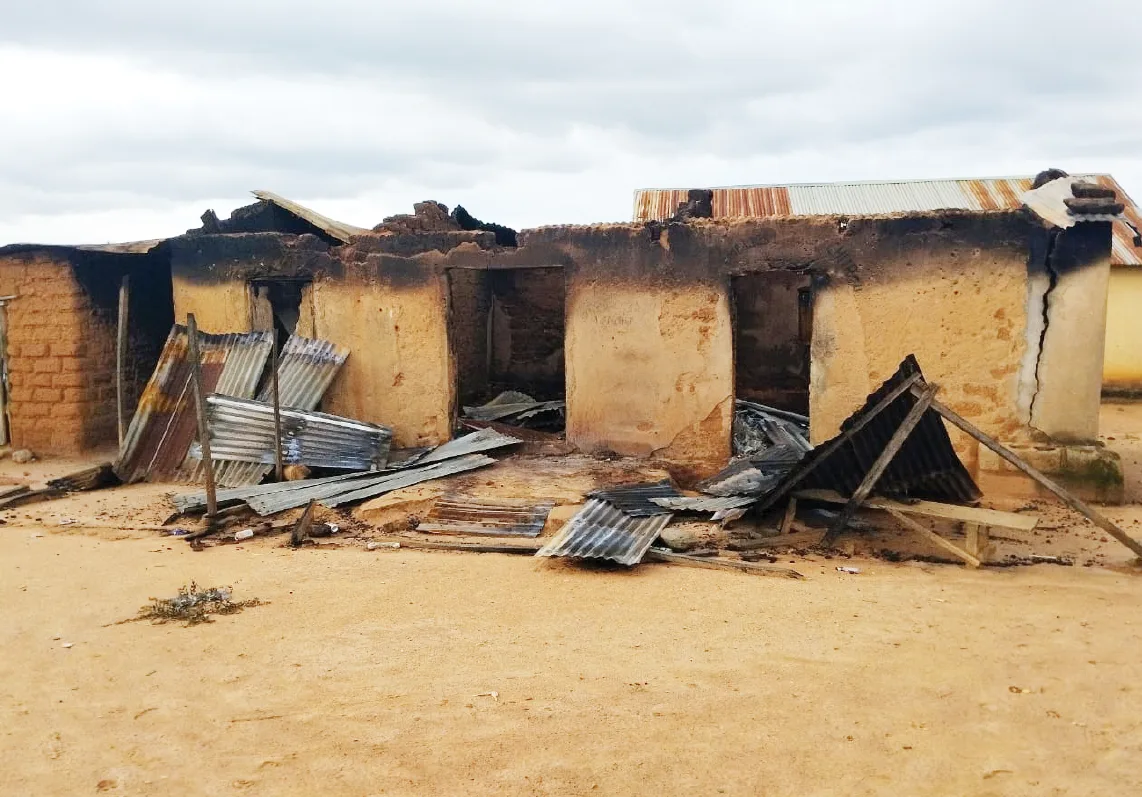
The burnt ruins of mud huts in Naridon, a tranquil farming village in Kamaru Ward of Kauru Local Government Area of Kaduna State are still smoking.
Burnt mattresses, twisted roofing sheets, blackened cooking pans and melted plastic containers littered premises that hours earlier had been homes full with laughter, family meals and aspirations for another planting season.
The silence was repeatedly shattered by cries of anguish, women wailing, neighbours digging fresh graves. The men who worked the productive soil now spent their lives in the burial of loved ones, rather than the preparation of their farms.
Children roamed the wreckage, looking for anything they could save from the homes that were reduced to ashes.
But a few miles away, on a hospital ward, was arguably the most heartrending scene.
There, the sole youngster left alive out of six siblings was fighting for his life.
Five brothers and sisters had been slain in the attack, at midnight. The sole survivor is now the only living witness to a family all but obliterated.
“It is hard to explain this kind of pain,” a community leader stated softly. How can you comfort parents who lost nearly all of their kids in one night?”
That question now looms over Naridon, a hamlet that has become the latest symbol of the repeated bloodshed that continues to afflict Southern Kaduna.
Peaceful village broken
Naridon is one of the many rural communities in Southern Kaduna where life is all about farming.
Farmers go to their fields before the sun rises and women cook food for their families. During the term the children go to school and then go home to help their parents on the farms.
Evenings are a sure thing. Men meet under the shade of big trees to talk about the harvest and the business of the village, and children play till dark.
Sunday ended like every other day. Families went to bed thinking another typical Monday lay ahead.
No. Gunfire disrupted the peace a few moments before midnight.
inhabitants reported gunmen with heavy weapons invaded the village at about 11:55 p.m., indiscriminately shooting at inhabitants asleep. Some ran into the surrounding bushes, others did not escape with their lives.
Within minutes the flames had devoured homes, food shops and business sites. The attackers vanished into the darkness, leaving behind dozens of dead civilians.
Several others were wounded. “Five brothers and sisters murdered, and now one child fighting for his life. Whole families were wiped off.
Five brothers and sisters killed…
Among the countless stories of unfathomable loss one rises above all others.
In the attack, five children from the same family were killed: Deborah Emmanuel, Friday Emmanuel, Yusuf Emmanuel, Yunana Emmanuel and Irimiya Emmanuel.
Their parents managed to survive by running to adjacent bushes. When they came back at daylight they found the dead bodies of their children.
“The attackers went out of their way to target the family,” said community leader Yunusa Babados.
“In one family, they killed six children and said to the parents, ‘We will spare you and kill all your children,’” he added.
But another account from community leaders said one of the six children survived and is being treated for critical injuries.
To many of the people who live there, the fate of that one child is both the unthinkable cruelty of the attack and the fragile optimism that life might yet arise from sorrow.
‘We count people, not numbers’
Dogon Rana, secretary to the village head of Naridon, broke down when he tried to speak to the journalists.
“We are still looking,” he said, adding that “some people are injured and some are still missing.”
Then came the news that even the most seasoned humanitarian workers couldn’t believe.
“One family lost five children. Only one youngster survived. That child is now fighting for his life.”
Rescue work is still going on as residents are going from home to house identifying remains.
At least 30 residents were confirmed killed.
Others were Geoffrey Monday, Maria Pius, Ladi Monday, Tabawa Monday, Guntu Balla, Enock Balla, Markus Gashi, Mariyamu Joseph, Maria Istifanus, Nuhu Bulus, Bulus Markus, Ayalla Markus, Monday Danladi, Kaka Umaru, Gundumi Umaru, Joy Ali, Dominion Danladi, Danladi Ibrahim, Mama Ibrahim, Deborah Emmanuel, Friday Emmanuel, Yusuf Emmanuel, Yunana Emmanuel, Irimiya Emmanuel, Pheobe Markus, Saviour Monday, Audi Musa and Sunday Yakubu.
Community leaders’ casualty list included three further victims who had not yet been properly named.
Each name was another broken family, another home left vacant and another future brutally cut short.
When the leader takes a hit
Unlike many leaders who only recorded the destruction, Dogon Rana became a victim himself.
His shop was among the buildings that were burnt.
Minutes, years of investment, gone.
“My property was ruined, he said.
Many houses and shops were burnt.
The residents said they lost properties worth millions of naira.
Among the buildings destroyed were the mansion of the late Hosea Garba, and various stores of local traders.
For many of the families involved, such companies were their only source of income.
Now they are faced with the enormous job of beginning their lives all over again.
If only…
As survivors recalled the tragedy, one topic recurred – the route going to Naridon.
The residents said that the terrible state of the access road had played a big part in the catastrophe.
The family was purposefully targeted by the perpetrators, community leader Yunusa Babados said.
“They killed six children in one family and told the parents, ‘We will spare you and kill all your children,’” he added.
But another report from community leaders said one of the six youngsters survived and is being treated for critical injuries.
For many of the locals, the fate of that lone survivor today symbolises the unthinkable savagery of the attack and the tenuous hope that life can yet spring from sorrow.
Three hours of terror
Dogon Rana said the bad state of the road leading to Naridon hampered security personnel and emergency responders from reaching the town on time.
“If there was a good road, security personnel could have come earlier,” he lamented.
For years, development experts have maintained that infrastructure isn’t only about economic growth, but may also be a matter of life and death in an emergency.
In many remote villages with poor road networks, security patrols are limited and emergency personnel have difficulty reaching victims promptly, making them more vulnerable. Reality was terribly obvious for the inhabitants, Naridon said.
Another villager, who spoke on condition of anonymity for security reasons, narrated the experience they went through.
The resident said the attackers were busy for over three hours.
“We just kept hoping that help would come,” said the resident.
The source said there were military formations in adjacent Kamaru and Ungwan Magaji but no involvement before the attackers withdrew.
The local further said that 22 members of the Rana family were killed.
The allegation, which security authorities had not independently verified, spoke to growing dissatisfaction among locals who feel that rural villages remain dangerously exposed.
For many Nigerians who are not from Kaduna State, Naridon may seem like just another isolated tragedy.
But the people of Southern Kaduna know better.
Over the last ten years, communities in Kauru, Kajuru, Chikun and Zangon Kataf Local Government Areas have been repeatedly targeted in violent attacks. Insecurity continues to transform life in the region with hundreds of people slain, thousands homeless and numerous villages abandoned.
Sani, Tinubu react
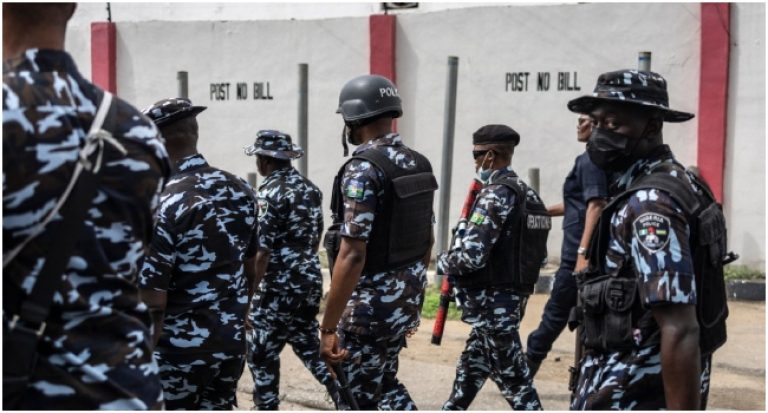
President Bola Tinubu denounced the incident and ordered security authorities to hunt for the perpetrators.
In a statement by his Special Adviser on Information and Strategy, Bayo Onanuga, the President condemned the deaths as an act of unjustified terror against innocent individuals.
Tinubu stated, “I have directed the Armed Forces, police and relevant intelligence agencies to intensify operations across the affected areas to swiftly track down the perpetrators, secure the release of abducted individuals and restore normalcy to the region.”
He assured Governor Uba Sani of Kaduna State and the state’s people of the support of the federal government.
The president also committed to bolster security infrastructure and eradicate criminal networks that threaten peace throughout the country.
Uba Sani, the governor, also condemned the fatalities, calling the act deplorable.
A statement by the Commissioner for Information, Ahmed Maiyaki, said the governor has asked security services to step up operations in the affected communities.
He also directed the Kaduna State Emergency Management Agency to offer prompt humanitarian aid to the affected citizens.
Sani, however, committed to collaborate further with the adjoining Plateau State, security agencies and traditional institutions for improved security along the Kaduna-Plateau border beyond emergency relief.
Reacting to the incident, the Kaduna State governorship candidate of the Peoples Democratic Party, Usman Shehu Bawa, better known as “Shehu ABG,” characterised the killings as “a horrifying act of barbarity,” saying the continuing slaughter across the state had become untenable.
He urged for a full investigation, arrest and prosecution of those guilty and immediate humanitarian assistance for survivors, injured victims and displaced families.
Atiku, Amnesty join in condemning
The killings were terrible and inexcusable, said former vice president, Atiku Abubakar.
He said no country could progress in a meaningful way when people were still being killed in their homes.
Atiku demanded a fundamental overhaul of Nigeria’s security architecture and called on all tiers of government to make the protection of lives a priority.
Amnesty International also criticised the incident, calling it as one of the bloodiest attacks on communities in Southern Kaduna in recent years.
The group stated it has collected evidence that whole families were killed in their homes.
It called on authorities to undertake a full investigation and bring those responsible to justice.
The Southern Kaduna Peoples’ Union, the umbrella body of the Southern Kaduna people, said the Naridon attack was another sign that existing security measures were not enough.
In an open letter to the Commissioner of Police, Kaduna State, the organization demanded intelligence-led policing, swift deployment of Mobile Police units, increased surveillance surrounding farming villages and quicker response to distress calls.
The union said responding after attacks was no longer enough and that communities needed preventive security measures.
Brains over brawn
Mohammed Ali, a security specialist, says intelligence collection is still one of Nigeria’s major vulnerabilities in handling instability.
Reliable, timely intelligence might enable security authorities to stop assaults before they happen, he said.
Criminal groups exploit information gaps, weak surveillance and poor cooperation among security agencies,” he said.
Ali said Kauru, Kajuru, Chikun and Kachia are places that need persistent intelligence-led operations.
He linked the constant attacks to financial incentives, such as ransom payments and cattle rustling, and said proceeds from the criminal activities enable armed groups to acquire more sophisticated weapons.
Besides the reconstruction of dwellings
Development experts say rehabilitation in places like Naridon needs to go beyond reconstructing wrecked homes.
“We talk about the need for psychological support for survivors, trauma counselling, educational support for children who have lost parents or siblings and long-term livelihood programmes.
Without such interventions, experts warn, the effects of violence can leave emotional scars that last for generations.
“Children who witness killings carry the trauma into adulthood.
A widow may find herself unexpectedly the only support of her family.
Parents who have to bury their children may take years to heal from the loss.
To survive it might be as painful as losing it.
Region wants permanent peace
The Naridon massacre took place barely two weeks after 19 Northern governors inaugurated the Northern Nigeria Security Trust Fund in Kaduna.
The governors pledged N1 billion monthly to enhance security cooperation in the region and increase responses to insecurity.
But the recent incident has cast doubt on whether such attempts would result in genuine protection for vulnerable areas.
For the people of Southern Kaduna, it is not about policy pronouncements and official comments. They want to see safety. They want roads that are easy to get to. They want emergency reaction in a timely manner.
Most of all, they want to sleep without being afraid.
Waiting for the justice
Another night came to Naridon and the survivors huddled around the smouldering ruins of their homes.
Some prayed in whispers.
Some glanced into the distance.
Later the fields would have to be ploughed again.
Markets would be back open.
Children would go back to school some day.
Life would continue.”
But it would never be the same again.
The names of the dead would be engraved into family histories.
The scorched compounds would be a terrible memory of a night when tranquillity had turned to tragedy.
And somewhere, in a medical ward, one youngster – the sole survivor of six siblings – fights the toughest battle of all.
What is done long after the graves are filled will determine whether Naridon is just another forgotten headline or a turning point in Nigeria’s approach to rural insecurity.
For now, another farm community grieves. Another generation bears new scars.
In Southern Kaduna worried inhabitants again ask themselves if the next knock at midnight will bring relief — or death.
About the Author