
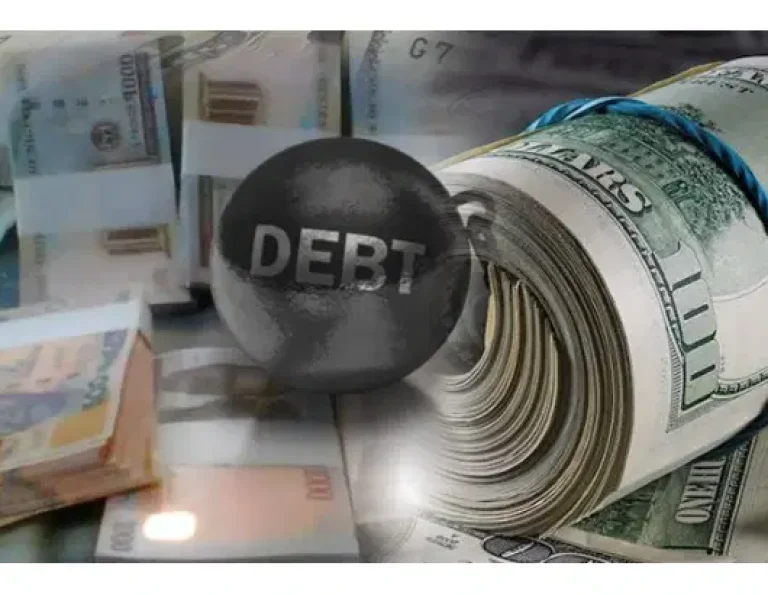
In the eight months to August 2026, the federal government borrowed N24.7 trillion from domestic investors, 90.5 per cent, year-on-year (YoY), higher than N12.98 trillion in the similar period of 2025 (8M’25).
Findings from the various public financial data of the government also indicated that credit to government expanded more than four times the growth rate of credit to the private sector during the same period, Vanguard writes.
The data are obtained from the current report of the Debt Management Office, DMO and Central Bank of Nigeria, CBN.
These changes are coming on the heels of a large increase in government revenue, according to various important agencies, including the Nigerian Revenue Service; the Nigerian Customs Service; the Nigerian National Petroleum Company Limited, among others. Public concerns were also on the enormous revenue influx, savings from the abolition of the petrol subsidy and massive naira cash conversions from the floating of the exchange rate.
Many public critics refer to extra-budgetary spending and other unexplained fiscal exposures as aggravating the cash-flow issues of the government that may have required significant borrowing in domestic and foreign windows. Meanwhile, recent CBN data on money and credit showed that credit to the government grew by 43 per cent YoY to N33.92 trillion in July 2026 from N23.69 trillion in July 2025. But private sector credit expanded by just 9.6 per cent YoY to N83.43 trillion in July 2026 from N76.13 trillion in July 2025.
In fact, government credit surged 4.5 times faster than private sector credit. Results revealed that the increase of FG’s borrowing was mostly spurred by the issuance of FGN Bonds; FGN Savings Bonds; and Nigerian Treasury, NTBs. Africans& Diaspora
Further analysis showed that borrowing via FGN bonds surged by 145 per cent YoY to N7.78 trillion in 8M’26 from N3.18 trillion in 8M’25. Similarly, borrowing through NTBs surged 78.6 per cent YoY to N16.92 trillion in 8M’26 from N9.47 trillion in 8M’25, while borrowing through FGN Savings Bonds grew 22 per cent YoY to N40.56 billion in 8M’26 from N33.18 billion in 8M’25.
Experts who spoke to our correspondent ascribed the dramatic rise in borrowing to the government’s increasing finance needs, amid a huge budget deficit, higher spending and rising debt-service commitments.
Yet the experts also worried that a growing federal demand for domestic borrowing may crowd enterprises and people out of available loans.
The higher borrowing might also mean higher spending on debt servicing and therefore leave less money for the government to spend on infrastructure, education and health, they said.
2026 budget highlights
The Nigerian government has proposed to spend N68.32 trillion in 2026 Budget with revenue of N36.87 trillion resulting in a fiscal deficit of N31.45 trillion, of which N29.20 trillion is expected to be funded through domestic and external borrowings while the remaining deficit would be funded through multilateral and bilateral project-tied loans and privatisation proceeds.
The N24.7 trillion borrowed in 8M’26 is 84.7 per cent of the N29.2 trillion domestic borrowing target, leaving around N4.5 trillion for the remaining four months.
If the current rate continues, the government would overshoot its annual target with an average monthly borrowing of roughly N3.08 trillion between January and August.
Why FG is taking more loans
MDU Capital Ltd Chief Executive Officer, Ayodeji Ebo said the borrowing surge was driven by “larger financing requirements from high debt-service costs, recurrent expenditure, infrastructure and security needs, and a fiscal deficit that is still large despite improved revenue.”
The government may also be leaning more on the domestic market to limit its exposure to foreign currencies, he said. However, Ebo warned that some of the NTB issuance was for refinancing or rollover of maturing liabilities and that it should not be taken to mean that it was all new borrowing. Some of the factors that led to the rise in borrowing are infrastructure investment and the need to fill the gap in fiscal deficits, said Ayodele Akinwunmi, Chief Economist, United Capital Plc.
Also the effect of the borrowing should be weighed from the point of view of the infrastructure being financed by the government, he said. We have witnessed tremendous progress in infrastructure development across the country, from hard infrastructure such as roads and railroads to soft infrastructure like education, healthcare and security.
“These developments have been positive in furthering the ease of doing business, providing a more enabling environment for economic activity,” Akinwunmi said.
He said the huge infrastructure financing gap in Nigeria meant that the government could not rely on annual budgetary allocations to address the deficit, adding that Nigeria’s infrastructure deficit was estimated at about $2.3 trillion by 2043 with an annual financing gap of about $100 billion. Africans & Diaspora |
“It is important to build a strong infrastructure base not just for economic competitiveness but also for job creation and inclusive growth,” he said.
Government credit growth
4.5x faster Reacting to the effect of the increased FG’s local borrowing on the economy, Ebo remarked “For investors, the increased supply of government securities creates attractive risk-free investment opportunities and higher yields.
But it can squeeze out the private sector, as banks and institutional investors would prefer government securities to lending to firms.
This boosts the cost of borrowing for companies and people, and might limit private investment, consumption and job development. “Higher debt-service obligations could also constrain the government’s ability to invest in infrastructure and crucial public services.” Also, Comecio Partners Co-Founder, Nnamdi Nwizu, said the high increase in domestic borrowings has had uneven results across the economy. “High yields on government bonds and treasury bills have been a boon for investors, especially pension funds, banks and money market funds and this also explains the steady FPIs flow into local markets,” he said.
But that comes at the expense of businesses, because banks can make safe, attractive returns by lending to the government, and have less motivation to lend to the private sector, which keeps borrowing prices high for firms.
For households, higher yields mean improved returns on savings products such as money market funds and FGN Savings Bonds but the downside is growing debt-service expenses for the government.
“The total money spent on interest payments alone was in excess of N3 trillion in Q1 alone, which is money that cannot be used for infrastructure, health or education, which ultimately impact on the ordinary Nigerians.” Africans & the Diaspora
Revenue rises but spending rises faster
The experts also expressed concerns about the fiscal implication of the Similarly, the Gross Registered Tonnage (GRT) of ocean-going boats climbed from 40.87 million tonnes to 49.95 million tonnes, registering a surge of 22.2 per cent. Service boat activities also rose under the Maritime Reforms. Nigeria’s ports post 12.3% spike in cargo throughput quarter.
The number of service boats completed climbed by 22.3 per cent to 4,347 from 3,554, while the accompanying Gross Registered Tonnage (GRT) jumped by 62.4 per cent to 1.73 million tonnes from 1.06 million tonnes. . Container traffic was up 11.3 per cent to 602,392 TEUs in Q2 2026 from 541,229 TEUs in Q2 2025.
The report said the number of inward laden containers climbed by 6.3 per cent to account for about 51.5 per cent of the total container traffic. Outwards laden containers showed a slight decrease of 3.9 per cent. Empty container traffic, however, climbed by 13.9 per cent in comparison with the similar period of 2025. Transshipment container traffic was 29,038 TEUs, against no observed movement during …Vessel traffic is up by 14.4%, while borrowing is up despite stronger government revenues and the Federal Government’s N5.4 trillion share of savings from fuel subsidy reduction.
The imbalance had widened as government spending outpaced the additional cash from subsidy savings and higher oil prices, Nwizu said.
“Instead of using the additional revenue to borrow less, the FG has increased the total budget and continued to rely heavily on domestic debt to finance it,” he said. “Higher spending in 2026 is offsetting some of the fiscal gains from the 2023-2024 reforms,” he noted. Tunde Abidoye, Head, Equity Research, Quest Merchant Bank, also observed that the steep climb in domestic borrowing, even with better income and fiscal savings from subsidy reduction, indicated that expenditure growth had still been higher than revenue generation.
Between June 2023 and December 2025, government spent N30.6 trillion while realised income stood at N20.4 trillion, leaving a funding imbalance of N10.2 trillion, he said.
But Abidoye said the government’s budgetary condition has improved due to greater income mobilisation, bolstered by high crude oil prices and ongoing tax reforms.
Debt service affects capital projects
One of the greatest factors behind the increase in borrowing was the magnitude of the 2026 Budget, said Center for the Promotion of Private Enterprise’s (CPPE) Chief Executive Officer Muda Yusuf.
“When you look at the size of this year’s budget compared to last year, there’s been a significant increase. “This year’s budget is above N60 trillion,” Yusuf stated. He said exchange rate swings had greatly increased the cost of capital projects while the naira value of external debt and the cost of repaying domestic debt had also grown.
Yusuf cautioned that any additional borrowing would increase the cost of servicing the debt and limit the government’s ability to finance other parts of the economy. The more government borrows the higher the expense of debt servicing.
As debt servicing rises, it crowd’s out government spending on other areas. He remarked, “Debt servicing takes precedence; before the government can embark on other expenditures, it has to service its debt.” Yusuf highlighted that the growing debt burden was affecting on funding issues for capital projects and some areas of budget implementation.
Nwizu, for his part, said government interest payments on domestic debts hit nearly N3 trillion in the first quarter alone, adding such cash might have been committed to infrastructure, healthcare and education.
FG can borrow up to N34 trillion
At the same time, the experts forecast that federal domestic borrowing would increase even more before the end of 2026. “Target aligned borrowing for the full year should be about N29 trillion,” Ebo remarked.
But he said anticipated income shortfalls and refinancing requirements might increase gross domestic issuance between N30 trillion and N33 trillion. Nwizu predicted borrowing at home to be close to N30 trillion but warned it might grow to between N32 trillion and N34 trillion if government spending continues to outpace revenue targets.
“The base case is for borrowing to stop around N30 trillion but the risk is still leaning toward a higher number, if government spending continues to outstrip revenue expectations,” he said. The borrowing target has already been raised upwards from the initial N17.9 trillion to around N29.2 trillion.
Revenue reforms, alternatives to PPPs
On other avenues to finance additional government expenditure, Yusuf said: “If government is able to generate more revenue, the need to borrow will be reduced. Revenue reform is highly crucial.
Public-private collaborations also matter a lot. The government does not need to concern itself with financing initiatives that the private sector can undertake. So public-private partnerships are one alternative approach of tackling the issue.
“The third option is to make sure that government assets are properly commercialised and they generate adequate returns. Improving returns from government assets is also of great importance. “Revenue production needs to be better and government assets need to be generating greater returns,” he said.
About the Author