
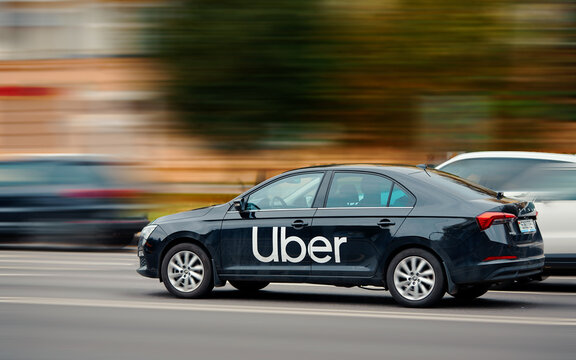
Uber’s departure from the ride-hailing market in Nigeria has caused concern among drivers, passengers and industry players that the move could stifle competition, raise transportation costs and further reduce earning opportunities for app-based transporters.
Uber said on Wednesday it was pulling out of ride-hailing operations in Nigeria, ending more than a decade of operations in the country, Daily Trust reports.
The Amalgamated Union of App-Based Transporters of Nigeria (AUATON) has denounced the situation, saying the corporation abandoned Nigerian drivers without proper notice.
AUATON’s National Spokesperson Jossy Adaraniwon slammed the decision as “unprofessional and irresponsible”, claiming Uber didn’t take proper consideration of the thousands of drivers who built its Nigerian business.
He said Uber’s pullout was tied in part to what he called an exploitative business model that did not safeguard workers’ rights or promote collective bargaining.
Later, Bolt and InDrive followed suit, creating what he described as a “race to the bottom” in Nigeria’s ride-hailing market, he said.
Adaraniwon added that the scenario has led to lengthier wait times for passengers, reduced profits and a drop in active drivers on account of terrible working conditions.
He called on Bolt and InDrive to build real collective negotiating procedures with AUATON, warning: “If you keep on working without establishing a real atmosphere for collective bargaining with AUATON, you will be doomed to the same fate.”
He sought fair wages, welfare packages, transparency, safety measures and appropriate working conditions for drivers as per the International Labour Organization norms.
The union also accused Uber of an anti-union role in Nigeria, including appealing the Federal Ministry of Labour over AUATON’s registration.
Adaraniwon also accused Uber of sponsoring some members in the union to cause internal problems and stall negotiations with drivers.
The reaction of Uber drivers and customers in Abuja to the company’s exit was varied.
Uber driver Friday Ayegba, who said he had been driving using the platform for nearly three years, said the company has become a key source of revenue for his family.
“Uber is a very important part of my family because what I make from Uber is what I use to support my family,” he stated.
“I will also miss Uber’s driver bonuses, promotions and navigation system which I think is very accurate and reliable,” added Ayegba.
Normally Uber gives us driver coupons that helps us to adjust our fuel expenditure but now that they are going it is going to effect us much,” he said.
Another passenger, Mercy Marcus, echoed the dissatisfaction, saying Uber was one of the cheaper ride-hailing options.
Uber is one of the cheapest ways to get about. “Uber is less expensive than Bolt, InDrive,” she remarked.
But another consumer, Kasim Abdullah, suggested the leaving might not leave a lasting gap, with the presence of Bolt, InDrive and other new platforms.
“There’s Bolt. “There is InDrive, and there are other ones that are coming up now,” he said.
Another driver, Emmanuel Ogbor, said Uber’s exit would not affect him much as he was using the platform mostly for side hustle. He also expressed complaints about the company’s commission with high fuel expenses.
“With the cost of fuel in Nigeria, we are buying fuel for N1,360 now and they are taking 30 per cent off every ride,” he claimed.
He stated he would instead focus on local platforms, like InDrive, which he said had a lower commission.
But beyond the immediate worries of drivers and riders, the pullout has prompted larger questions about competition in Nigeria’s ride-hailing business.
Uber had been instrumental in creating the app-based transportation industry, offering riders with a choice and giving drivers a second income.
Uber also commissioned a Public First study which revealed that Uber contributed around N34 billion to Nigeria’s economy in 2023 and helped drivers earn an extra N6.1 billion a year through the platform.
Uber has not specified the number of Nigerian affected drivers, staff and riders that the exit will impact.
Ex-spokesperson mourns departure: ‘I’m heartbroken’
Francesca Uriri, a former communications officer at Uber, has lamented the ride-hailing company’s decision to quit Nigeria. She said the development was a devastating loss after years of creating relationships, campaigns and initiatives around mobility and economic empowerment.
Uriri, who goes by the Instagram account @zanyfran, described her reaction in an emotional post after Uber announced it was stopping its ride-hailing operations in Nigeria.
Uriri, who formerly worked as Head of Communications for Uber West Africa, said she was heartbroken over the company’s exit and that her experience with the platform extended well beyond just having a job.
On her public profiles, Uriri describes herself as a communications expert with past experience at Uber and as the founder of Leading Ladies Africa.
I’m heartbroken in a way I can’t really put into words. And honestly, I feel a little stupid too. Because it’s only a job, right? But it isn’t,” she said.
The news that Uber was quitting Nigeria, she said, “hit me like a gut punch,” because the company’s existence in the country was interwoven with the lives and stories of many individuals.
“Because it wasn’t just a job. It was about actual individuals. Actual stories. “Real impact,” she remarked.
Uriri recalled a few people whose experiences, she said, were part of her experience at Uber.
She spoke of Madam Blessing, the company’s first female driver-partner who also had a flourishing fashion business.
She also pointed to Tobi, a National Youth Service Corps member who won a new car, as an example of some of the personal prospects and economic benefits she linked with the platform.
Beyond specific recipients, Uriri gave respect to the team she worked with, calling them “easily the most talented, driven and passionate people” she had ever worked with.
CFAO Nigeria Deputy MD: Exit from Nigeria will limit possibilities
The announcement was a shock, especially given the status of Uber as one of the pioneer app-based ride-hailing services in Nigeria, said Kunle Jaiyesinmi, Deputy Managing Director, CFAO Nigeria.
The arrival of Uber into the Nigerian market helped create a new model of urban mobility that encouraged other operators to enter the industry, Jaiyesinmi said.
He pointed out that the options accessible to commuters have since been broadened by competitors such as Bolt, LagRide and other local mobility platforms.
However, he said he was disappointed that Uber would be leaving Nigeria at a time when the country’s population is growing substantially and demand for easy transportation is on the rise.
Jaiyesinmi said some of the issues ride-hailing operators faced were due to the larger economic environment, namely the deregulation of petroleum products and the removal of gasoline subsidies.
He said the ride-hailing company has seen increasing pressure from increased operating costs and consumers have not seen a comparable gain in their purchasing power.
“Reinventing business models is always good,” he added, pointing to developments in the larger economy as having a big impact on the profitability of ride-hailing services.
Jaiyesinmi stated that one of the immediate effects of Uber’s pullout would be a reduction in the options available to commuters. He specifically cited the requirements Uber has for the cars used on the site.
Uber has traditionally put a lot of attention on car certification and quality, which helped the user experience around its service, he said. “Its departure could leave customers with fewer opportunities to choose vehicles that meet similarly high standards,” he noted.
The news might also have economic ramifications for drivers who depend on Uber for their livelihoods, he said. Drivers previously recruited on the platform would have to find other ways to put their vehicles to work and earn a living, he said.
Uber rival says Bolt committed to Nigerian market
Meanwhile, Bolt has reiterated its long term commitment to Nigeria, assuring passengers, drivers and other stakeholders that the company is still committed on the Nigerian market and its continued growth.
“ Nigeria remains a key market and we will continue to focus on providing reliable mobility solutions to riders, creating earning opportunities for drivers and working with interested parties to support the development of the country’s mobility ecosystem.”
“Nigeria is still an important market for Bolt and we remain fully committed to the country. Teddy Appa-Dankyi, Senior General Manager, Bolt West Africa, stated, “Over the years we’ve built a strong community of riders and driver partners and our focus is on continuing to serve them while strengthening our operations and creating more opportunities across the market.
He said: “We are aware there is some understandable uncertainty following recent developments in the industry. But we’re very much focused on the long term. “We will continue to work closely with our drivers, riders, regulators and other partners to contribute to a reliable, accessible and sustainable mobility ecosystem in Nigeria.
Uber launches robotaxi in London
Meanwhile, the corporation is extending its services elsewhere, less than 24 hours after it terminated operating in Nigeria.
In a major step in the firm’s growth of robotaxi services, Uber has shown autonomous trips in London, alongside British Artificial Intelligence company Wayve.
Reuters reported yesterday that London is now the second city in Europe where Uber offers autonomous trips, after it first started its robotaxi service in Zagreb.
Wayve-powered Ford Mustang Mach-E vehicles will be fewer than 20 in the first stage.
Passengers selecting UberX, Uber Comfort or Uber Electric could be matched with one of the autonomous vehicles for free.
First, there will be a licensed operator in the car to oversee the trip. In the future, fully driverless operations will require regulatory approval.
The introduction will help improve public and government confidence in the technology, said Sarfraz Maredia, Uber’s Global Head of Autonomous Mobility.
“This will increase credibility with both consumers and government,” Maredia added.
ADC demands Uber’s exit, vote of no confidence on Tinubu’s policies
On its part, the African Democratic Congress (ADC) has termed the removal of Uber from Nigeria and the scaling down of activities by other international companies, as evidence that President Bola Ahmed Tinubu’s economic policies are “turning Nigeria into a graveyard of businesses.”
Mallam Bolaji Abdullahi, the National Publicity Secretary of the ADC, stated yesterday that the increasing number of businesses “shutting down, scaling back or leaving the country” shows the growing disparity between the government’s claims of economic progress and the actual situation. He also noted that this development is a vote of no confidence in President Tinubu’s economic policies.
The party said it is worried that President Tinubu and his government were celebrating a minuscule 0.2 percentage-point rise in GDP at a time when businesses are closing, jobs are evaporating and millions of Nigerians are plunging further into poverty.
“Certainly, a 0.2% growth does not justify the extreme hardship Nigerians are suffering,” the party said, adding that while the “Tinubu government celebrates a marginal improvement of 0.2 percentage points, Nigeria’s poverty rate has snowballed to 63%, affecting an estimated 140 million Nigerians.”
The party has tasked President Tinubu to explain the 0.2% GDP growth to the 140 million Nigerians who have been plunged into poverty since he assumed leadership; “the workers who have seen the value of their salaries evaporated; businesses that have been grappling with energy costs; and millions who have been compelled to reduce the quantity and quality of food on their tables.
“When the president and his party say things are getting better, we expect them to tell us what has improved in the lives of the Nigerians. They should inform us how much food has been put on the tables by their “GDP growth”. They should inform us which bill it has paid.” “If 0.2% is their success index, let President Tinubu and APC tell us what they consider failure,” ADC remarked.
Abdullahi said the exit of Uber after twelve years in Nigeria is a reflection of the increasingly hostile operating environment facing businesses particularly the soaring cost of energy and transport with the price of fuel rising by as much as 1,700% following the removal of fuel subsidy and devaluation of the naira.
“This is precisely why the ADC Presidential Candidate, Atiku Abubakar, has advocated for the reintroduction of a targeted fuel subsidy to bring down the cost of fuel, transportation and production,” the party said.
It also referenced the earlier study by the Manufacturers Association of Nigeria that 767 manufacturing enterprises, including 20 prominent global brands, have shut down or halted operations in Nigeria, with hundreds more distressed since President Tinubu began office in 2024.
“It highlighted companies like Microsoft, Jumia and Bolt Food, Pick n Pay, Shoprite, GlaxoSmithKline (GSK), Sanofi-Aventis, Bayer AG, Procter & Gamble, Unilever and PZ Cussons among others that have shut down or scaled down operations in the country.”
Hence, the ADC added when the President said that Nigeria has turned the corner, we wonder whose corner he is talking about. If the economy is really improving or there is even the faintest hope in the minds of individuals who operate these firms that this APC government can improve the economy, why are they closing shop and heading elsewhere?”
ADC cited the example of GlaxoSmithKline (GSK), which it said shut down its manufacturing in Nigeria after 50 years.
About the Author