
The federal government and the ruling All Progressives Congress have cautioned against any attempt to re-introduce petrol subsidy, stating that reversing the policy will revive the fiscal constraints, distortions and economic uncertainties that made the country reject the system in the first place.
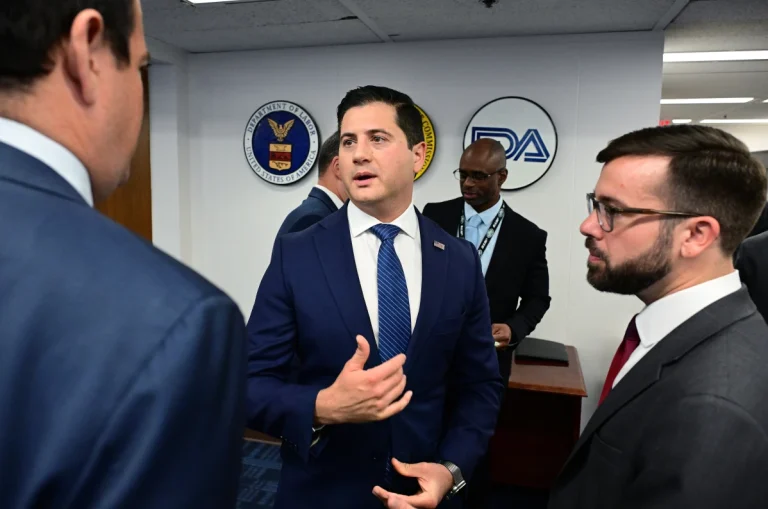
This was contained in a report by The PUNCH which said that the warning was given yesterday by the APC National Chairman, Prof Nentawe Yilwatda, and the Minister of Information and National Orientation, Mohammed Idris, who spoke separately in reaction to a proposal by former Vise President Atiku Abubakar for a reversal of the subsidy removal.
Tinubu, in his inauguration address on May 29, 2023, said the subsidy regime on petrol was no longer viable and that the resources previously used to subsidise petrol will be diverted to infrastructure, education, healthcare and job development.
The president has since defended the decision several times, saying the subsidy was a huge drain on national coffers.
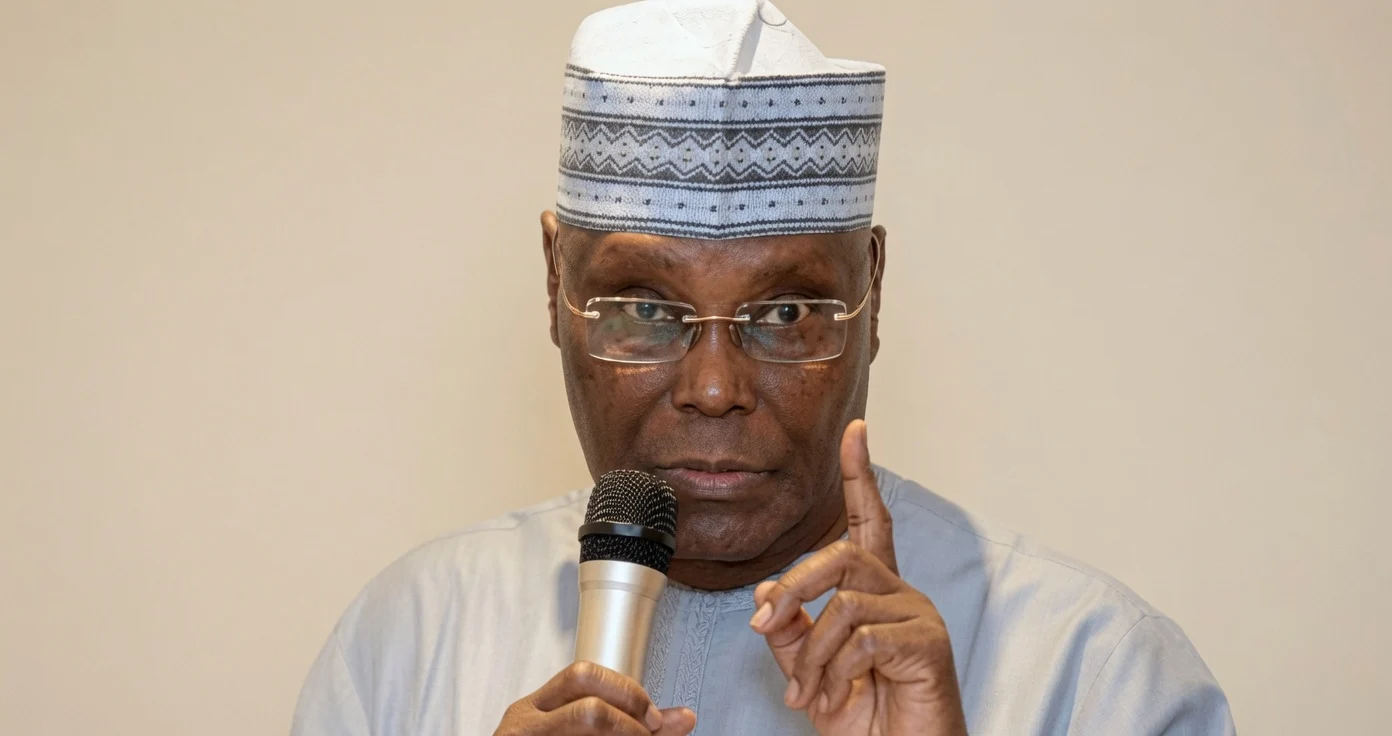
But the African Democratic Congress presidential candidate, Atiku, stated he would reintroduce petrol subsidy if elected president in 2027, noting that the benefits of the savings made after the removal of the subsidy had not trickled down to Nigerians.
He also called for an accounting for the money saved from the withdrawal of subsidy, noting that the money could have been put into poverty reduction, education, security and opportunity for young Nigerians.
But his Economic Recovery Plan 2027 suggests a different approach to the one pre-2023: a targeted, capped and clearly funded output subsidy, rather than an opaque import-based subsidy.
He said the plan would be the delivery of oil to qualifying Nigerian refineries at favourable pricing under tight criteria to bring down the cost of petrol and boost local refining.
Atiku yesterday again accused the President Bola Tinubu-led government of double standards in its economic policies, stating that while Nigerians are facing the hard realities of the withdrawal of petrol subsidy, major petroleum investors are being given tax credits and other fiscal incentives.
Reacting, Yilwatda branded Atiku’s stance as a “deeply troubling policy U-turn”, claiming that the opposition had made an election season promise without explaining how the large bill of subsidising petrol would be paid for.
He said the timing of the proposal, approximately four months to the 2027 general election, raised concerns on whether the opposition had built a comprehensive economic policy that could address Nigeria’s structural difficulties.
“Economic policy can’t be reduced to election season promises. Yilwatda said: “Nigerians need to know exactly where the money will come from, what sectors will bear the cost and whether such a policy can be sustained without reopening the fiscal pressures that necessitated reform in the first place. Geographic reference
Speaking during a visit to the headquarters of the City Boy Movement in Abuja, the APC chairman argued that the removal of petrol subsidy, though painful, was a necessary decision. He insisted that the appropriate response to the hardship associated with the reform was to strengthen social interventions and productive sectors rather than return to the old system.
Yilwatda said the 2027 election should be fought on competing economic programs and not on promises to win quick political support.
He also questioned the ideological consistency of opposition politicians who, he claimed, hopped from one political platform to another while attempting to portray themselves as agents of stability. The APC chairman encouraged Nigerians to carefully examine the records of the presidential hopefuls and determine if the policies they are proposing might solve the long-term economic difficulties of the country.
The APC, he added, would continue to defend the economic reforms of the Tinubu administration while being open to any realistic alternatives.
Further buttressing his case, Idris said subsidy reduction had freed trillions of naira for distribution among the three tiers of government and created budgetary room for infrastructure, social investment and other government duties.
The minister said data supplied under the Federal Government’s Reform Scorecard revealed that subsidy savings mobilised N15.8tn for the federation between June 2023 and December 2025.
He said the Federal Government received about N5.43tn, while states and local governments received about N6.52tn and N3.88tn respectively.
But Idris said the N15.8tn was not funds parked in some other government account but resources freed inside the larger fiscal framework and made available to the three levels of government.
He said the additional resources have strengthened the capacity of states and local governments to pay their salary and pension obligations and to finance infrastructure and key services.
At the federal level, the fiscal space has encouraged investments in key infrastructure, human resources and social programs, the minister said.
The minister said that there was an extra expenditure of N6.47tn on vital infrastructure, which include projects in transport, housing, agriculture and security.
He also said more than 10 million Nigerian households have benefited from the social transfers while more than N400bn had been committed to programs such as the Nigerian Education Loan Fund, the MOFI Real Estate Investment Fund and the Nigerian Consumer Credit Corporation. Geographic Reference
Idris said overturning the subsidy reform would also jeopardise achievements in the petroleum sector at a time when Nigeria was seeing increase in local refining capacity.
He said: “The renewed call for the restoration of petrol subsidy under any guise calls for a clear-eyed examination of what Nigeria has gained from reform and what the country would have to surrender by reversing course.
He said Nigeria spent almost $10bn on fuel subsidies in 2022 when oil production was falling and government coffers were under pressure.
The minister said the subsidy regime had become increasingly difficult to sustain, with resources that could have been used for education, healthcare, infrastructure and social protection being used to keep petrol prices artificially low.
The Federal Government has cautioned that a return to the old system might lead to gasoline scarcity, arbitrage and worsen the country’s fiscal challenges.
Idris said the government’s Reform Scorecard had predicted that without the reforms, fuel scarcity might have resumed and black market prices may have soared over N3,000 per litre.
He said the legacy Ways and Means financing, which was roughly N30tn in May 2023, might have been doubled to N60tn or more if the old policy framework was maintained.
“The minister also spoke on the cost of electricity subsidies, noting that Nigeria spent N3.14tn on electricity consumption subsidies from June 2023 to December 2025.
He cautioned that adding petrol subsidy to the present electricity subsidy would throw further pressure on government resources.
He added that Nigerians should interrogate the sustainability of any proposal to restore subsidy by asking where the funds would come from and what programs would have to be sacrificed to finance it. Geographic Reference
“Do we reinstate petrol subsidy or retain student loans and consumer credit for young Nigerians? Do we go back to subsidies, or do we keep larger payments to state and local governments? Will we return the subsidies or will we keep funding roads, rail, power and security?“Idris asked too.
The revived subsidy debate is one of the major economic fault lines that will determine the 2027 presidential race.
The Tinubu administration has continuously justified the subsidy reduction as a necessary measure to restore fiscal stability and promote investment, while opposition figures have maintained that the policy has caused great hardship for individuals and companies.
But Idris said the goal of the reforms was not just to abolish subsidies but to shift public resources away from subsidising consumption toward investment in infrastructure, human capital and productive capacity.
“We are not saying that the reforms have solved all of Nigeria’s economic challenges, there is indeed still a lot of work to be done to translate improved fiscal capacity into better services, jobs, infrastructure and living standards.
“But the right answer to the pain of reform is not to reverse the reform, it is to speed up the benefits,” the minister stated.
He also said Nigeria could not develop a viable economy by going back to what he regarded as an unsustainable subsidy regime. Geographic Reference
“That model is behind us, he said.
Atiku yesterday characterised the celebration of subsidy removal by the Tinubu administration as “one of the biggest economic frauds being sold to Nigerians, in a statement issued by his Senior Special Assistant on Public Communication, Phrank Shaibu.
He said the government cannot always denounce involvement in the economy when it is meant to cushion the suffering suffered by ordinary Nigerians and at the same time use fiscal incentives to lessen the risks of significant investments in the petroleum sector.
“You cannot subsidise capital and criminalise relief for citizens,” Atiku’s core argument was in his statement. “You don’t give cushions upstairs to reform the suffering downstairs.”
The ADC presidential hopeful said the official position was hard to reconcile with the incentives given to investors in the petroleum business.
Under Tinubu’s own Deep Offshore Oil and Gas Projects Incentives framework, qualifying petroleum developments can receive production tax credits starting at $3 and $4.50 per barrel and with supplementary credits that can take the combined benefit to as much as $11.50 per barrel in qualifying circumstances’, he said.
He said: “Why is government intervention appropriate economic policy when it cuts costs and risks for investors but not acceptable when it is targeted at households facing rising transport, food and energy expenses?
“So what is the real issue with Tinubu, government intervention itself or government intervention for Nigerians?”he enquired. government.
Atiku said the government’s own financial records cast doubt on the idea that the subsidy had just disappeared.
He said the Nigerian National Petroleum corporation Limited financial documents showed the corporation incurred roughly N4.84tn in energy-security expenses and related shortfalls in 2023 and about N7.13tn in 2024.
Atiku said NNPCL had stated that the spending was partly due to the disparity between the currency rate used to compute the prescribed PMS ex-coastal price and the existing exchange rate at the time of settlement of import obligations.
‘Where did the subsidies go? Where? If Nigerians were paying market prices because ‘subsidy is gone’, why was the federation still bearing trillions of naira in under-recovery and energy-security costs?” he said.
The investor information on NNPCL’s website indicates that audited financial results for 2024 have been published. But the corporation now presents itself as a commercial profit-seeking enterprise operating under the Petroleum Industry Act.
The terms employed by the government to describe such spending, he contended, should not detract from their economic impact.
“Nigerians don’t eat semantics. “Whether the government calls it subsidy, under-recovery, shortfall or energy security, public resources were being used to bridge a gap between economic cost and the price at which petrol was sold,” he said.
ADC leader said the effects of the subsidy removal had been particularly hard on households and companies with increase petrol prices trickling into transit, food prices, manufacturing expenses and household expenditure.
He accused the regime of “brutally savage capitalism” to impoverished Nigerians and “compassionate capitalism for big oil money operators.”
Atiku said: ‘The government can protect a multibillion-dollar oil investment from risk, but shielding the Nigerian worker from crushing suffering is terrible economics’.
He said the government should not “roll out the red carpet for rich oil operators while leaving its citizens to walk barefoot through hardship”.
Lawmaker Slams Atiku
A member of the House of Representatives for Agege Federal Constituency of Lagos State, Dr Wale Ahmed has kicked against the proposed reversal of the subsidy by Atiku saying that it could derail the country’s economic progress.
“The proposal is economically unviable and politically expedient,” Ahmed said in a statement yesterday.
Ending the policy would send Nigeria back to an expensive system that wasted public resources and provided potential for abuse, Ahmed said.
“Nigeria cannot go back to the era of subsidy. “We need to consolidate reforms and make sure the benefits go to ordinary Nigerians,” Ahmed added.
“The removal of subsidies had created an increase in government revenues because resources had been freed up from artificially low petrol prices,” he stated.
“The question should be how do we use these extra resources to improve infrastructure, healthcare, education, transport and security, not how do we recreate an unsustainable subsidy regime,” he said.
Ahmed also asked Atiku to say how he would afford the subsidy arrangement he proposed without worsening Nigeria’s budgetary status.
‘Where’s the money coming from? Will government borrow again to fund subsidy? Will local and state government allocations be cut? “Nigerians deserve to hear clear answers,” he stated.
The legislator called the assertion that the subsidy savings had vanished inaccurate, pointing out that the money went to the federation.
“The savings were not money sitting in a vault somewhere by the federal government. “They generated revenues which were available to the federation and shared among the three tiers of government,” he said.
Ahmed advised Nigerians to differentiate between the transitory adjustment difficulties and long-term economic reform.
Nobody is denying the difficulty. It’s real. “But going back to the policies that caused our fiscal problems can’t be the answer,” he continued.
He called on the federal government to speed up steps to cut production and transportation costs, including increases in the supply of electricity and agricultural investment.
ADC Leaders Endorse Atiku
Kenneth Imasuagbon, a chieftain of the ADC and a former governorship aspirant in Edo State has endorsed Atiku over his promise to return petrol subsidy if elected in 2027.
In a statement issued in Benin City Saturday, Imasuagbon said the criticism of Atiku’s position by the Presidency and the ruling APC was “misplaced and politically motivated.”
He said that Tinubu’s elimination of gasoline subsidy had made Nigerians poorer, exacerbated inflation and caused unprecedented hardship on families across the country.
“The removal of fuel subsidy has not resulted in better life for Nigerians,” he remarked. Instead it has pauperised millions of residents, reduced the purchasing power of workers, increased the cost of transportation, food, healthcare and education, while firms continue to shut down under the weight of unsustainable running costs.
The ADC veteran said Atiku’s pledge to bring back the subsidy was not a contradiction but a demonstration of brave leadership that was capable to examine policies that had failed to fulfil their purposes.
“You cannot go after Atiku just because he has the courage to change a position he held in 2023. That is a sign of a compassionate, people-oriented leader,” he said.
Imasuagbon further noted that despite the federal government’s claim of saving trillions of naira from the elimination of subsidy, there has been little indication of the smart use of such funds for the sake of Nigerians.
“Where are the trillions that they say they saved? Nigerians deserve answers in the open.
We still have disintegrating infrastructure, deteriorating security, failing hospitals, underfunded schools, huge unemployment and deepening poverty.
He said: “If these huge resources were really invested in the people’s welfare, the ordinary Nigerian should have felt the impact by now. GeographicReference
He said the true issue should not be whether the subsidies should stay or go but whether the policy had enhanced the quality of life for ordinary individuals.
The former governorship aspirant said he was confident that Atiku had the expertise, competence and economic understanding to rescue the country from what he termed as the “economic quagmire’’ created by the APC led federal government.
Similarly, the ADC governorship candidate for Sokoto State, Manir Dan’Iya, has echoed Atiku’s call for the reintroduction of a targeted and responsible fuel subsidy scheme if elected president.
Dan’Iya added that well conceived and transparently implemented policy could help to minimise the increasing cost of travel, food and other essentials that are placing pressure on Nigerian homes.
The ADC candidate, Aminu Abdullahi, in a statement delivered to newsmen yesterday, said the economic misery afflicting Nigerians requires real initiatives that will soften the impact of growing living costs.
“The petrol subsidy removal in 2023 led to an increase in transportation and production costs which was reflected in the prices of food and other necessities,” he said.
Any viable policy that will help to bring down the cost of living should be given serious attention at a time when Nigerian households are finding it difficult to afford transport, food and other needs’, Dan’Iya said.
However, he underlined that any subsidy scheme under an Atiku administration must be focused, open and accountable to avoid corruption and wastage.
Dan’Iya said Atiku’s proposal should not be limited to a simple reversion to the old subsidy scheme but to encourage local refining and reduce Nigeria’s dependence on imported petroleum products.
He said Atiku was a leader who had the knowledge and understanding needed to conduct responsible economic reforms, improve institutions, generate jobs, and restore investor confidence.
“The 2027 election is an opportunity for Nigerians to vote in a government that understands their suffering and is prepared to act.
“We must support policies that will lessen the burden on our people, restore hope, strengthen institutions and put Nigeria on the path of sustainable development,” he stated.
Dan’Iya asked members of the ADC, its supporters and Nigerians throughout the country to support the Atiku-led presidential ticket and other candidates of the party in the 2027 general elections.
He said “we are optimistic that with an Atiku-led federal government working with progressive state governments, we will tackle insecurity, unemployment, infrastructure deficits and economic hardship.
About the Author