

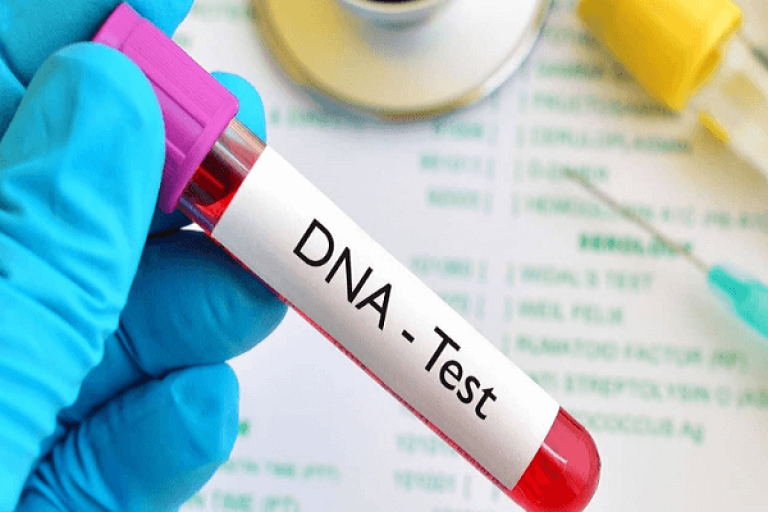
Smart DNA Nigeria’s fresh study has showed that 23.6 per cent of reported paternity tests for 2025/2026 outcomes were negative, implying that the males tested were not biological fathers. Background
Boys made up 56.1 per cent of poor firstborn outcomes.
The Nation states the percentage is impressive at around one in four but down significantly from the 24 percent in the previous time.
The pattern throughout the three reporting periods shows a progressive reduction from 26.1 per cent in 2023 to 24 per cent in 2024/2025 and 23.6 per cent in 2025/2026.
The figures are still important. But the narrative is more than DNA; it is about trust, doubt and the human need for assurance.
Elizabeth Digia, Operations Manager at Smart DNA, nailed the dimension when she said: “Most of the men and women who come to us are not coming because anyone told them to. They come because they cannot live with the question mark. It is a genuinely human event and it should be presented with dignity – not sensationalism.”
The lab’s results indicate paternity testing has become a more and more significant tool for answering problems that many families can’t or won’t resolve through discussions.
The numbers also give some idea of who is doing the asking. Men accounted for 78.6 per cent of recorded first interactions, while women accounted for 15.2 per cent.
The highest age class was men aged 41 or older accounting for 48 per cent of male records with age data. 59.5 per cent of the tested persons were five years old or less.
That raises unsettling issues about the nature of distrust in Nigerian families. Why are males demanding more and more scientific proof of biological paternity? How many of them live with doubts and doubts before they finally take the test?
’ And what becomes of a marriage when a lab report proves the fears of one partner — or reveals what the other partner believed would remain hidden?
‘“For men who get a negative result, the discovery can be an emotional earthquake. A man can find himself suddenly reconsidering years of marriage, fatherhood, financial sacrifice and emotional devotion.
“The biological truth can come after years of school fees, medical costs, birthdays, sleepless nites and the everyday closeness of bringing up a child.
‘’But of course the child didn’t ask for any of this. Experts have warned fathers who discover that they are not biologically related to a kid should not seek revenge by abandoning, humiliating or emotionally distancing from the child.
Find out more
Governor,
newspaper Campaigns & Elections ‘’The aftermath can be particularly hard for youngsters, who can suddenly find themselves caught between adults struggling with betrayal, rage, embarrassment and sadness.
Another remarkable finding concerns birth order.
The poor firstborn outcomes were represented by 56.1 per cent of males compared to around 64.4 per cent in the previous quarter, Smart DNA’s findings said.
The finding is of special significance in a society where the first male child is generally burdened with family name, lineage, inheritance and continuity. Uncertainty over paternity can thus be much more than a private argument between a man and a woman in such situations.
It can call into question identification and belonging, complicate claims of inheritance and sometimes flow into court conflicts about who really belongs to a family.
There’s a second part to the altering DNA landscape: migration.
In the latest study, DNA testing connected to immigration dropped to 9.7 per cent from 13.1 per cent. Tests for peace of mind jumped to 87 percent of all cases from 83.7 percent.
In these situations, DNA is predominantly employed as a private means for personal assurance than as a legal or migration instrument.
But the most significant element about the latest data is also the one which must not be forgotten in the frenzy that surrounds them.
23.6 per cent is not to say one in four Nigerian men is parenting another man’s child unwittingly. Such a finding would be scientifically and statistically unjustified.
The data came from Smart DNA’s clients, people who have already had reasons to seek testing, not a representative random sampling of Nigerian households. The lab itself has warned against generalising its conclusions to the general population.
The 23.6 per cent is not a countrywide prevalence number but a testing-centre negative-outcome rate. It makes a big difference.” People who have no cause to suspect paternity are unlikely to stroll into a DNA test looking for confirmation.
The population of those requesting paternity testing is thus already different from the population of all fathers.
You cannot generalise the findings from one clinic to represent the entire population of Nigeria because the clientele of the clinic is determined by its location and the characteristics of the people that seek its services’, Femi Adebola, a professor of sample survey statistics at the Federal University of Technology, Akure, told AFP Fact Check.
About the Author