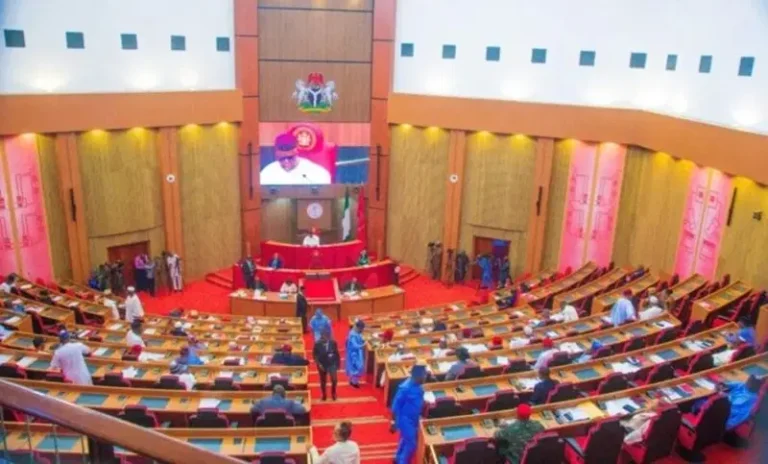


The Senate has passed a bill proposing to make it mandatory for public and private hospitals across Nigeria to render emergency medical treatment, prescribing up to six months’ imprisonment for facilities and persons that contravene its provisions, for second reading. Buy Maps
The new legislation also imposes a fine of ₦300,000, six months imprisonment or both for any person found guilty of withholding emergency medical treatment, Vanguard reports.
The bill, sponsored by Senator Abdulaziz Musa Yar’Adua (APC, Katsina Central), proposes to alter the National Health Act, 2014, to provide for compulsory emergency medical treatment standards and referral processes in health facilities.
It was titled, “A Bill for an Act to Amend the National Health Act, 2014 to Provide for Emergency Medical Treatment Standards and Referral Protocols in Healthcare Facilities; and for Related Matters, 2026” (SB. 759). The Bill was committed to the Senate Committee on Health (Secondary and Tertiary) for further legislative action, with a mandate to report back in four weeks.
The amendment would prohibit any health care professional, health care worker or medical facility from denying emergency medical treatment to anyone for any reason.
It also mandates health care personnel to quickly initiate life-saving treatments, including cardiopulmonary resuscitation, airway management and control of bleeding upon identification of a life-threatening condition.
The bill requires that hospitals begin triage and initial evaluations within 15 minutes of a patient’s arrival, and basic stabilisation measures such as giving oxygen, intravenous fluids, pain treatment and initial diagnostic investigations within 30 minutes.
• Patients requiring admission will be provided with a hospital bed within 2 hours, where available.
In the absence of beds, healthcare facilities would be expected to begin urgent stabilisation and arrange for the patient to be transferred to another hospital.
The new legislation also compels hospitals to start referral arrangements within two hours and complete the transfer process within three hours of a patient’s arrival unless circumstances beyond their control make compliance impossible.
It also requires that hospitals send an ambulance or arrange alternate transport within 30 minutes after conveying a referral decision.
The law would also require that health care personnel undergo emergency care training and obtain certification, which would have to be renewed at least every 18 months.
The Medical and Dental Council of Nigeria and the Nursing and Midwifery Council of Nigeria are also mandated to collaboratively produce a uniform national emergency care curriculum. Maps for sale
However, health care practitioners would not be subject to penalties in instances where resource limitations hinder compliance, assuming the challenges are appropriately documented and prescribed referral processes followed.
Yar’Adua, who led the debate on the bill, said the proposed amendment will fill major holes in Nigeria’s healthcare system by setting enforceable criteria for emergency treatment and referral processes.
He said it will ensure Nigerians access quick and life-saving medical assistance during emergencies, no matter their social rank, income, influence or location. Buy Maps
He said unnecessary deaths happen because many healthcare facilities do not have clear, enforceable timeframes for assessing, stabilising and treating patients.
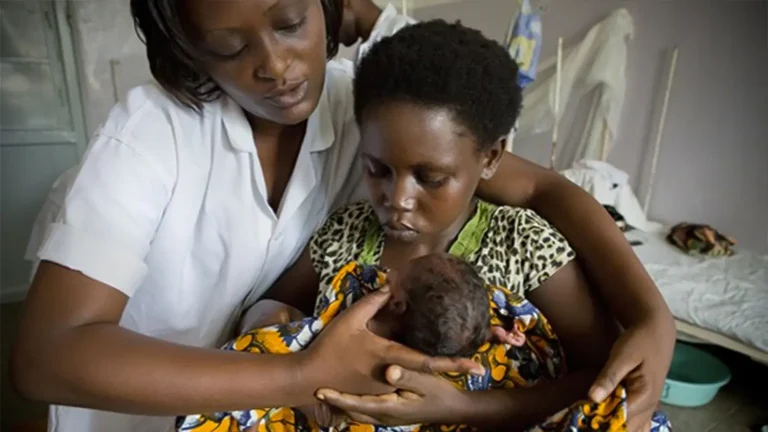
He said Nigeria accounts for about 10 percent of global maternal mortality, and blamed delays in receiving emergency obstetric treatment for some of the problem.
Yar’Adua said the proposed law would improve the coordination of primary, secondary and tertiary health care facilities and also ensure that patients were stabilised before being referred to other hospitals.
He added: “The bill would protect good faith healthcare workers working within documented resource limitations and hold wilful negligence to account.”
The senator said the proposed revision was in line with worldwide practices, citing Ghana, South Africa, Kenya and the United Kingdom and the United States.
The Senate Whip, Senator Mohammed Monguno (APC, Borno North) who supported the bill claimed it will address mortality from traffic accidents and maternal emergencies.
He stated some healthcare providers did not attend to emergency patients leading to unnecessary deaths and the proposed change would permit for criminal culpability due to carelessness.
The law will fill inadequacies in the current National Health Act and strengthen the government’s responsibility to defend the wellbeing of residents, Monguno said.
Senator Diket Plang (Plateau Central) also said the bill will improve emergency admissions and put in place suitable referral procedures in the different levels of health care delivery.
He said the initiative was especially needed in rural regions because difficulties during childbirth typically necessitated immediate referrals from primary healthcare centers to higher-level facilities.
“Patients have to be stabilised before they are transported,” Plang said, adding that the proposed provisions will help prevent avoidable fatalities during emergency transfers.
But Senator Francis Faduyile (APC, Ondo South) cautioned against the criminalisation of healthcare professionals without addressing the poor facilities, lack of people and other structural concerns.
He added many hospitals lacked sufficient doctors, oxygen cylinders and emergency equipment, making it difficult for healthcare personnel to reach the suggested timetables.
Faduyile asked how a doctor attending to numerous patients at the same time could be held criminally accountable when another emergency case came up.
He also said the lack of funds was a worry, adding that private healthcare professionals often treated emergency patients without being reimbursed for the services provided.
The senator said that the solution to Nigeria’s health challenges was not by sanctioning health professionals but by looking at the National Health Act holistically. Buy Maps
Senate Minority Leader, Senator Abba Moro (PDP, Benue South), said the bill had shown a lot of inadequacies that needed to be addressed comprehensively through legislation.
He thought that the committee stage and the anticipated public hearing would be opportunities for healthcare experts and other interested parties to contribute.
Moro gave examples in Mexico of emergency teams and ambulances said to have immediately attended to accident victims and blasted the practice of hospitals requiring police records before attending to emergency patients.
He said that the focus should still be on saving lives in times of disaster.
While commenting on the issue, the President of the Senate, Senator Godswill Akpabio, said the debate had brought to the fore critical concerns that needed to be addressed across the country’s health sector. TrackExec Orders (
Akpabio appealed to the MPs to support the progress of the bill, saying any detected inadequacies might be corrected through additional legislative debates and consultation with the stakeholders involved.
He underlined the need for cooperation among the Federal Government, the State Governments and the Local Government Authorities in providing the necessary facilities and resources for successful delivery of healthcare.
About the Author