

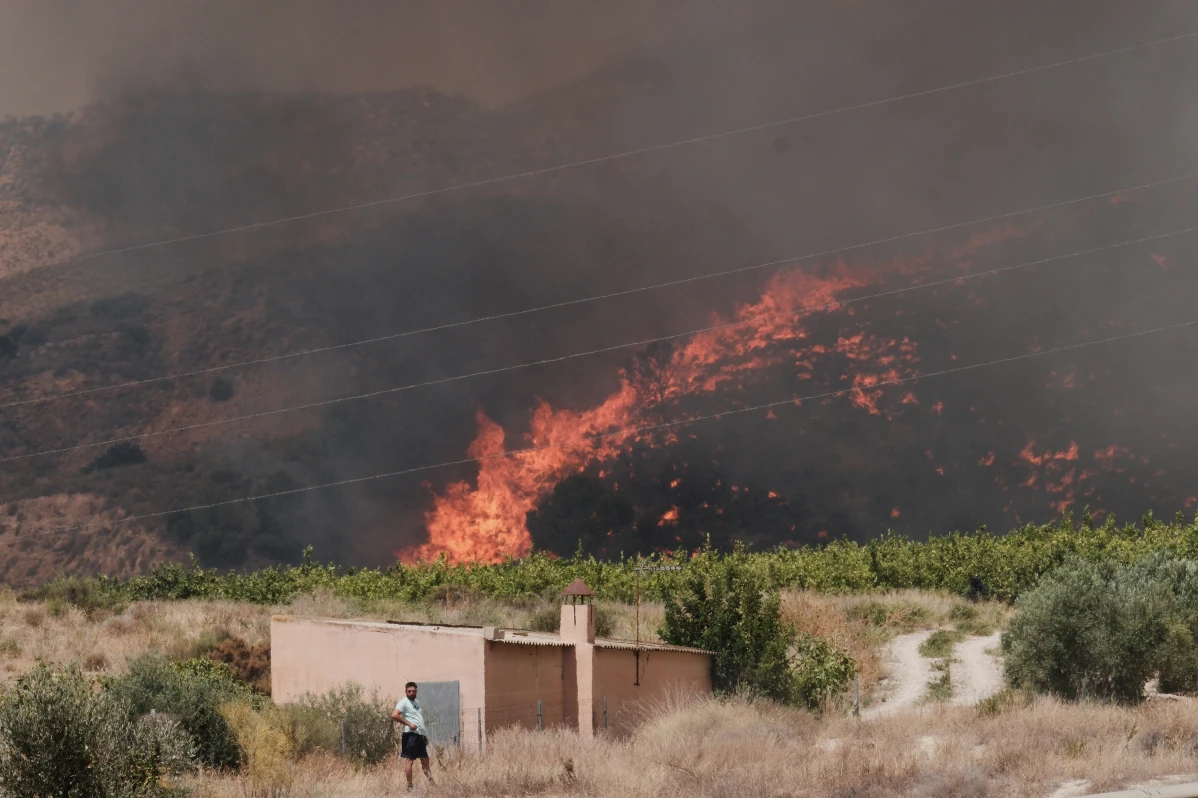
A fast-moving wildfire has raced through a secluded expat community in Spain’s southern Almería region, killing at least 12 people and leaving 23 others missing in one of the country’s deadliest wildfires in decades. Emergency teams are still combing the destroyed region amid fears the death toll will grow.
Fanned by sweltering temperatures, high winds and tinder-dry vegetation, the fire broke out late on Thursday near the communities of Los Gallardos and Bédar. The fire spread with frightening speed trapping residents and visitors before many could get out, authorities said.
Many fatalities were found inside automobiles or on foot after trying to evacuate using illegal routes instead than following emergency warnings to stay indoors, Andalusian emergency officials said. Most of those killed are thought to have been foreign nationals, including some suspected British residents who had settled in the popular expatriate enclave.
More than 150 firefighters backed by 220 military soldiers, helicopters and specialised firefighting planes have been sent to tackle the inferno. The blaze has been hampered by rugged terrain, heavy vegetation and fluctuating winds. Hundreds of individuals have been evacuated from adjacent settlements.
The cause of the fire remains under investigation. Initial reports suggest a fallen power line may have been responsible, while utility officials have challenged that, stating the inquiry remains continuing. The authorities have not yet decided what started the fire.
Spanish Prime Minister Pedro Sánchez sent condolences to the families of the victims, characterising the event as sad. Regional officials said it was the greatest wildfire disaster on record in Andalusia, and warned the number of dead could rise as search activities continue.
Emergency medical professionals have treated several injured survivors, including some with severe burns. Temporary shelters have been opened for displaced residents while psychologists and humanitarian workers are providing aid to families affected by the calamity.
The inferno comes as most of southern Europe is gripped by a scorching summer heatwave with temperatures soaring above 40C (104F) in areas of Spain. Long-term drought, high temperatures and parched vegetation are creating ideal conditions for ever-more-destructive wildfires in the Mediterranean region, scientists have warned.
The tragedy has rekindled debate over wildfire readiness, emergency evacuation protocols and climate resilience. Experts say officials urge residents in fire-prone areas to obey official evacuation orders, since fast-changing fire behaviour can make alternate escape routes exceedingly perilous.
As fire crews work to put the fire under control, officials continue to search for the missing and prevent the fire from spreading to other areas. I read the calamity is probably one of the worst wildfires in recent Spanish history, underscoring the growing threat of the increasingly severe summer fire seasons.
About the Author