
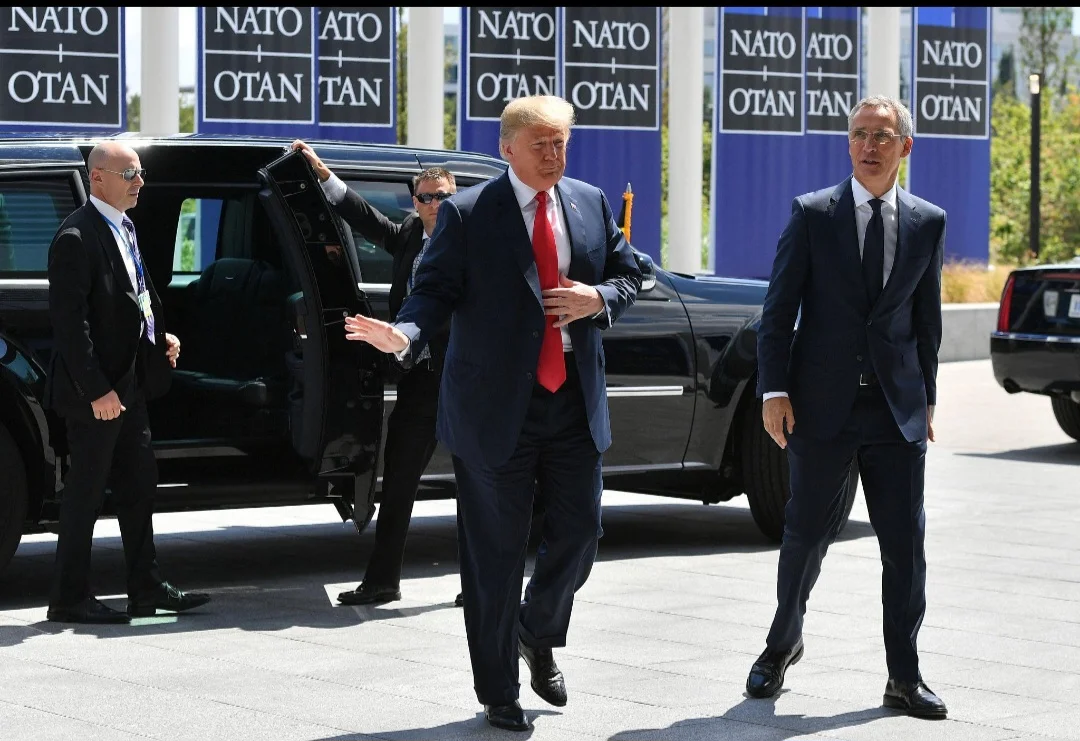
U.S. President Donald Trump arrived in Ankara on Tuesday for the opening of a NATO summit where alliance leaders are seeking to show a stronger commitment to collective defence amid growing geopolitical tensions and continued pressure from Washington for Europe to shoulder more of the security burden.
The two-day summit comes as NATO’s 32 member nations confront major security issues including Russia’s war in Ukraine, turmoil in the Middle East and increasing concerns about China’s expanding military footprint. The meeting, hosted by Turkish President Recep Tayyip Erdoğan, will probably focus largely on increasing defence budget, boosting military production and bolstering NATO’s long-term deterrence.
Trump met with Erdoğan before the official summit sessions kicked up and the two leaders discussed bilateral defence cooperation, regional security and the potential restart of US deliveries of F-35 fighter fighters to Turkey. The United States also announced the easing of some sanctions on Turkey, a move praised by Ankara but viewed carefully by several NATO partners.
Ahead of the summit, European leaders announced more than $50 billion in new defence pacts eager to demonstrate their commitment to burden-sharing. The purchases, which include advanced drones, planes and missile systems, are part of NATO’s drive to modernise its armed forces and adapt to emerging threats. NATO Secretary General Mark Rutte said the investments were part of a wider overhaul of the alliance’s defence posture, pushing for what he termed a “revolution” in military production.
Trump has often said European partners should pay much more for their own defence, and he restated his proposal for NATO members to spend 5% of their gross domestic product, or GDP, on defence — much over the alliance’s long-standing aim of 2%. Several nations still fail to meet Trump’s suggested criteria, even though many member states have raised military budgets in recent years.
Ukraine is another important topic on the summit agenda. NATO leaders are due to reaffirm military and financial backing for Kyiv as Russia presses on with its invasion. Ukrainian President Volodymyr Zelenskyy is scheduled to meet with a number of alliance leaders to lobby for more air defence systems, ammunition and long-term security assurances.
The conference also reflects larger anxiety about the future of transatlantic relations. Trump’s criticism of several key European allies, including Britain, France and Germany, over their support for recent U.S. military activities in Iran has highlighted fractures within the alliance. He has also said that the United States could further cut its military presence in Europe if allies do not improve defence spending.
Although they disagree on key issues, NATO leaders are expected to conclude the summit with a unified declaration reiterating the alliance’s commitment to collective defence under Article 5 but highlighting deeper cooperation on defence technology, weapons manufacturing and regional security. Officials hope the conference will send a message of unity and convince members that NATO is ready to respond to an increasingly complicated global security situation.
About the Author