
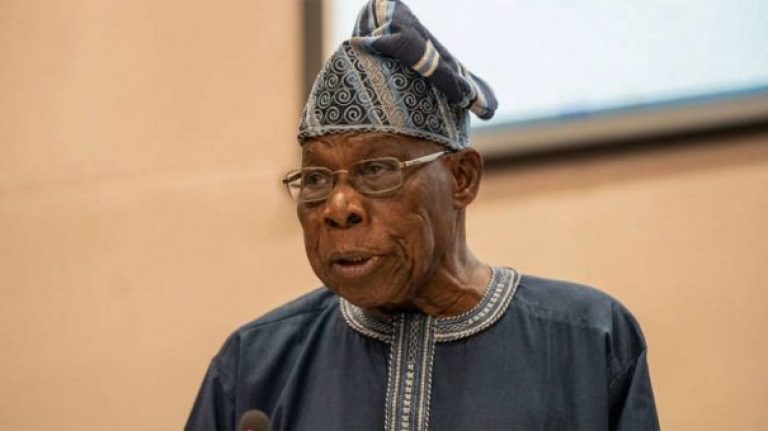
Former President, Chief Olusegun Obasanjo, has warned that Nigeria should not endure another civil war, adding that many of the causes that led to the 1967-1970 conflict remain unaddressed in the country’s institutions and among its many ethnic groups.
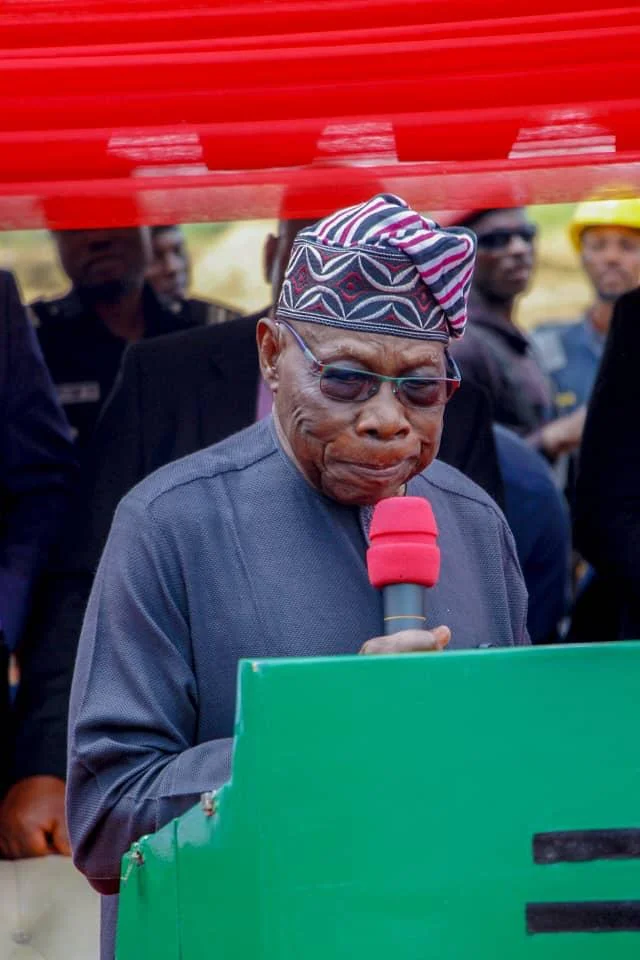
Obasanjo made the warning yesterday at the Olusegun Obasanjo Presidential Library (OOPL), Abeokuta, Ogun State, while receiving a historical publication, Asaba Massacre, from the Isama Ajie of Asaba, Chief Chuck Nduka-Eze.
The former president, however, claimed he could not give a full account of the Asaba Massacre because the area was under the command of the late General Murtala Muhammed. The Nation reported that he, however, participated in the Nigerian Civil War.
“I confess I was in the civil war. “When people talk about Asaba Massacre, I always confess that I cannot give details of it because Murtala Muhammed was the head of that operation,” Obasanjo remarked.
He said he had been asked several times about Muhammad’s involvement in the Asaba activities but declined to reply.
He pledged, however, to study the historical compilation, including its transcripts and audio-visual elements.
“Nigeria must look at its history with honesty so that such tragedies will not happen again, remembering the lessons from the war,” Obasanjo stated.
“Some of the causes of the Civil War remain with us today. “How long are they going to keep it up?” he enquired.
Obasanjo stated former Head of State, Gen. Yakubu Gowon had said that Nigeria would not survive another civil war.
“I think we’ve fought one civil war too many already. To say we’re going to have a second civil war — God forbid. We must learn from the past, and condemn what took place that should never have taken place, and do all humanly necessary to avoid it from happening again. “We have to be ready to say, ‘Never again.”
Obasanjo also recalled a war-time incident where he stopped a soldier from raping a woman in Asaba, noting that such acts would have made him vicariously culpable as a commander.
The documentation of the events by Nduka-Eze, according to Obasanjo, was commendable and the preservation of historical documents was necessary for national reconciliation and educating the future generation.
Nduka-Eze noted earlier that the Asaba Massacre was based on thorough study including eyewitness accounts, recorded interviews, archival records, audio-visual evidence and established historical scholarship.
Independent testimonies clearly demonstrate that after federal troops seized Asaba, citizens were rounded up in public areas and forced to profess loyalty to Nigeria by proclaiming “One Nigeria,” he said.
He stated the men were then segregated from women and children and shot dead, loudly claiming their commitment to the Nigerian state.
“The evidence demonstrates a pattern of repetition. In hopes of being protected civilians obeyed the demands but unarmed male civilians were nonetheless slaughtered. “This tragic contradiction is constantly reflected in testimonies, documentary materials and scientific works,” he stated.
The actual number of casualties may never be known but solid evidence shows that over 1,000 unarmed individuals were slaughtered, creating a permanent scar in the Asaba community,” Nduka-Eze further said.
Like Obasanjo, the author warned that many of the root causes of the civil war – including ethnic hostility and suspicion among Nigeria’s varied communities – remain unsolved and continue to endanger national cohesiveness.
About the Author