

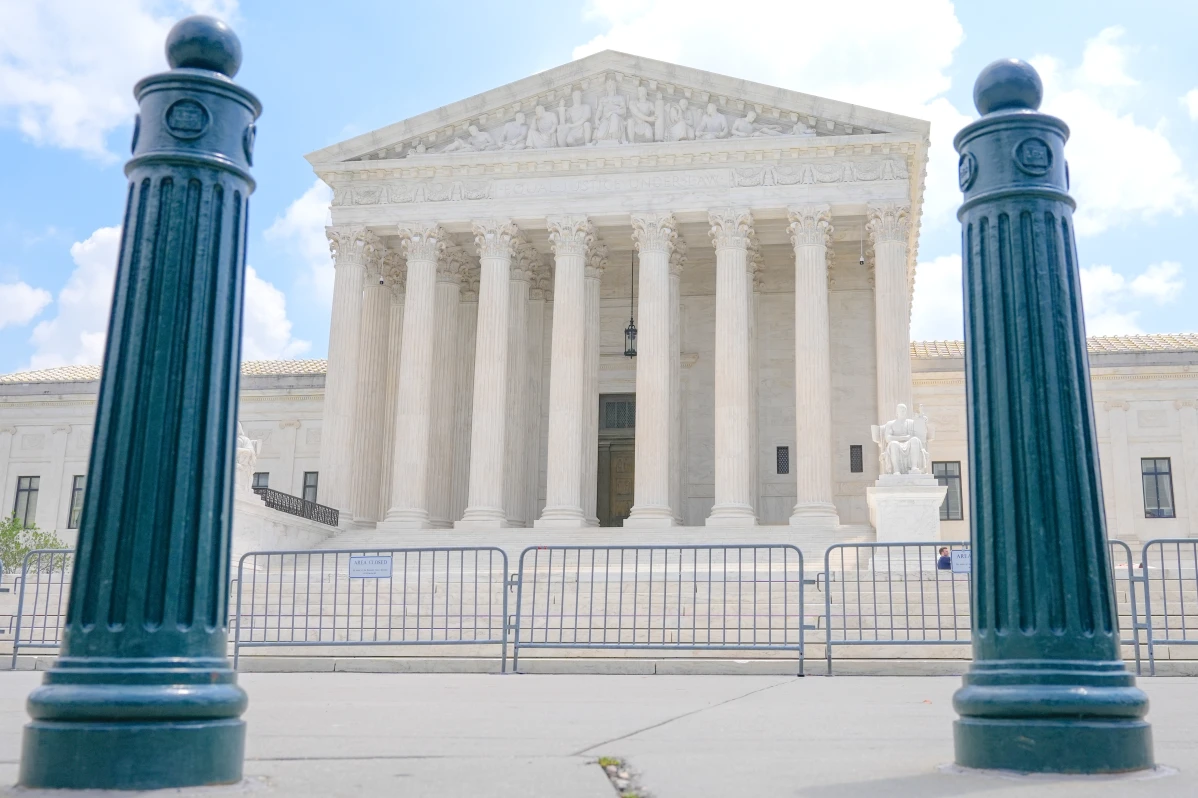
In a landmark decision in one of the country’s most closely watched legal battles over transgender rights, education and women’s sports, the U.S. Supreme Court said Thursday that states can enforce laws that prohibit transgender girls and women from competing on female school athletic teams. The verdict backs laws passed in Idaho and West Virginia and will likely bolster similar measures currently in place in more than two dozen U.S. states.
On Tuesday, the Court unanimously ruled that state regulations do not violate Title IX, the federal law barring sex discrimination in education. The Court was divided 6-3 on the distinct constitutional matter, with the conservative majority holding that the bans likewise do not violate the Equal Protection Clause of the Fourteenth Amendment. Justice Brett Kavanaugh authored the majority opinion.
Kavanaugh, writing for the Court, said Title IX allows schools to maintain separate athletic teams for males and females based on biological sex. He maintained that nations have legitimate interests in ensuring fairness and safety in girls’ and women’s sports and may thus restrict participation accordingly. The judgement said biological distinctions between males and females can warrant separate sporting tournaments.
This verdict comes after challenges brought by two transgender students, Lindsay Hecox, in Idaho, and Becky Pepper-Jackson, in West Virginia. They both alleged the state laws discriminated against them based on their gender identity and denied them equal educational chances. Plaintiffs’ attorneys argued the bans violate the Constitution and Title IX by preventing transgender children from engaging in sports consistent with their gender identity.
See also Swedes Reluctant to Adopt Euro as Currency, Survey Shows
The Court’s three liberal justices disagreed on the constitutional question. Joined by Justices Elena Kagan and Ketanji Brown Jackson, Justice Sonia Sotomayor wrote that the majority’s ruling opens the door to discriminating against transgender students without adequate evidence that blanket bans are warranted. The dissent also asked whether states had proven that transgender participation raised widespread concerns about fairness or safety that justified such extensive limitations.
The decision is another big blow to transgender rights campaigners following a string of recent Supreme Court verdicts on transgender matters. Legal experts say the ruling sets an important precedent that is likely to influence ongoing lawsuits challenging similar laws in states like California and Connecticut, where policies allowing transgender athletes to compete according to gender identity are being challenged in court.
The finding was celebrated by its supporters, including many Republican lawmakers and women’s sports advocacy groups, as a triumph for competitive fairness and the safety of female athletes. They said biological variances can provide competitive advantages in some sports, and that governments should be able to set standards for eligibility to play in school sports.
LGBTQ+ groups and civil rights supporters condemned the ruling, saying it was a setback for transgender students’ rights and a potential precursor for broader exclusion from school activities. They committed to continue to challenge restrictive practices through future legal and legislative action, while urging schools to promote safe and supportive settings for transgender children.
The verdict does not ban transgender athletes nationwide. What it does say is that individual governments can opt to implement such limits if they legislate them into law. As a result, rules around transgender athletes in school sports are projected to continue to be a patchwork issue across the country, according to state laws, and the national conversation over transgender rights and sports is far from over.
About the Author