
By the end of the 16th century the distinction between the two professions was generally established, and by the end of the 17th rather firm… Much of the solicitor’s time is spent attempting to keep his clients out of court, but there comes a point when he requires the services of what the Americans call ‘the trial lawyer’. “In England here it’s the barrister….”
Willy Mutunga was sworn in on 20 June 2011 as the first Chief Justice of Kenya under the 2010 Constitution. Mutunga was a previous president of the Law Society of Kenya, had a doctorate in law and had taught law. He too had been an internal émigré, a former political prisoner and émigré. He rose via a career in philanthropy, a former Ford Foundation regional representative in East Africa and key architect of the new constitution, to become Chief Judge.
Chief Justice Mutunga’s unconventional background afforded him a down-to-earth vision of law and its institutions in a post-colonial culture. It also prepared him for something both necessary and ambitious. Under the old regime the institutions of law in Kenya had been brought into disrepute. They had to be re-fashioned, badly. The arrival of Chief Justice Mutunga in this new capacity was timely.
Among his initial objectives was to head the transformation of the law and justice institutions in Kenya. The procedure was consultative, encompassing magistrates, judges, judicial staff, the public, political leaders, the media, communities, people and consumers.
On 31 May 2012, over a year into his term, Chief Justice Mutunga launched a four-year Judiciary Transformation Framework. It presented a host of proposals for infusing the institutions of law and justice in the country with the ethos of the new constitution.
The Transformation Framework was a harsh diagnosis of an antediluvian system, out of touch with its people and immune to change. Kenya’s Transformation Framework talked of institutions having “a founding history of dominance, power, prestige and remoteness, as opposed to service and equality”. The text can be easily translated to Nigeria’s institutions of law and the judiciary. Its architecture, its norms, its dress code and other rituals have taken it away from social reality.” The document stated the outcome was a legal system that was viewed by the public as both “alien and insensitive.”
The “dress and address” of the legal and judicial institutions was a major part of this dilemma. Many a career in post-colonial law is attracted to it by the lure of the dress of lawyers and judges and the way in which they are addressed.
The initial rationales for these were revealing. One of the most persuasive of the rationales is that “a theatrical aspect (that) seeks to impress on laymen”, offers members of the profession “a useful anonymity and conformity”, and seeks to mask them “to protect them from revenge-seeking defendants.”
The wigs were finally thrown out by the courts in Kenya after they called them “torturous”, “colonial relics”, “cumbersome”, “lack uniformity”, “uncomfortable” and “antique”. They also voted to redesign the judicial robe and to do away with ‘My Lord’. They are now called ‘Your Honour’. That translates to “Mheshimiwa” in Kiswahili.
And surprisingly too, the courts and legal vocation of Kenya have not collapsed. Rather they appear to have moved forward.
Kenya is not the only country where this has happened. In 2011, the Bar in Punjab and Haryana in India stopped the use of “My Lord” or “Your Lordship” when addressing the bench and called such appellations “relics of the colonial past”.
In June 2022, Srinivasan Muralidhar, the Chief Justice of the High Court of Orissa, India, issued a formal notice asking counsel and users of the court to “try and avoid addressing the judges of this bench as ‘My Lord’, Prefixed with ‘Hon’ble. ‘Your Honour’ or ‘Your Lordship’ ‘Any form of address in keeping with the etiquette of the court, such as “Sir”, shall suffice.
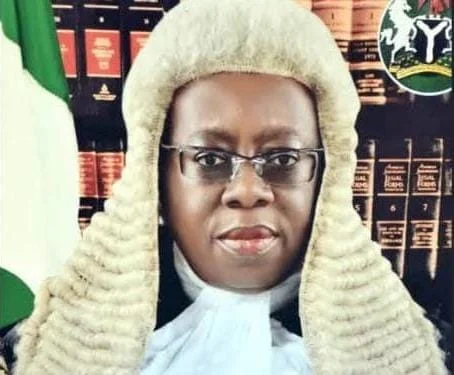
On 13 July 2026, the Chief Justice of Nigeria (CJN) set off a muted debate about issues of dress and address in the vocations of law and the judiciary when she directed the Chief Registrar of the Supreme Court to issue a circular titled “Prohibition of the Use of the Title ‘Barrister’ as a Prefix to Names.”
In a land where all manner of crooners and Karaoke wannabes of all genres dub themselves “Barrister”, the headline of the Chief Registrar’s circular seems pretentious at first. It promised a magical ability to erase Nigeria’s obsession with grandiose prefixes and dull suffixes in one fell stroke.
The circular stated clear it was targeted at “official correspondence, records, documents, identity materials and any other official engagements. This raises the question of what is an official engagement. Does it include political rallies, cabinet meetings, convocation grounds?
The CJN held that the usage of “Barrister” as a prefix “is inappropriate and inconsistent with the standards of professionalism expected within the Supreme Court.” Of course, the protection of standards in the legal profession is a noble goal, but there are at least three serious problems with the circular.
Firstly, it is in a crisis of misplaced priorities. It is, of course, a trivial matter to fuss over trappings and prefixes, in a society in which the legal and judicial vocations are terminally tarnished by far more severe maladies.
Secondly, the circular appeared to be regimental diktat. The CJN has failed to seize a chance to launch an inclusive and consultative process to change the needless antiquarianisms that define Nigeria’s legal and judicial procedures.
Third, it had a sense of “physician heal thyself” about it. The Chief Justice’s branding could have started with a judiciary where even women judges bridle implacably at not being addressed as “My Lord”.
The prefix that troubles the CJN is itself part of the colonial baggage she presides over. The legal profession in England, from which Nigeria derived its occupational strait-jackets, has been separated into barristers and solicitors for five centuries.
Christopher Sapara Williams was initially called to the Bar at the Inns of Court, England, in 1879. In 1888 he was the first lawyer and solicitor of the Supreme Court of Nigeria. That was 18 years after the founding of the Law Society of England and Wales and six years before the Bar Council.
In those days lawyers were scarce; transactions were limited and the duty of the lawyer was defined by advocacy before the white man’s court. They were lawyers in Nigeria, members of the English Bar. The title “Barrister” was quickly adopted and became standard.
In many places of Nigeria, individual neighbourhoods still have different names for their local experts. From “Dokkie” for the medical doctor, to “Deelaw” for the lawyer. Adokiye Amiesimaka, a lawyer and elite footballer, was memorably tagged “Chief Justice” by the late football pundit, Ernest Okonkwo and it stuck. CJN cannot pretend to do away with those.
In reality a lawyer is or may be far more than a “Barrister”. In that sense, it is a bit of a misnomer. Hence it is not a proper professional title or courtesy either. But that is a minor matter compared to the problems besetting Nigeria’s legal profession.
As Richard du Cann writes: “The word ‘advocate’ is used of both barristers and solicitors in all courts and tribunals except the Crown Court and the High Court. In many parts of East and Southern Africa lawyers are termed “Advocate”. In South Africa, as in England, the legal profession is split, and the title “Advocate” is reserved for individuals who have been admitted as barristers.
How we dress and address legal and judicial careers in Nigeria matters. But more essential still is whether we want to repair the lost mission and character of those organisations. Nigeria’s Chief Justice may have lost a chance with her piddling circular but it is not too late for her to recover a sense of direction.
About the Author