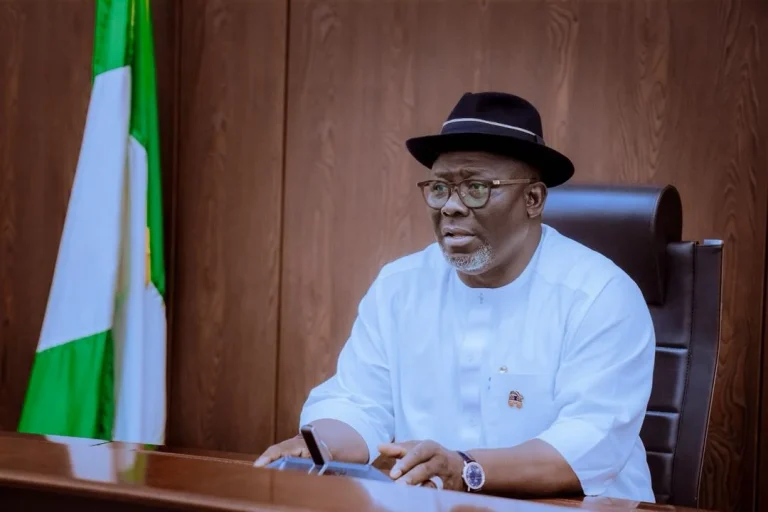

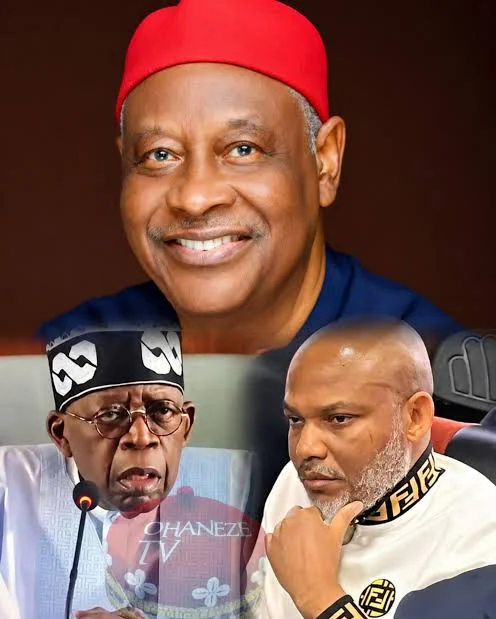
Chief Ralph Obioha, a former member of the National Assembly and pro-democracy activist, has declined the national honour conferred on him by President Bola Ahmed Tinubu, as part of the 2026 Democracy Day celebrations. Obioha said he declined the award because of the state of democratic values, the continued detention of Mazi Nnamdi Kanu and the rising insecurity in the country.
Obioha, a leading light in the pro-democracy campaign under the National Democratic Coalition (NADECO), made the announcement in a statement issued in Enugu on Monday.
He thanked President Tinubu and the Federal Government for deeming him worthy of the distinction, but added that accepting the accolade would be at variance with the ideas that made him participate in the June 12 pro-democracy battle.
I don’t take this recognition for granted. Any award given by the Federal Republic of Nigeria is worthy of appreciation and is notable. But after careful reflection and in commitment to the ideas that guided our struggle for democracy under NADECO, “I have decided, with respect but with firmness, to decline the award,” he stated.
Obioha said he and other pro-democracy activists, including President Tinubu, fought against military authority and risked their liberty in pursuit of the realisation of the June 12 mandate of late Chief M.K.O. Abiola.
He said the resistance was based on ideas of justice, freedom, rule of law and respect for fundamental human rights.
“One of the basic tenets of democracy is to protect freedom of expression and the right of citizens to criticise those in power without fear of persecution,” the former MP stated.
Dissent and criticism were not a threat to democracy but prerequisites of democratic governance, he said.
Obioha: Kanu’s incarceration contravenes democratic principles
“The continued detention of Mazi Nnamdi Kanu makes it difficult for me to accept this award,” Obioha stated.
He said there were differing views on Kanu’s techniques and political ideas, but the situation raised bigger questions around justice, due process and the safeguarding of fundamental freedoms.
He appealed to President Tinubu, a beneficiary and actor in the democratic fight of Nigeria, to utilise his office to achieve reconciliation and a solution that advances national healing.
Obioha also raised worries about the growing insecurity in Nigeria, beyond the Kanu issue, with the ongoing loss of lives to terrorism, banditry, kidnapping and other violent crimes.
He said the protection of lives and property was the primary responsibility of government, adding that many Nigerians were progressively becoming apprehensive about their safety.
Obioha said his action was neither a personal affront to President Tinubu or snubbing of national accolades, but a matter of principle anchored on the values of the June 12 battle.
“In my view, it would be inconsistent with those convictions to accept this honour at a time when many of the values for which we fought are still not sufficiently realised.”
He repeated his commitment to democracy, justice, national unity, freedom of expression and a Nigeria where citizens have equal protection under the law and live in peace and dignity.
Chief Ralph Obioha was a member of the National Assembly from 1979-1983 and one of the leading lights in Nigeria’s pro-democracy movement.
About the Author