
In the wake of recent tragic abductions of school children and teachers in Oyo and Borno States, Nigerian government has launched a massive, intelligence-led rescue operation, with President Bola Ahmed Tinubu declaring unequivocally that “no child belongs in captivity.”
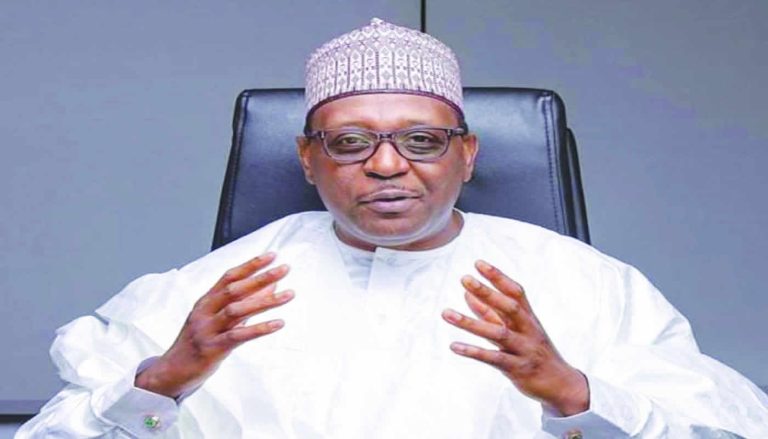
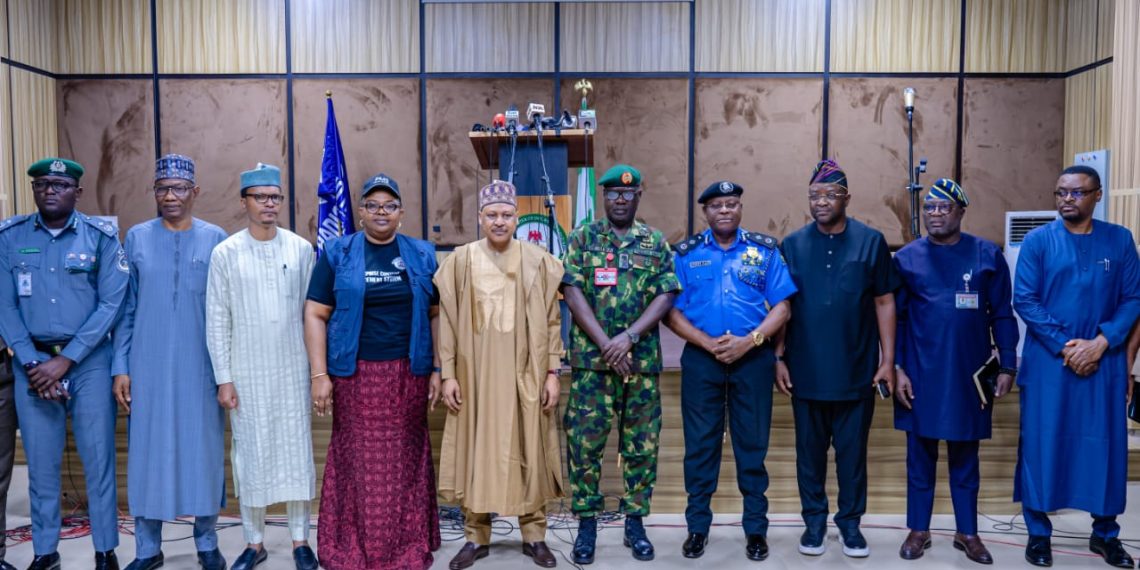
During a special security briefing tagged #UniteAgainstTerror on Thursday in Abuja, the Minister of Information and National Orientation, Mohammed Idris, outlined the administration’s aggressive and comprehensive strategy to bring the victims home and crush the terrorist networks responsible.
The briefing comes at a sobering moment for the nation. In Borno State alone, at least 42 children are reported missing following a brazen assault on a school in the Askira-Uba Local Govt Area.
Describing the attacks as an assault on the future of the nation and the very values that bind Nigerians together, Idris assured the public that the safe return of every captive remains the government’s top priority.
“The President has directed that every lawful instrument available to the Nigerian state be deployed towards achieving this objective,” Idris stated.
This includes the immediate deployment of a specialized rescue team and the authorization to recruit 1,000 forest guards to fortify vulnerable communities and woodlands.
A Shift in Strategy: Intelligence and State Policing
Moving away from a strictly military- centric approach, the President Tinubu’s administration is spearheading a comprehensive overhaul of Nigeria’s security architecture.
A major pillar of this reform is the determined push for state policing—a move designed to create a dynamic,
flexible, and fit-for-purpose system that empowers local communities.
Behind the scenes, a formidable coalition of security forces—including the Armed Forces, the Department of State Services, and the National Intelligence Agency—are working in tight coordination.
While operational details remain classified, the Minister confirmed that
aerial surveillance, intelligence gathering, and search-and-rescue operations are proceeding without interruption.
Adding further context to the complexities of security operations, Mr. Zakari Mijinyawa, Director of Public Communication in the Office of the National Security Adviser, emphasized that the public often misunderstands the nuances involved.
“There is this assumption of a lack of capacity in the public. It is not true. The capacity exists. The armed forces, the police, the intelligence services are well-equipped,” Mijinyawa stated.
He clarified that the challenge lies not in capacity, but in the “methodology and strategy” employed, especially in sensitive situations like hostage-taking.
“The objective of security is to save life. It’s not to impress.
“It’s to ensure that they come back safe, sound to their families and to their communities,” he explained, highlighting that security agencies must prioritize the safety of victims over immediate, politically-driven responses.
Mijinyawa underscored that security planning involves meticulous threat
assessment and strategic timing, often working tirelessly behind the scenes to resolve issues without public disclosure of operational details.
Battlefield Victories and Judicial Accountability
The government’s intensified efforts are already yielding significant results across multiple fronts. According to military reports, approximately 1,000 terrorist elements, including dozens of key leaders, were eliminated in the first quarter of 2026 alone.
In a major breakthrough this May, a joint operation supported by the United States disrupted critical terrorist logistics networks, eliminated key ISWAP commanders, and successfully rescued 92 civilians near Buratai in the North-East.
Meanwhile, enhanced maritime security in the South-South has drastically reduced oil theft, boosting national
production by 400,000 barrels per day. The fight against terror is also seeing unprecedented success in the courtroom.
In a landmark judgment just a day prior to the briefing, the Federal High Court in Abuja sentenced four terrorists to death for their roles in the horrific June 2022 massacre at St. Francis Catholic Church in Owo, Ondo State.
Furthermore, a recent wave of terrorism
prosecutions resulted in 386 convictions out of 508 cases brought before the courts, sending a clear message that perpetrators will face the full wrath of the law.
The Road Ahead: Economic Prosperity and National Unity
Recognizing that security and the economy are deeply intertwined, the administration is pairing its military and judicial offensives with ambitious economic reforms and massive
infrastructure projects.
By opening up communities with new highways and rail lines, the government aims to replace despair with boundless opportunities for hardworking
Nigerians.
However, the Minister emphasized that the govt cannot win this war alone while issued a passionate appeal to the media to exercise restraint and avoid amplifying terrorist propaganda, urging citizens to remain vigilant and share credible information with security agencies.
“Terrorism has no tribe. Terrorism has no religion. Terrorism has no political affiliation. Its only purpose is destruction,” Idris declare
As the nation waits anxiously for the safe return of its abducted children, the message from Abuja is clear: Nigeria will not bow to fear. United in purpose, the country is fighting back to ensure that terrorism has no future within its borders.
About the Author