
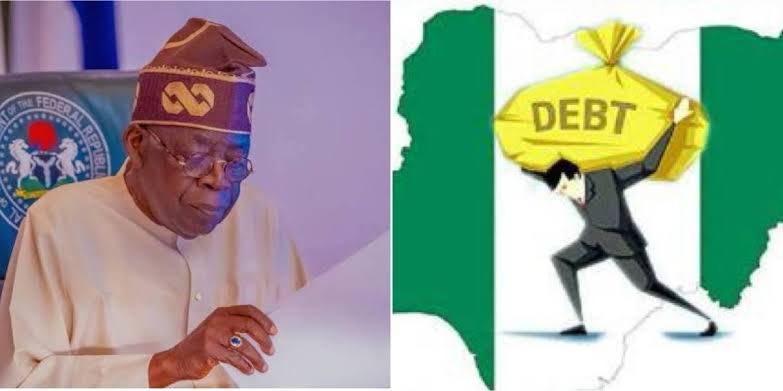
A former chairman of the Alliance for Economic Research and Ethics LTD/GTE, Dele Oye, has lamented the unprecedented increase in public debt under President Bola Tinubu, saying the N65.9 trillion borrowed by the administration in the last 24 months is more than five times the total debt Nigeria incurred in the first 55 years of its Independence.
Oye, the immediate past chairman of the Organised Private Sector of Nigeria (OPSN), stated that while successive governments racked up debt over decades, the Tinubu administration alone added N65.9 trillion in two years, compared to just N12 trillion accumulated over 55 years, reports The Guardian.
According to the Debt Management Office, Nigeria’s total public debt was N159.28 trillion as of April 2026, adding that each Nigerian owed N670,000. It lamented the growth of Nigeria’s debt profile in recent years.
Without quick steps to improve revenue collection and fiscal discipline, the rising debt burden might put long-term pressure on public finances and impede government spending on important areas, Oye warned.
He said: “Remember 2006. Nigeria had recently achieved one of the most recognized fiscal accomplishments in African history. President Olusegun Obasanjo paid $12 billion to clear $30 billion debt with the Paris Club. External debt-free Nigeria’s brief moment. The Excess Crude Account (ECA) was fat. The future was fundable. That wonderful moment twenty years on is a fairy story. By 2015, under president Goodluck Jonathan, debt had risen back to N12.06 trillion, manageable but the alarm signs were already blinking. Then came the years of Buhari.
“The debt increased from N12.06 trillion to N87.38 trillion in eight years, 620 per cent increase. The Central Bank of Nigeria (CBN) had to manufacture money through ‘Ways and Means’ advances. Of this N23.7 trillion was later securitised as long-term bonds, thereby turning a government overdraft into a generational obligation.
“Within two years, Tinubu’s administration has added N65.9 trillion. To put that in perspective, Nigeria’s first 55 years of independence incurred N12 trillion debt. “This administration has added more than five times that in 24 months.”
Governments love to quote the debt-to-GDP ratio, said Oye: “Nigeria’s is 35.5 per cent below the 55 per cent distress threshold of the International Monetary Fund (IMF) and far more comfortable-looking than South Africa’s 78.8 per cent or Kenya’s 65.6 per cent. Politicians carry this number around like a clean bill of health.
Let no man fool you. What really important is the debt service to income ratio, or how much of every naira made goes directly to paying creditors. The Nigerian Economic Summit Group (NESG) says Nigeria’s ratio was 116.8 per cent in 2024 and barely eased marginally to 113 per cent in Q1 2025. CBN’s data for January 2025 alone indicated the Federal Government paid out N696.27 billion in debt service against total retained income of N483.47 billion. That’s a 144 per cent coverage ratio in one month.”
Nigeria has the ability to do it, with the means to get over the hurdles, Oye said. It was a talent. What it has always lacked, consistently and consequentially, is the political will to use them.
“The prescriptions are no secret: digitise tax collection and broaden the base; enforce the Fiscal Responsibility Act (FRA) with criminal sanctions; restructure Eurobond maturities before the 2027 to 2029 redemption wall arrives; channel oil windfalls into a constitutionally protected stabilisation fund; and empower states to generate their own revenue rather than queue at Abuja’s door every month.”
About the Author