
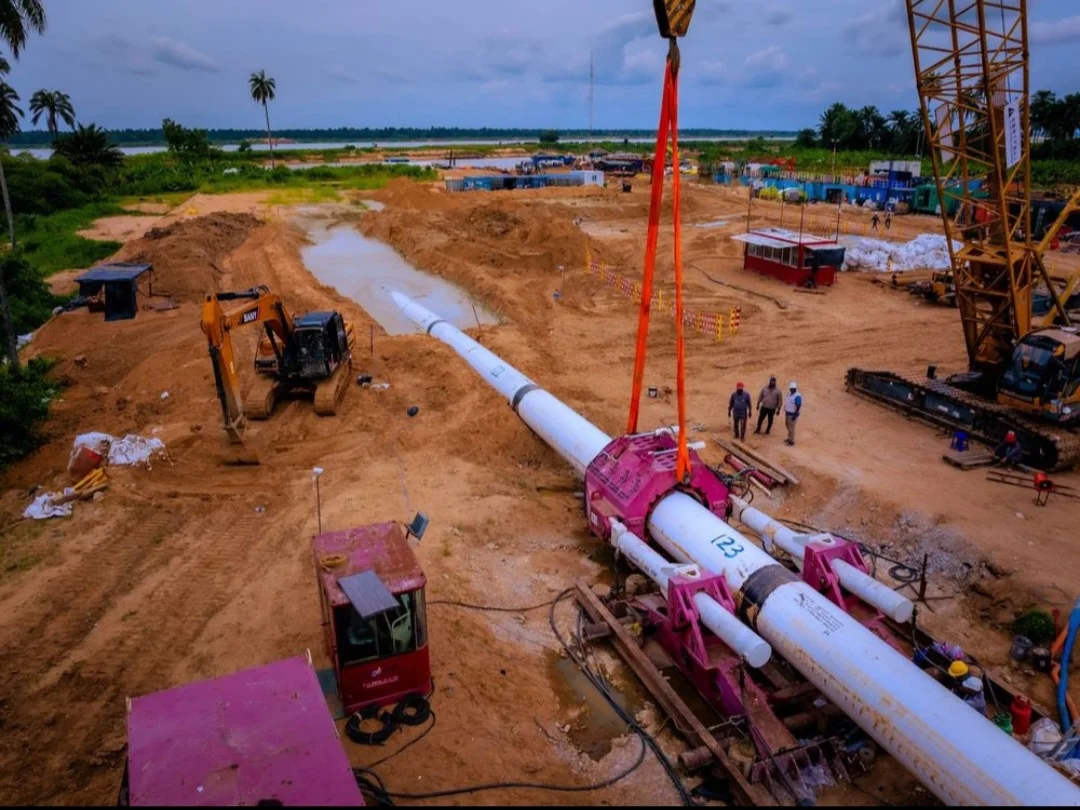
Nigeria has reached a significant milestone in its energy infrastructure with the complete completion of the River Niger crossing on the OB3 gas pipeline project, a technically hard task accomplished with the use of sophisticated Horizontal Directional Drilling (HDD) technology.
The project, executed by the Nigerian National Petroleum Company Limited in conjunction with PCE Nig. Limited is seen as a vital connection to enhance the country’s gas distribution network.
Commenting on the development, the Group Chief Executive Officer of NNPC Limited, Bashir Bayo Ojulari, termed the feat as a landmark development for the gas infrastructure of Nigeria.
He said successfully navigating one of the most technically complex parts of the project would go a long way to improving reliability of gas supplies, boosting home use and supporting power generation and industrial growth across the country.
“The achievement is a reflection of our growing engineering capacity and builds on the success we recorded with the crossing of the River Niger under the AKK pipeline project in June 2025,” Ojulari said.
He said the success was made possible via solid project governance, innovative engineering solutions and the commitment of both the internal teams of the NNPC and its partners.
He also noted the significance of the OB3 pipeline to Nigeria’s goal of creating an integrated and resilient gas network that would enable the country to achieve long-term energy security and economic prosperity.
The NNPC chairman also credited the Federal Government under President Bola Ahmed Tinubu for the success of the project, saying that the administration’s Gas-to-Prosperity strategy and a conducive business environment played crucial roles.
He commended the Board of Directors of the company, led by Ahmadu Musa Kida, for their advice and monitoring.
Ojulari said the company will continue to work with partners to enhance energy access, stimulate industrialisation and improve living standards for Nigerians, reiterating NNPC’s commitment to national development.
The completion of the OB3 River Niger crossing comes as Nigeria targets higher oil and gas production levels of 3 million barrels of crude oil per day and 12 billion standard cubic feet of gas daily by 2030.
About the Author