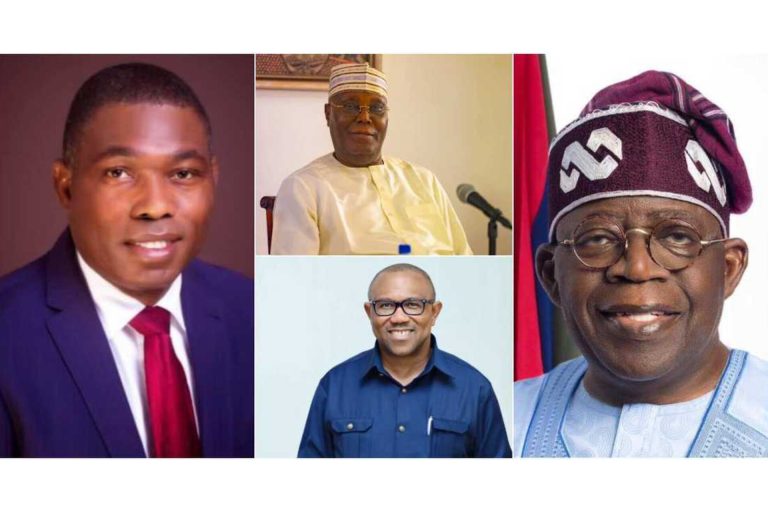

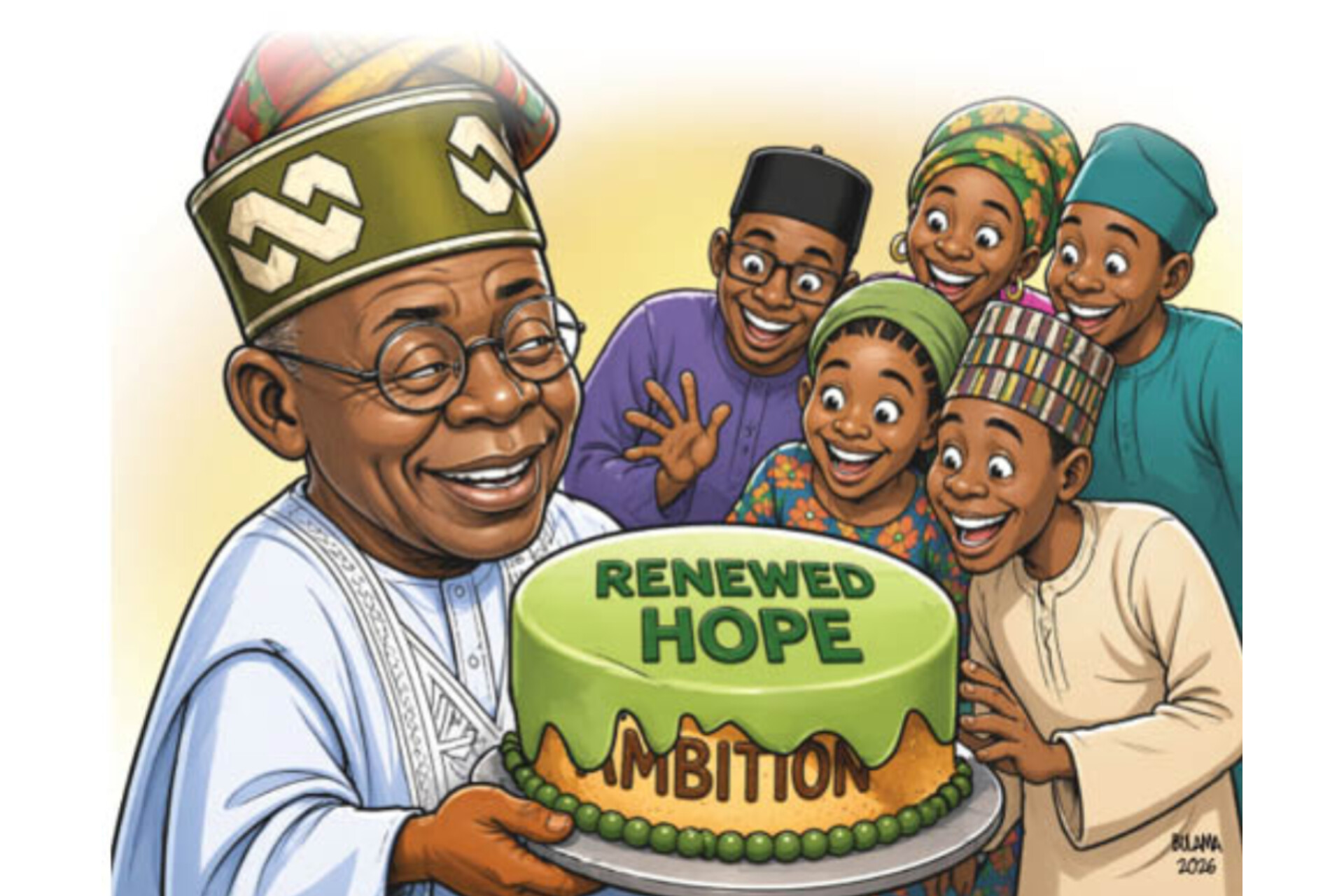
“Renewed Hope” was the official campaign slogan for Bola Tinubu and Kashim Shettima’s campaign leading up to the 2023 presidential elections.
Aside from the emilokan assertion by the then-presidential candidate that it was his turn to be president of Nigeria, the phrase “Renewed Hope” became very popular at the time.
After Tinubu won the election and became president on May 29, 2023, the phrase didn’t die down. Instead, it took on a life of its own when Senator Remi Tinubu, the president’s wife, used the theme of the campaign slogan to name her pet project, according to Weekend Trust.
As Nigerians started to figure out when and where to draw the line between the campaign slogan and the First Lady’s pet project, the federal government also used the same names for different programs and initiatives, calling them all “Renewed Hope” with different sub-themes.
Our reporters looked into it and found that the projects with that name include ones that are funded and supported by the government through several agencies.
Because of the confusion, there are hints that keeping the slogan could be on purpose to link government projects to campaign pledges made in the past.
Analysts are worried that the distinction between government-funded projects and personal projects has become less clear.
An analyst who didn’t want to be named stated that the government needs to make it clear which projects are being funded by the First Lady and others through interventions and which ones are normal projects that are part of the federal budget.
Prof. Jibrin Ibrahim, a well-known political scientist, said that the Renewed Hope agenda was originally part of Tinubu’s campaign program and was utilized to help write his election manifesto.
“When they got into power and the First Lady started this effort, it was more like her own project. What bothered me was that there was no information about where the project’s money was coming from. Is it money from the government or her own money? Then, as you’ve seen in the last few years, it has somehow become part of government projects.
“You have projects based on this Renewed Hope all over the country.” The difficulty with what’s going on is that we still don’t know who is paying for it. He said, “The most important thing is that you have to keep private projects separate from public projects.”
A source who knows of the federal government’s “Renewed Hope” programs claimed that the moniker is being used since it is the administration’s main project and is important in the present political climate.
“This is honestly the administration’s main project, and I don’t see anything wrong with using it for a campaign.” The source claimed, “It is common for those in power to show off their accomplishments through projects like these.”
He added the project was called “Renewed Hope” since it is the administration’s campaign endeavor to show all the development projects that the current administration is working on.
Some people are also worried that fully funded government projects are being utilized to help President Tinubu run for a second term.
Our reporter has found that in addition to the First Lady’s Renewed Hope Initiative, there are also the Renewed Hope Agenda, the Renewed Hope Ward Development Programme, the Renewed Hope Ambassadors, and the Renewed Hope Infrastructure Development Fund.
The president also remarked that the Presidential Infrastructure Development Fund (PIDF) should be combined with the new Renewed Hope Infrastructure Development Fund (RHIDF) and the 2026–2030 Renewed Hope National Development Plan.
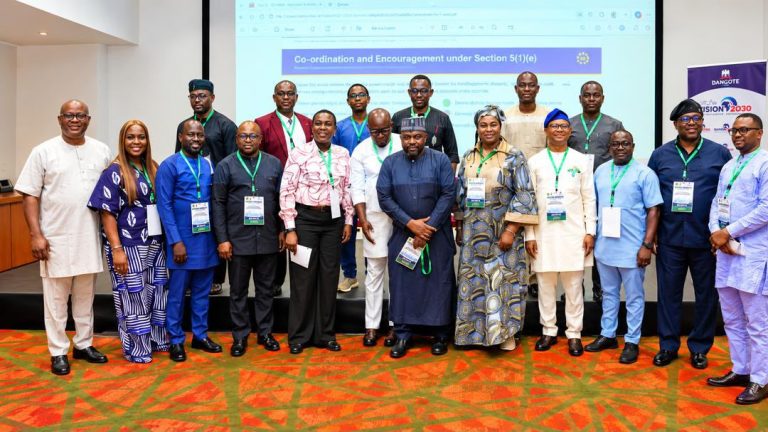
Governor Hope Uzodimma of Imo State is in charge of the new Renewed Hope Ambassadors. The Minister of Budget and National Economic Planning, Abubakar Atiku Bagudu, is in charge of the Renewed Hope Ward Development Program. He said it is a key part of the Tinubu administration’s plan to build a $1 trillion economy and make sure that no Nigerian is left behind by 2030.
He noted that the Renewed Hope Ward Development project will map out the economies of all 8,809 electoral wards in the country to find unique local potential for job creation, investment, and community development.
Our correspondent learned that the Renewed Hope Projects are part of the Nigerian federal government’s housing plan under the Renewed Hope Agenda. The goal is to develop 50,000 affordable housing units around the country through Public-Private Partnerships.
It plans to build different types of houses with schools, clinics, and markets nearby. Projects are already going on in states like Abuja, Kano, Oyo, Katsina, Ebonyi, and Lagos, and there will be lower- and medium-income housing in Abuja, Lagos, Katsina, Yobe, Gombe, Sokoto, Benue, and Kano, as well as Abia, Akwa Ibom, Delta, Osun, Oyo, Benue, and Nasarawa.
Our source found out that the Federal Ministry of Housing, the Federal Mortgage Bank of Nigeria (FMBN), and the private sector are paying for the projects.
How far the Renewed Hope Initiative has come
The First Lady Oluremi Tinubu started the Renewed Hope Initiative in 2023. So far, it has raised and given out more than N100 billion in the last three years.
The number, which includes direct payments, gifts, and multi-year promises, went up from N9.4 billion to N12.9 billion in mid-2025.
The offerings include promised help and direct cash payments for women, displaced people, orphans of deceased military heroes, seniors, and Nigerians living in other countries.
The program started immediately after President Bola Tinubu took office in June 2023. It included targeted welfare programs, such as N250,000 handouts to 57 families in Abuja’s TradeMore Estate who had been damaged by flooding. This totaled N14.25 million.
In July 2023, it gave N500 million to people in Maiduguri who were affected by violence and N427.75 million to the widows and orphans of soldiers who had died. Each of the 1,709 people who got money got N250,000.
The First Lady started the “Every Home a Garden” initiative in November 2023. The event was open to first-time female farmers across the country and offered a N20m reward to the winner. The goal was to boost domestic food production.
Mrs. Tinubu announced 43 scholarships, among other things, on August 26, 2023.
The Cities and Estates Program of Renewed Hope
The federal government of Nigeria, led by President Bola Ahmed Tinubu, has started the Renewed Hope Cities and Estates Programme to help fix the country’s housing need of 17 to 20 million units.
The goal of the program is to build 100,000 homes around the country, with 50,000 of those homes planned for the first phase. The Renewed Hope Cities program is focused on communities in large cities that have at least 1,000 units each, including 1-3 bedroom apartments, terraces, and duplexes. This is in addition to Renewed Hope Estates, a medium-sized project with 250 to 500 units in state capitals for middle-income families.
The third type is social housing for the most vulnerable, with 100 affordable dwellings in each of Nigeria’s 774 Local Government Areas.
Ahmed Musa Dangiwa, who was then the Minister of Housing and Urban Development, spoke at the ground breaking of the Renewed Hope Cities and Estates program in February 2024. He said that the money for these projects would come from a mix of sponsors, including the Federal Ministry of Housing and Urban Development’s budget, the Federal Mortgage Bank of Nigeria (FMBN), and Public Private Partnerships with well-known developers.
The Federal Ministry of Housing and Urban Development and a group of developers, including Continental Civil and General Construction and Ceezali Limited, signed a Public Private Partnership in December 2023 to build 100,000 houses across the country.
The Infrastructure Fund for Renewed Hope
President Tinubu approved the Renewed Hope Infrastructure Development Fund, which is meant to help Nigeria build better infrastructure in areas including transportation, ports, aviation, electricity, healthcare, and education.
Ajuri Ngelale, who used to be the President’s Special Adviser on Media and Publicity, said this in a statement at the time.
Mr. Ngelale noted that the Fund will put money into important national initiatives that will help the economy grow, contribute value locally, create jobs, and encourage technical innovation and exports, among other things.
He noted that the Fund will figure out the best ways to invest, like directly financing projects through budget allocations and SPVs, co-financing (public-private partnerships) with important organizations, multilateral development agencies, and equity investments.
The fund will also pay for roads, railroads, ports, food security, and improving aviation and agriculture infrastructure.
The president has also agreed that the new Renewed Hope Infrastructure Development Fund (RHIDF) will take over the Presidential Infrastructure Development Fund (PIDF).
The president also announced the Renewed Hope National Development Plan for 2026–2030 in February of this year.
The president spoke at the second National Economic Council (NEC) Conference and noted that the move marked the end of the economic recovery phase and the start of a five-year period of “transformation” under the new Renewed Hope National Development Plan (2026–2030).
He said that his administration’s first few years were devoted on structural problems and infrastructural shortages that were already there. Now, though, the focus must shift to inclusive, bottom-up prosperity.
Many people now see the Agenda as a campaign strategy since then.
As Nigeria gets ready for the 2027 general elections, Renewed Hope Ambassadors have put up a lot of events. Even though INEC hasn’t yet called for the start of campaigns, these activities seem to be getting people to support the president ahead of the planned time.
Why people see Renewed Hope Ambassadors as a campaign tool
The Renewed Hope Ambassadors (RHA) is the one that has caused the most worry. It is made up mostly of state governors who are members of the All Progressives Congress (APC).
Governor Uzodimma leads it, and it asserts that its main goal is to connect with regular people and promote and explain President Bola Tinubu’s “Renewed Hope” policy changes and successes.
Uba Sani of Kaduna State, who is the Deputy Director-General, and Gov Inuwa Yahaya of Gombe, who is the Secretary, are both intimately involved in the endeavor.
When President Tinubu met with RHA in the State House, he told them to keep getting the word out and getting people involved, especially at the grassroots level, about how the government is trying to improve their lives through economic reforms.
“You are the conscience of a country that wants to break free from poverty and despair.” The president told the ambassadors, “This is a once-in-a-lifetime chance to break the chains of poverty and ignorance.”
The governors said that things have started happening at the regional level, and that all the local governments’ institutions have been set up, just like in the electoral wards.
“We have begun the process of counting votes all the way down to the polling unit level.” We are always collecting data during enrollment and sending messages to markets, schools, professional groups, women’s groups, faith-based groups, and grassroots political groups.
Governor Uba Sani said, “We have everything we need to spread the message of renewed hope to every ward, local government, and state.” We haven’t done enough. I think we need to do more. We need to keep telling our story. If we don’t tell our story, other people will tell it in their own manner.
Many people are worried, meanwhile, about where the money for the project will come from, given state governors are in charge of it.
A worried voter, who doesn’t want to be named, said, “I don’t think it’s fair to other political parties running in the same elections if a governor uses state resources to either mobilize or travel around to sell the president.”
“Also, do the budgets of the states involved show these costs?””Why?” he inquired.
We couldn’t get a response from the presidency about the development since we couldn’t reach Bayo Onanuga, the President’s Special Adviser on Information and Strategy, and Daniel Bwala, the President’s Special Adviser on Policy Communications, didn’t answer calls.
Tunde Rahman, the Senior Special Assistant to the President (Media) and the director of communications for the Renewed Hope Ambassadors, likewise did not answer calls to his number.
At the time this report was written, they had not yet responded to messages given to them.
Dr. Saidu Ahmad Dukawa, an Associate Professor of Public Administration at Bayero University Kano, criticized the Renewed Hope Initiative, calling it politicized and raising concerns about what it could mean for Nigeria’s democracy.
He stated, “Yes, it is a kind of indirect political campaign, which makes it even more wrong because other political parties don’t have the same chance to start campaigning.”
Prof. Jibrin Ibrahim told our reporter that this is the biggest budget project ever.
He remembered a past First Lady who had a pet project and added, “Even for those pet projects, like the Women’s Hospital at the time.” But for the Women’s Hospital, she gathered money in public by putting on an event when state governors attended and gave money to the project.
“So, everyone knew where the money was coming from. And after the coup, the project was seen as a public initiative because most of the money came from state government budgets.
He went on, “But now we have no idea where the money is coming from.” And, as I’ve said previously, there is no transparency at all.
He said that civic society and opposition parties should ask where the money is coming from and why it seems to be used the way it is.
“Using resources whose sources are unknown to do what looks like campaign programming is not allowed.” I don’t think that’s okay at all. I think people should pay close attention to what’s going on and speak up.
“And are there any ways to hold people accountable to make sure Nigerians know that everything is being done according to the law and the constitution?” he said.
Some experts link the Renewed Hope drive to the Transformation Ambassadors of Nigeria (TAN), a well-known group that worked to get President Goodluck Jonathan re-elected in 2015. TAN was active during Jonathan’s presidency.
The group staged gatherings in every region of the country and said they got more than 17 million signatures to support Jonathan’s 2015 campaign, pointing to his successes in agriculture, infrastructure, and aviation.
Then, there were doubts about who was paying for the TAN because most of Jonathan’s guys said they didn’t know anything about the group.
About the Author