
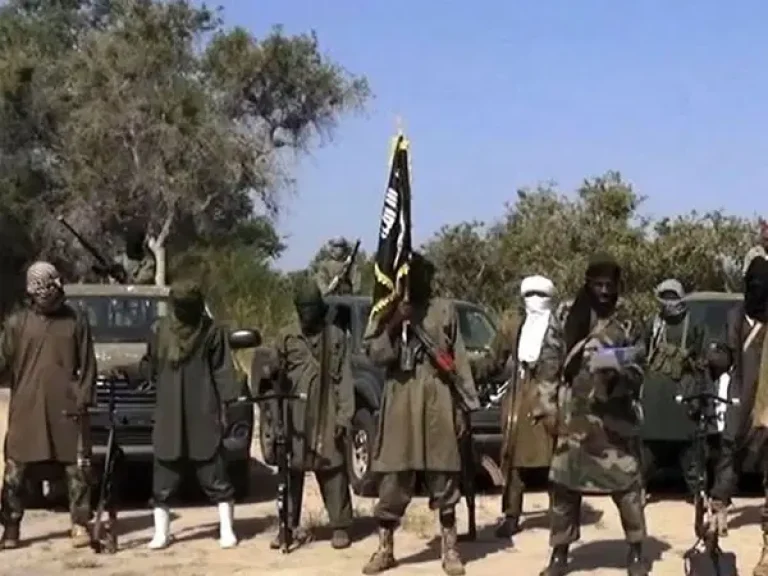
Intelligence, militia, and jihadist sources told our reporter that fighting between competing jihadist groups in Northeast Nigeria has killed almost 200 people in the troubled Lake Chad area.
Reports from AFP say that combat broke out yesterday between Boko Haram and the Islamic State West Africa Province (ISWAP) group near Dogon Chiku, on the shores of Lake Chad. This is the latest round of fighting over control of territory that is fueled by ideological differences.
Babakura Kolo, a member of an anti-jihadist militia that helps the Nigerian military, told our correspondent, “From the toll we got, around 200 ISWAP terrorists were killed in the fight.”
A former Boko Haram jihadist who has since given up fighting but keeps an eye on jihadist activities in the area reported that “around 200 ISWAP fighters were killed in the clashes,” and that some of their weapons were taken.
The former militant, who only wanted to be known by his first name, Saddiku, said that Boko Haram lost four members in the combat.
Saddiku, who lives in Maiduguri, the capital of Borno state and the center of the insurgency, said, “This could be the worst clash between the two groups since they started attacking each other.”
A Nigerian intelligence source who works in the area stated they were keeping an eye on the aftermath of the clashes and thought they “killed more than 150.”
The intelligence source said, “We know about the fighting, which is good news for us.”
Since they split in 2016 over disagreements in ideology, ISWAP and Boko Haram have been conducting a deadly battle for control of territory. Most of the fighting has been around Lake Chad.
Farmers in some areas of Zamfara and Sokoto States, on the other hand, are worried about rising taxes and threats from armed bandits, who they say are making it hard for communities to get ready for this year’s harvest season.
People noted that even though the weather has been good for farming in recent years, numerous attacks have converted farms into battle zones, keeping farmers in constant terror and endangering food supply across northern Nigeria.
Villagers said that bandits have started what they call “harvest taxes,” which means that farmers have to pay in cash or crops before they can go to or harvest their fields.
Community sources say that armed organizations set up checkpoints around villages, collect taxes, and punish people who can’t pay them in some places.
A farmer from the Tsafe Local Government Area of Zamfara State, who asked to remain anonymous for safety reasons, said, “We are living under a parallel authority.”
“They told us when to go to our farms, how much to pay, and they also take some of our grains.” He went on to say, “Those who refuse are attacked or taken.”
The circumstance has made it so that many farmers have to leave their fields even if their harvests are ready to be picked.
About the Author