
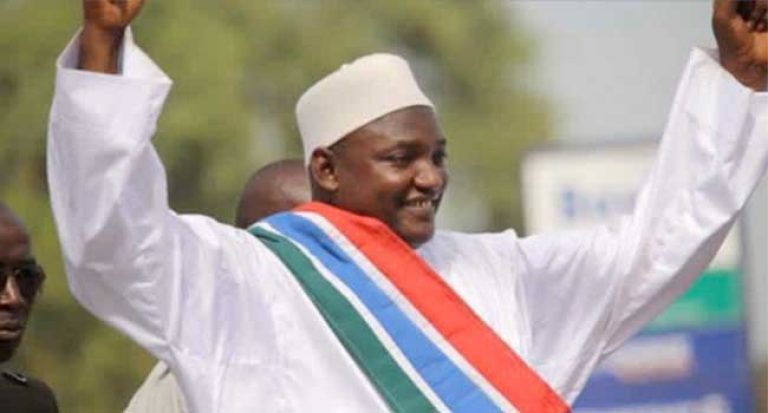
Officials said yesterday that the next presidential election in The Gambia would be on December 5, 2026. This is because President Adama Barrow is running for a third term and is getting a lot of criticism.
According to AFP, Barrow shocked Gambians earlier this year when he indicated he would run for a third term in power.
The small West African country’s 1997 constitution allows the relocation, but it wasn’t something that was anticipated of him at first.
Many people thought that once Barrow was elected in 2016, The Gambia would finally have a new constitution that limited presidential terms.
In 2020, however, MPs who were on Barrow’s side turned down a proposed constitution because it had a language that would have limited presidents to two terms, which would have kept Barrow from running again.
Four years later, the government made a second draft that didn’t have the retroactive clause.
But in July, lawmakers turned down that bill.
People in and outside of the country have criticized Barrow for running for a third term as the leader of his National People’s Party.
The United Democratic Party, which is the biggest political party in The Gambia, named veteran politician Ousainou Darboe as its candidate for president last month.
At this point, though, most people think Barrow will win the 2026 election because the opposition hasn’t yet formed a winning alliance.
Joseph Colley, head of The Gambia’s Independent Electoral Commission (IEC), said yesterday that the presidential election will be on December 5, 2026, and the legislative election would be on April 10, 2027.
He stressed the IEC’s dedication to “transparency, inclusion, and following electoral laws” and asked political groups to follow the rules for registering.
The present constitution says that the country’s elections should be held on December 5.
The constitution, which was written in 1997, helped Yahya Jammeh keep his totalitarian grip on power since he took over in a coup in 1994.
The current government and rights groups believe that Jammeh’s 20 years in office were distinguished by serious violations of rights and the use of state finances for the former leader’s personal needs.
After losing the election to Barrow, who was not well known at the time, he fled the country in 2017 for Equatorial Guinea. He finally gave up and gave up power.
About the Author