
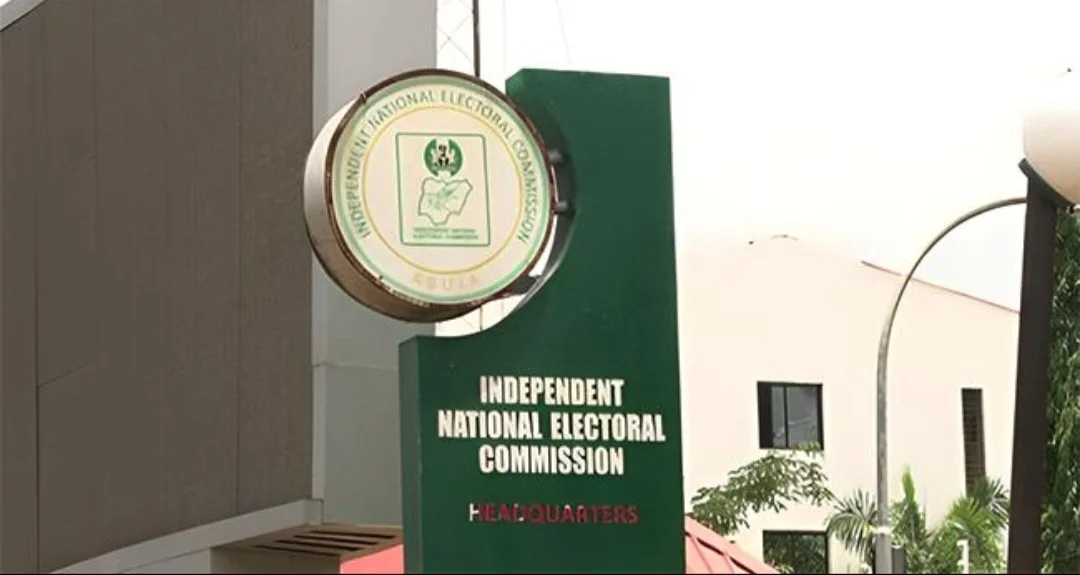
The Independent National Electoral Commission (INEC) has extended the deadline for political parties to submit the names and particulars of its candidates for the 2027 gubernatorial and State Houses of Assembly elections.
Following pleas by political parties for more time to finalise nominations thru the INEC special online portal, the electoral body has shifted the deadline from Saturday, August 8 to Tuesday, August 11, 2026.
The extension comes as political parties ramp up preparations for the 2027 general elections with nomination of candidates emerging as one of the major milestones ahead to the polls.
The extension was announced by INEC in a statement signed by the National Commissioner and Chairman of the Information and Voter Education Committee, Mohammed Kudu Haruna.
The commission said the submission window was initially expected to close on August 8, according to its revised timetable and schedule of activities for the 2027 general elections.
But following appeals by political parties, INEC further extended by three days the period for the parties to finish the uploading of their candidates’ information.
This means that the new deadline is Tuesday 11 August 2026.
”This extension is only for submission of candidates for governorship and State Houses of Assembly elections.
It does not mean a universal extension to all deadlines for candidates in the 2027 election timetable.
The nomination of candidates is a critical stage in the electoral process in Nigeria.
Political parties shall provide to INEC the details of candidates selected thru their primaries or any other permitted nominations. The commission then considers and publishes the details of candidates as required by law and by its own electoral timetable.
The extra time allows parties to fix any outstanding administrative difficulties, finish uploads and fix any errors encountered during the electronic submission procedure.
The INEC 2026 Regulations and Guidelines provide that the names and particulars of candidates shall be uploaded by political parties on the required forms thru the INEC Candidate Nomination Portal (ICNP).The extension therefore appeared to be largely meant to allow parties who had not completed the electronic process to do so before a new deadline.
The development comes as Nigeria intensifies preparations for the national elections in 2027.
The INEC’s broader electoral calendar has already set forth certain deadlines for political parties, candidates and election stakeholders.
The commission is doing the nomination process in stages according to their schedule; and there are different timelines for presidential/National Assembly races and governorship/State Assembly elections.
In their analysis, the Policy and Legal Advocacy Center (PLAC) observed that INEC’s operational calendar has staggered the nomination process and set earlier portal upload deadlines than the outer statutory dates provided in the Electoral Act 2026.
This makes the recent three-day delay especially critical for parties that are trying to satisfy the commission’s operational requirements.
The extension gives political parties till Tuesday to make the required paperwork.
The judgement does not mean parties can expect more extensions.
Political groups are expected to consequently take the extra time to ensure that their candidate details are appropriately submitted and that remaining nomination requirements are met.
The commission’s decision additionally emphasises the increasing significance of its electronic nomination system in handling the substantial number of material that will be part of the 2027 elections.
The statement also updated on the approaching Osun State governorship election slated to hold on the 15th of August, 2026 by INEC.
The commission added that voters who sought for replacement of lost, damaged or defaced Permanent Voter Cards (PVCs) have until midnight on Sunday, August 9 to print their downloaded replacement cards.
INEC said the deadline would let it collate data on downloaded PVCs and determine final figures on PVC collection ahead of the Osun poll.
The PVC collection activity in Osun was carried out in phases.
Collection at Registration Area level began on 22 July and initially ended on 28 July but was extended to 31 July following complaints of big crowds and difficulties experienced at several collection centers.
The exercise then went down to the Local Government Area level and lasted from 1st to 7th August,
INEC in a separate statement also condemned the stealing of voter cards from two collection centers in Osun.
The commission said replacement downloadable PVCs had been made available to the affected voters in Odo-Otin and Ife Central Local Government Areas after their cards were purportedly collected during raids on the collection centers.
INEC insisted that the stolen physical cards cannot be utilised for voting.
The explanation is important coming ahead of the August 15 governorship election and especially with the worries regarding security of election materials and the confidence of voters.
INEC has told the people of Osun that it is ready to conduct what it called free, fair, credible and inclusive election.
This is coming as INEC is under severe public and political scrutiny over its preparations for the upcoming general election.
With major political parties actively positioning themselves for presidential, governorship and legislative campaigns, the 2027 elections are expected to be one of the most watched political fights in Nigeria.
The commission’s management of the nomination of candidates, voter registration, distribution of PVCs, election technology and publication of the particulars of candidates would be important to public confidence in the electoral process.
The Electoral Act 2026 has also altered some of the dates for nominations establishing a new framework for political parties and INEC to adapt to. PLAC’s study pointed out that the new law shortened the statutory deadline for submitting party nominations from 180 days before an election to 120 days.
INEC will next proceed to process the information submitted by political parties as stipulated in the electoral timetable once the window for submission closes.
Where appropriate, information about candidates shall be disclosed to enable voters to evaluate the details of candidates for elective office.
The additional three days could help parties to solve nomination hurdles, uploading issues at the last minute.
But for INEC, the delay also underscores the fine line between enforcing electoral deadlines and mitigating real issues experienced by political parties.
The new deadline of August 11 gives parties only a narrow window to complete the process.
So the commission’s decision is unlikely to hinder preparations for 2027. Instead it provides political parties with one more short window to get their candidate submissions in order before the electoral process moves on to its next phase.
About the Author