
In the previous five years, no less than 60 academics in Nigerian universities and polytechnics have been suspended, sacked, had their jobs terminated or prosecuted over charges of sexual harassment and other forms of sexual misbehaviour.
An analysis of disciplinary actions publicly announced by tertiary institutions between 2021 and July 2026 showed that despite the zero-tolerance policies against sexual misconduct by universities and polytechnics, reports of lecturers requesting sex from students have continued to emerge across the country, Saturday PUNCH reports.
The latest cases occurred on July 27, 2026, when Paul University, Awka, Anambra State, announced the suspension of a practical biology technologist in its Faculty of Natural and Applied Sciences, Cornelius Eze, over serious allegations of sexual misconduct following a complaint made to the institution on July 14.
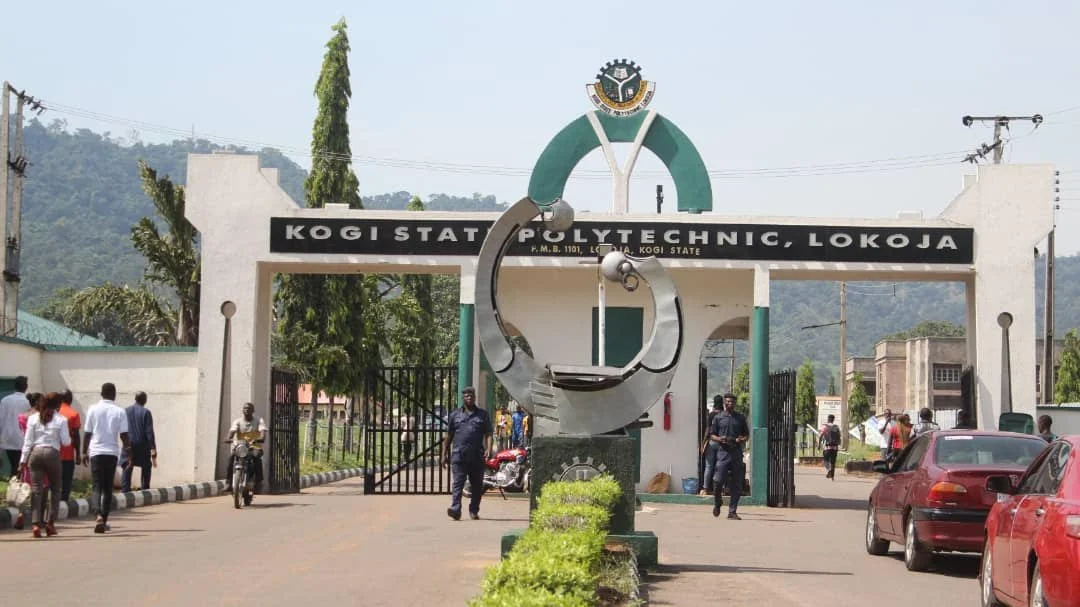
A week earlier on July 18, a lecturer at Kogi State Polytechnic, Mukhtar Muhammed, was dismissed for allegedly sexually molesting a pupil.
The college stated the move was in a bid to preserve discipline and protect pupils from abuse.
It was not the first time the institution has taken such measures.
The polytechnic also revoked the appointment of a lecturer, Abutu Thompson, in December 2025 following allegations of sexual harassment and victimisation of a female student of the Department of Computer Science.
Similarly, a lecturer in the Department of English and Literary Studies, Federal University, Lokoja, Kogi State was investigated in May, 2024 for alleged persistent attempts to sexually harass a female student with improper communications.
The crackdown sped up in 2024 and 2025.
The University of Nigeria, Nsukka, in April 2024, suspended a lecturer, Mfonobong Udoudom, indefinitely following a viral video that reportedly showed him sexually abusing a female student.
In April 2025, the Governing Council of Lagos State University of Science and Technology sacked three lecturers for alleged sexual harassment after disciplinary processes.
The Governing Council of Abubakar Tafawa Balewa University, Bauchi, has dismissed a senior lecturer, Dr. Usman Aliyu, for sexually harassing a married postgraduate student, who accused him of demanding sexual favours and threatening her academic progress. This was less than 10 days after the case was reported.
The list extended further in July 2025 when the Lagos State University sacked two lecturers after its Governing Council allegedly judged them guilty of offences, including sexual harassment, inhumane treatment of pupils and financial wrongdoing.
The new sanctions represent only a small portion of the disciplinary actions taken by tertiary institutions over the past five years.
In February 2021, the University of Nigeria, Nsukka, suspended a lecturer of the Department of Archaeology and Tourism, Dr Chigozie Odum, on charges of sexual misconduct.
Four months ago, the Federal University, Oye-Ekiti suspended a lecturer in its Department of Media and Theatre Arts following identical charges while the University of Lagos terminated two academics in June 2021 for sexual misconduct.
The University of Port Harcourt also sacked a lecturer in the Department of Foreign Languages and Literature for sexual misconduct in August 2021.
Similarly, the Vice Chancellor of Akwa Ibom State University, Prof. Nse Essien, in June 2021 announced that the institution terminated roughly 14 lecturers for participating in the sexual molestation and abuse of female students.
The Federal Polytechnic, Bauchi sacked two lecturers of the Departments of Nutrition/Dietetics and General Studies in October 2021 for sexual misconduct.
Same year, a lecturer in the Department of Sociology at the Ignatius Ajuru University of Education was sacked for impregnating a female student while another instructor at the Kwara State University, Malete was sacked in December for sexually harassing a student in the Department of Pure and Applied Sciences.
The sanctions persisted in 2022.
In the same year, a lecturer at the Elechi Amadi Polytechnic in Rivers State was fired in January for allegedly sexually harassing a female student.
Three months later, Obafemi Awolowo University, Ile-Ife, Osun State, set up a probe into allegations of sexual harassment against a professor in its Department of Linguistics and African Studies, bringing to two the number of professors in the institution to have faced similar allegations within a few years.
In June 2022, the then Vice Chancellor of the University of Abuja, Prof Abdul-Raheed Na’allah, dismissed two professors for sexual misconduct, saying it was part of efforts to maintain the university’s ethical standards.
More disciplinary actions in 2023.
The Independent Corrupt Practices Commission (ICPC) The Commission arraigned a lecturer of Tai Solarin University of Education, Dr Balogun Olaniran, for allegedly demanding sexual gratification from a female student to change her examination results.
The same year, Ambrose Alli University fired a lecturer over alleged sexual harassment after its Staff Disciplinary Committee found him guilty of misbehaviour in May.
The Vice Chancellor of the college, Prof. Asomwan Adagbonyin said the lecturer admitted to making attempts to the student and had even gone to her church to seek forgiveness.
In July 2023, Na’allah reported that the University of Abuja has terminated two more instructors over complaints of sexual harassment.
It was also learned that the University of Calabar had suspended its then Dean, Faculty of Law, Prof. Cyril Ndifon over charges of sexual harassment in August 2023.
It later became one of the nation’s highest-profile examples of university sexual harassment and led to criminal charges against him.
Just over a month later, the University of Lagos suspended a lecturer, Kadri Babalola, for allegedly raping a 21-year-old student.
In October 2023, the Federal College of Forestry in Plateau State also sacked four instructors for sexually harassing female students.
The reoccurring occurrences have heightened fears that sexual harassment remains ingrained in Nigeria’s tertiary education system despite repeated disciplinary measures by institutions.
According to a 2018 poll by the World Bank Group, about 70 per cent of female graduates from postsecondary institutions in Nigeria have encountered at least one type of sexual harassment during their academic journey.
The survey found that the main perpetrators were fellow students and lecturers yet many victims indicated they did not disclose occurrences for fear of victimisation, intimidation, academic consequences and lack of faith in the existing reporting processes.
And the recent incidents of students accusing teachers of wrongdoing has again brought the matter into public scrutiny.
A University of Lagos student recently went to court accusing a lecturer of sexual harassment, a scenario that has rekindled discussions about access to justice for survivors and the duty of institutions to safeguard complainants from reprisal.
The newfound attention comes after new legislative initiatives to tighten the country’s legal response to sexual harassment in educational institutions.
In 2025, a legislative chamber, the House of Representatives, proposed a bill to impose a harsher sentence on lecturers convicted of sexually abusing pupils.
The bill aims to reinforce existing laws by increasing the penalty for violators and requiring tertiary institutions to implement transparent reporting and investigation processes.
This follows years of agitation after the Sexual Harassment in Tertiary Educational Institutions Prohibition Bill, which had considerable popular support, failed to become law after being approved by previous assembly.
Education rights campaigners have argued that while colleges have been more inclined to fire violating academics, criminal prosecution is rare, with many perpetrators escaping with administrative penalties merely.
Speaking on the matter, Director of Programmes at Reform Education Nigeria, Ayodamola Oluwatoyin, called on President Bola Tinubu to sign the proposed law.
“Once the president signs the bill, it’ll be a game-changer. We need to make our schools safe for our youngsters. “The most unfortunate part of the issue is that some of these students, even when harassed, are scared to come out in the open for fear of victimisation and other issues,” Oluwatoyin stated.
In the same vein, Nafisa Atiku-Adejuwon, the former Programme Manager, Gender Justice at the Shehu Musa Yar’Adua Foundation, called for tertiary institutions to establish survivor-centred reporting mechanisms that would encourage victims to speak out without fear.
“The response system has to be survivor-centred and holistic; mental and physical health has to be taken seriously. “The response system shouldn’t be to make the university look good; the response system should be to take care of the survivors,” she said.
Universities also need to develop trust with students by promising confidentiality, safeguarding complainants from retaliation and ensuring that claims are reviewed quickly and transparently, she said.
About the Author