
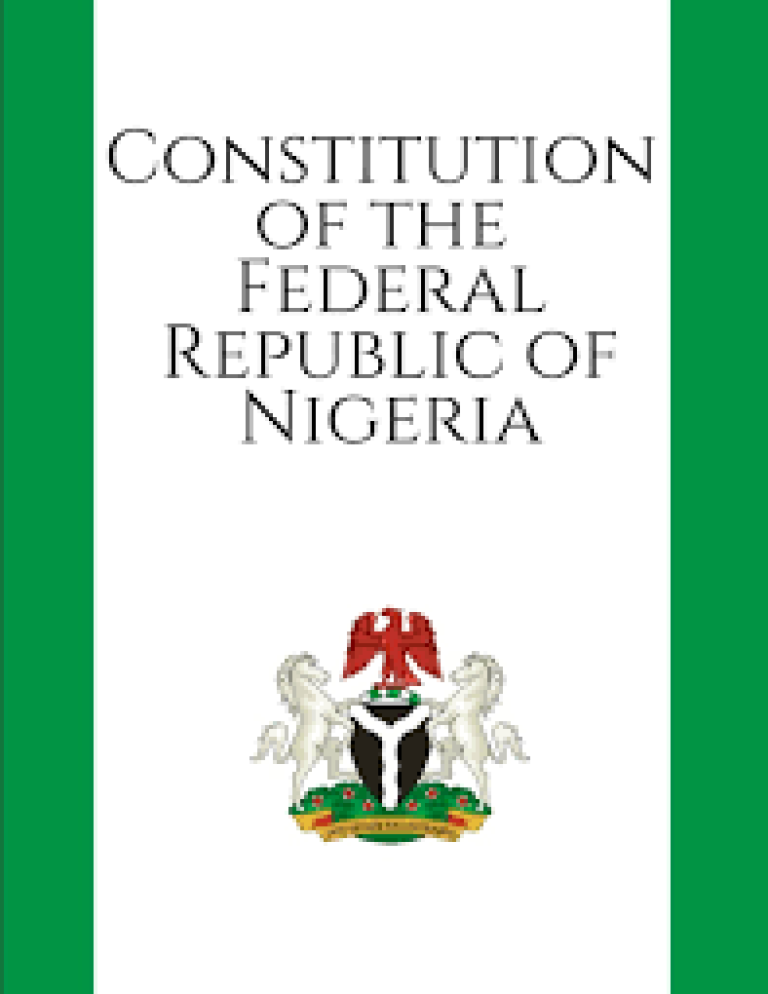
Afenifere National Publicity Secretary, Prince Justice Faloye, has said that the democratic leadership in Nigeria since 1999 had contributed to the economic woes the country is passing through, by ignoring the Chapter Two of the Constitution of the Federal Republic of Nigeria that holds the ace for economic boom.
The political elite instead of implementing these basic principles in Chapter Two of the Constitution were preoccupied crafting policies that never served the common Nigerian, the president of ASHE Foundation, a think tank group, Faloye writes Daily Independent.
He said the so-called framework of economic reforms to tighten the economic noose on the poor, through devaluation, subsidy elimination and taxation must be modified in order to have significant impact to the society.
“Chapter Two of the Constitution prescribes everything to make Nigeria great – economics, politics, sociocultural, education, health, foreign policy among others, but has been neglected by all parties since 1999, until SDP now made it the focus of the 2027 manifesto,” he said.
“But Section 16 is the most important and most critical for making everything else work. Economics is why we became the Slave Coast, merged into Nigeria and why we today have 63% poverty rate. Nothing short of a War, THE BIG PUSH can reverse the 500 year economic slavery.
Chapter Two is broad – Section 14 is on Sovereignty, democracy and social justice, calling security and wellbeing the primary purpose of government: 15 Political Objectives of national integration against prejudice and prebendalist government Section 16 are Economic Objectives providing maximal welfare, happiness and planned economy: Section 17 Social aims of freedom, equality, Justice and dignity Section 18 Education aims of free education Section 19 Foreign policy Section 20 Environment Section 21 Culture Section 22 Media Section 23 Ethics Section Citizenship
“However as illustrated Section 16 is crucial because it states the right type of economic ideology which can inspire Section 15 Political Objectives, Section 17 Social Objectives, Section 18 Free Education etc.
“Yet politicians violating the Section 14 objectives of Sovereignty-politically by election malpractices and economically by foreign inspired neoliberal economic policies, have not only failed the expressed primary purpose of governance for security and welfare, but every other stipulation.
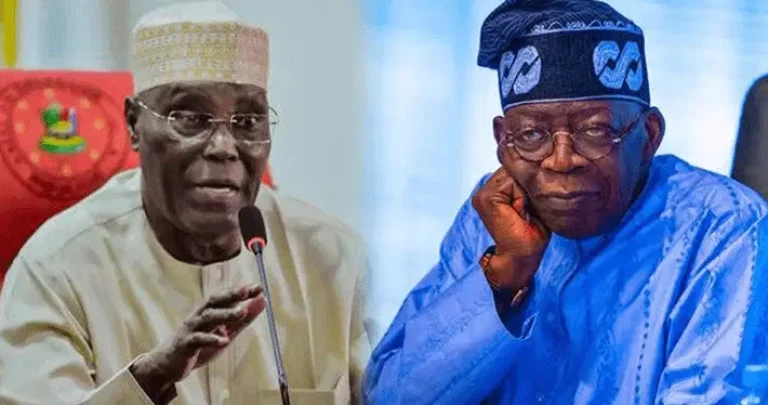
“There is a question about whether the greatest fault of our politicians is corruption or ignorance due to coloniality of knowledge and power sources that causes mental slavery. I have gone through the Manifestoes of the 3 top presidential contenders – Bola Tinubu Abubakar Atiku and Peter Obi – all of whom have all vouched for fuel subsidy removals and devaluation. I authored an article in November 2022 titled Neocolonial administrators or Economic Revolutionaries.
“Not knowing that fuel subsidies were not consumption subsidies they proclaimed but production subsidy since, two thirds of vehicles were commercial, in addition to Okada and Keke and 90% of our production was based on fossil fuels so the removal crashed the productive economy.
“They also have the misconception that Agriculture and Agro-Allied industries will bring about industrial revolution and economic prosperity. Even Obasanjo Farms hasn’t boosted manufacturing by-products in almost 50 years of its establishment.
“Our elite are ideologically stuck in the slave plantation economic exploitation nor the colonial economic system of exporting primary goods and importing manufactures, and only want to change the skin color of the plantation slavemasters while the exploited masses are paid unliveable wages.
“Nigeria has remained a poor neo-colonial economy with over 90% of its labour in the informal sector consisting of agriculture, retail and transport workers on low unliveable wages with no healthcare, housing or retirement benefits.
Manufacturing sector produces less than 10% of our national production and only 3 subsectors (food & beverage, cement and textile) with low wages contribute to 77% of manufacturing output.
“Our political slave masters are demanding more agricultural labor, further depressing the already low agricultural wages. In USA, China and other developed countries, the labour was pulled into the industrial sector with greater earnings. In agriculture, the decline in the supply of agricultural labour led to pay increases which promoted the transition from peasant to industrial agriculture.
“Nigeria’s 26% contribution of agriculture to GDP is too high, just like China before its economic BIG PUSH, now China has reduced it from 27% to 7.9% USA to 0.9% EU to 1.6% all with railways and massive housing that increased heavy industry and services like haulage and logistics.
“Their utopian Manifestos of Agro-Allied industries as El Dorado is not aware that Nigeria has the highest agriculture value added in Africa and 5th largest in the world because our agriculture is fully processed in our food, tobacco and beverages, and textile manufacturing subsector. Our agriculture is suffering from laws of decreasing returns, due to lack of rails and haulage, causing 40% wastage of agricultural produce which diminishes return on investment and wages.
What is needed is a change in the structure of the economy and not economic changes that tighten the economic noose on the poor through devaluation, subsidy elimination and taxation. Prince Adewole Adebayo, the SDP Presidential candidate says what is needed is an economic war, the Big Push economic development doctrine. Not simply mouthing ‘consumption to Production, his strategy to remove poverty is to confront the two pillars of the economic system – the consumer and producer market.
“There is no development in the consumer market – homes – and the industrial launchpad – railways – and we have 30 million people homeless and we don’t have a railway complex. Houses are the best of all goods and repository of wealth that encourage consumer demand.
“Railways, not just another mode of transport, have the highest income and employment multiplier effects across the entire economy. You can grow yam into yam chips processing, oranges into juice industries, but railways are the largest production unit including Steel, Plastic, Rubber, Electrical and Electronics.
What is needed is a Big Push, like the 1933 New Deal by US President FD Roosevelt and China’s Chairman Mao enormous public works. “China and India push their economy by building 15,000 houses and 15 kilometers of railway everyday even till date”.
Given 30 million homeless and a population growth of 6 million per year, at least 2,500 housing units per day (1 million per year) must be developed across the states based on population to stop homelessness from getting worse.
The private sector builds fewer than 400,000 annually (about 1000 per day) and the government has planned 25,000 dwellings for 2025. To fulfill its pledge of putting a roof over every head, it has to build at least 7,000 dwellings a day. There should be a railway station in every local government area, not a piecemeal approach but a planned approach which involves 10 kilometers a day across the country. First, a grid of three West-East lines (Lagos-Calabar, Ilorin-Yola and Sokoto-Maiduguri) and three South-North lines (Lagos-Sokoto, Port Harcourt-Kano, Calabar-Maiduguri) can be created and then States and local government can connect to the mainlines. The railway boom will bring wealth for at least 50 years.
Instead than relying on foreign loans, SDP wants to employ the tools of Modern Monetary Theory to deficit budget. The massive spending is projected to produce inflation, especially if it spreads to imports due to needed raw materials or contractor earnings used to buy consumer items.
Economics realizes there is a tradeoff between employment and inflation known as the Philips Curve, without deficit budgeting. The trade-off between inflation and big time development is taken care of by having the rate of inflation less than the rate of value added.
Apart from being the only Nigerian institution with nationwide organizational capabilities, the Nigerian Defence Industries Corporation is the business arm of the Army, and it would eliminate the cost of contractors and wastage to produce at half the price, which could be recouped in the markets, with the government acting as the business incubator. The magnitude of the major public works must be of an immense and strategic character, galvanizing the whole nation into creative action.
“The building of our economy from the roots of the consumer and producer markets, with the provision of citizens with the Ultimate Good ‘Summum Bonum’ of housing, and railway industrial launchpad that free education, free health, true social democracy and political system all will defend, human dignity, vibrant foreign policy and all other objectives of Chapter Two.”
About the Author