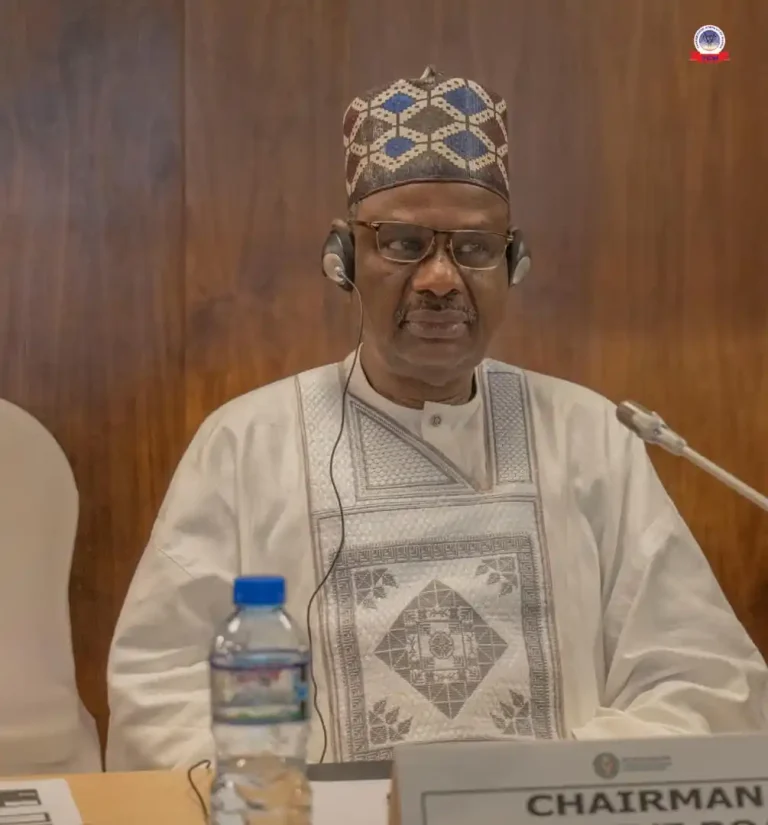

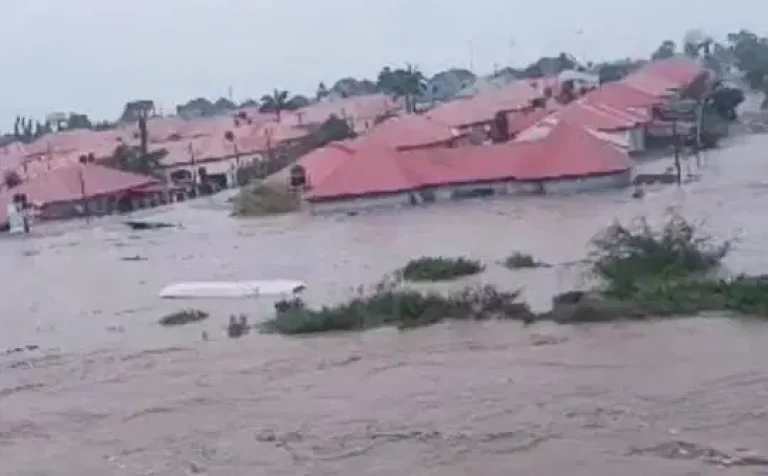
The Director General and Chief Executive Officer, Nigeria Hydrological Services Agency, NiHSA, Umar Mohammed, has said that last week’s devastating floods in Lagos State and some other states across the country, were not a surprise. City & Local Guides
The DG stated that NiHSA’s projections and warnings were ignored, writes Sunday Vanguard.
He said NiSHA has done its predictions using many models before the floods. “This is something we foresaw, we saw it coming.
“This is just the beginning of the rainy season, sometime around July-September (12 weeks), and it could be worse than what is even happening right now,” he cautioned. “As we speak now, with the flooding happening, if nothing is done…
And we expect it to get worse around August-September specifically August-September.
Muhammad also highlighted concerns that the flooding could impact drinking water in affected states as it could be contaminated.
Lagos had heavy rainfall on Tuesday which continued for over 12 hours flooding property and roads in Lagos while bringing commercial activity and vehicular movement to a standstill.
The downpour that began on Sunday reached a crescendo, stranding traffic and commuters across the metropolis, while homeowners had to bail out storm water from their homes to be safe.
Because of the downpour’s ferocity and associated threats, parents and guardians, in panic mode, stopped their children and wards from going to school.
Some of the areas that were heavily flooded include Lagos-Oshodi Motorway, Abeokuta Motorway by Oshodi bus stop, Lekki-Epe Motorway and its surroundings, Victoria Island, Agege, Ikeja, Oworonsoki, Gbagada, Funsho Williams Avenue (formerly Western Avenue), Iwaya area of Yaba, Lagos Mainland Local Government Area and other coastal areas. City & Local Guides
However, internet monitoring viral videos revealed locals and cars caught in floodwaters sending SOS message to the state administration for aid.
Lagos is a coastal state and hence it has lots of factors that can impact floods within the state distinctive to Lagos.
“Lagos is a very big urban city, and it has a very big river that cuts through the city, and then it is just by the ocean. So all three primary types of floods especially in Nigeria can occur in Lagos with this.
“There is a chance of urban flooding in Lagos, there is a chance of riverine flooding in Lagos, even coastal and tidal flooding are possible in Lagos.
“Think of situations where you have urban flooding and then the river rises.
“There is going to be a collision of flood types that could be even more devastating.
And Lagos is at some point below sea level. I wouldn’t want to term flat considering the character and landscape of Lagos. Local & City Guides
“When I say below sea level, there is a sea level, and usually ground is supposed to be above the sea, that is why the ground is not submerged under water.”
“Mohammed spoke to our correspondent at the weekend through the Head, Geographic Information System (GIS) and Remote Sensing, Emmanuel David Tuna.
“It’s above sea level from the point of view of the bank or the beach area. Now some parts, especially in Ikoyi, that I have been to, where we utilise some of our equipment and our GPS to check the altitude of the ground, we got to observe that some spots in Lagos are point zero, meaning equal level with the water.
“Some places are even below sea level. But not all parts of Lagos, certain sections of Lagos are above, and these regions that we get to witness flooding a lot of times in the urban region are below sea level. City& Local Guides
And we ask a lot of questions. We ask about the behavioural pattern of this flooding. Because sometimes when this floodwater happens, we may not be there to observe the actions, but we know from experience how floodwater ought to behave, and then we ask questions – does it come in a certain direction?
“Is there any speed on it? Speed? Is it dead ? ”Are these waters more stagnant than flowing at the height of the rainy season? Or do they flow in some areas? What direction do they take when they flow?
Do they flow from point A to point B or B to point A?
“We know from our analysis where it is flooding but with eyewitnesses it’s more like it validates what we have and when I mentioned that we are not surprised it’s because we noticed that these areas that are below sea level are already as of the time we went there which is after the rainy season sometime between October and November most of their drainages already were filled with water and stagnant.
“Number one, drainages filled with water, sometimes even to the brim, and there was no flooding, drainages already filled.
Secondly, we saw that these drainages, as they filled, were not flowing.
“So there is a clog someplace.
“Now, in addition to the blockage, these drainages are filled with dirt and other debris—sand and plastics and all that.
“So you would get to see that it forms more like a pond system .
“Some areas will flow into the town instead of it flowing out of the town and make it stagnant and lots of flooding in Lagos, we were expecting it to be more stagnant as it is flowing from what we are seeing, from reports we are seeing.” City & Local Guides
‘Lagos, Ogun River enters
“So as it’s flowing there’s every indication that the river is contributing as well. “So, now we have urban flooding at stake, happening now, and riverine flooding joining that.
“Riverine flooding should not be a factor in this area but it is because the urban flooding has already started and filled up all areas the rivers were supposed to flow to.
So the river was just starting to urban flood and that was making it worse.
“It’s a fresh water river and it’s coming out of the Ogun River itself. Ogun River enters Lagos, it didn’t merely run right into the ocean.
“It separates, it creates more as like a little tributary in the state.
“And we predict a lot of things like that in the coastal area.
“When a river is trying to flow down to the ocean it splits and breaks, either forming a small delta or having some tributaries that flow to the ocean.
“So these tributaries contribute to urban flooding and they increase the intensity.
“So without this river it would have just been urban flooding and stagnant.
“But this flow coming into urban flooding increases this and at this stage we should be lucky that the tides are not even high to combine with this; if not, it will have nowhere to flow to and the area that is being submerged will be way higher.
“The three types of flooding can occur in Lagos which is so peculiar to Lagos. And when they happen at the same time, it gets challenging.” City & Local Guides
‘Hazardous flooding’
He warned: “Right now as we speak, with the flooding going on, if nothing is done, this is just the beginning of the rainy season, sometime around July-September, and it could be worse than what is even happening right now.
And we expect it to get worse in August-September, particularly August-September.
“The reason is that, as we speak now, the ground is already saturated, Lagos is flooding and it is going this long because it has nowhere to go to.
“Remember I said some parts are below sea level. So it can’t even flow out of the town. ““The ground has to take up this flood water, or even push it out.
“So, if it’s not doing that, the ground would be forced to absorb this water and it would take longer time for the flood water to even escape.
“And if it doesn’t get enough escape and there’s more rain coming in, the flooding could go on for days, maybe even a week or two.”
Warnings and predictions ignored
“We saw this coming, it was a challenge and we actually spoke out through the media about some of the conditions that were happening in Lagos. NiHSA’s earlier predictions and warnings were disregarded and thrown away,” the DG further remarked. City & Local Guides
‘Worries about drinking water’
“So apart from the flooding there was something else that we were also concerned about drinking water, the quality of the water because we knew that this flooding was coming, we were not certain of the intensity of the flood but we knew it was coming.
We were worried about the drinking water since we thought it would last longer, the flood would last a long time.
And then we were worried about drinking water across states.
“So we started looking at the quality of the water and we did, we have our reports.
So we wanted to see the quality of the water before the flood since we know that after flooding, or even during flood, we are expecting issues with drinking water in the states.
“And then we are trying to compare, before the flood, what is the quality of water in the boreholes, the water that the community and residents are drinking. Then after floods, what is the state of the water?
“So we can go and see what is causing the water pollution. We wish to verify the sources, in particular the source. So, we have pre-flood data as we speak and now that flooding is happening, I am sure my DG is already putting a team together to go to Lagos and acquire a post-flood report. City & Local Guides
‘Flood To Abate In October’
However, the NiHSA chairman claimed the Lagos waters would decrease in October but not before slipping into a on and off pattern.
We are looking for the floods to start to recede rather soon. We expect it within days but to also re-start again, it’s going to be an on-and-off time of flooding. We predict this flood to be intermittent, to be intermittent from July to September.
“We expect these rains to be receding around October, we still expect flooding, but the intensity may not be as high but we are still expecting flooding in October, and the only time we can be safe, I will be honest, is possibly around November.
“We are expecting low flood in October. We have reports and weekly forecasts that we are currently issuing out today and for the rest of the year, analysing these events but particularly not to Lagos alone, for the entire country but as we are talking about Lagos, we have also analysis about Lagos to show the extent of our forecasts because we are not expecting it to stop now. “There are some places that had never experienced flooding in Lagos before until this year.”
Cooperation failure
The DG decried lack of collaboration from state governments on annual flood projections and what to do to lessen the impact as he added, “We have a challenge of cooperation from states, a serious challenge with cooperation from states. Most of the time we are coming before the flood starts, we are not coming when the flood is happening, they are not perceiving any risk that is approaching. Most of the time we are ignored. “Our warnings are not being taken seriously.”
About the Author