
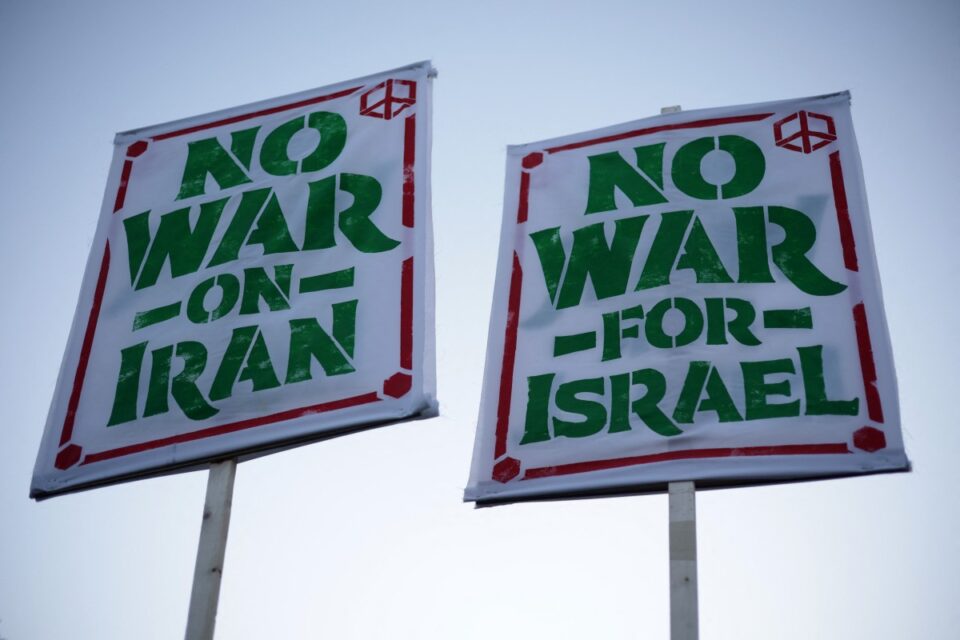
WASHINGTON, DC - APRIL 07: Anti-war demonstrators hold signs as they gather near the White House to protest the war in Iran on April 7, 2026 in Washington, DC. U.S. President Donald Trump announced that a temporary ceasefire has been reached between the U.S., Iran, and Israel, pausing attacks for about two weeks while Iran reopens the Strait of Hormuz and negotiations continue toward a longer-term agreement. Alex Wong/Getty Images/AFP (Photo by ALEX WONG / GETTY IMAGES NORTH AMERICA / Getty Images via AFP)
Nigeria’s oil earnings have chalked an anticipated windfall of almost N5.13 trillion in two months after crude prices shot up substantially on the back of tensions related to the United States-Iran issue, boosting revenues well above the Federal Government’s 2026 budget forecasts.
Sunday PUNCH reported that the US-Iran conflict began on February 28 with oil below $70 a barrel.
Since the war began, oil prices have risen further, at one point selling for more than $120. Brent was trading at $110 a barrel on Friday while Nigeria’s flagship crude, Bonny Light, was trading at $134 as at Thursday.
The 2026 budget is based on an oil production estimate of 1.8 million barrels per day, a benchmark oil price of $64.85 per barrel and an exchange rate of N1,400 to the dollar.
The estimated daily oil revenue is therefore $116.73m (1.8 million barrels x $64.85) This is equivalent to around N163.42bn each day at the budget exchange rate, which is the starting point for evaluating any revenue gains or shortfalls.
However, real earnings in March and April were above this benchmark, mostly due to a substantial jump in crude oil prices as the Middle East conflict continues to simmer, findings show.
In March, data from the Nigerian Upstream Petroleum Regulatory Commission showed that the country’s oil production averaged 1.55 million barrels a day, the average crude price was $95.03 a barrel, according to the Central Bank of Nigeria and the exchange rate averaged N1,370 to the dollar.
These estimates mean they were raking in almost $147.30m a day in revenue, by multiplying 1.55 million barrels by $95.03.
This corresponds to around N201.80bn daily when converted at the average exchange rate for the month.
There was a positive variance of N38.38bn daily against the budget benchmark of N163.42bn daily. That’s N38.4bn daily on average or an anticipated N1.19tn windfall in 31 days in March.
Although production was around 250,000 barrels per day short of the budget objective, the higher oil price meant total revenues were still well above forecasts.
The improvements were more apparent in April, with production and prices both up. Oil output is projected to climb to a conservative average of 1.7 m bpd (based on NUPRC assertions that oil production had jumped to 1.8 mbpd) while the average price shot up to $127.05 per barrel. The currency rate for the month was at N1,365 to the dollar.
Applying these conditions, daily oil revenue increased to around $216.0m, which is the product of 1.7 million barrels and $127.05. Converting to naira, this translates to about N294.84bn each day.
–This is a daily windfall of N131.42bn above the budget benchmark”
The overall windfall in the 30 days in April is anticipated to be roughly N3.94tn. This large rise reflects both an increased output performance and a surge in world oil prices throughout the period.
The total windfall from both months was roughly N5.13tn, with March providing N1.19tn and April contributing N3.94tn.
The study suggests that the income rise was driven largely by higher oil prices rather than by increased production.
Earnings beat expectations with firmer pricing but output remained considerably below budget benchmark in March.
Production is said to have improved in April, although the extent of the windfall was mostly due to the extraordinary jump in crude prices.
The development suggests a temporary increase to government revenues and could give some fiscal relief in the near future.
But it also underscores the country’s persistent exposure to fluctuations in the global oil market, since revenue performance remains primarily dependent on foreign price swings rather than consistent domestic production levels.
Further analysis indicates that without the price increase, revenues would have been much lower in both months, even if output and exchange rates had remained unchanged.
If March crude had been sold at the budget benchmark of $64.85 a barrel, revenue would have been roughly $100.52m a day, calculated by multiplying 1.55 million barrels by the benchmark price. That is a daily value of N137.71bn, or nearly N4.27tn for the 31-day period, converted at N1,370.
April seems to be the same. At a production rate of 1.7 million barrels per day, and a benchmark price of $64.85, the daily revenue would have been almost $110.25 million.
This translates to N150.50bn every day at the average exchange rate of N1,365, and about N4.52tn for the month.
The masses are at the receiving end as crude rates go up and fuel costs are also going up and the country is earning more revenue from oil sales.
The Nigerian National Petroleum Company Limited has boosted official selling prices for all 37 Nigerian crude grades for May-loading cargoes, Oilprice.com said.
The NNPC raised the price of its top quality, Bonny Light, by $6.13 a barrel for May from April, the report said, adding that Nigeria was enjoying the benefits of the US-Iran war. Forcados was similarly hiked by $7.01 per barrel.
“The Iran war is working for Nigeria. “Nigeria’s national oil company NNPC has increased the official selling prices of all 37 Nigerian crude grades for May-loading cargoes, raising its flagship grade Bonny Light by a hefty $6.13 per barrel compared to April, while Forcados is up by $7.01 per barrel,” the article said.
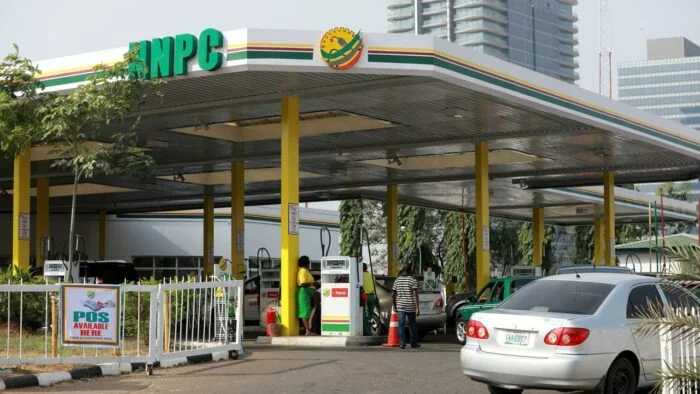
Petrol responded swiftly as the Dangote Petroleum Refinery increased the gantry price from N1,200 on Wednesday to N1,275 per litre.
Filling stations raised pump prices to an average of N1,250 to roughly N1,350 or N1,400 depending on the area without any hesitation.
Relief calls
Speaking in an interview with our correspondent, the National President of the Petroleum Products Retail Outlet Owners Association of Nigeria, Billy Gillis-Harry, said he lamented that the federal government was not taking actions to support the public while gaining more from the high oil prices.
“The government is not commenting on the rising petrol prices so it is worrying,” he remarked. At least the government could devise some measures. Crude oil price is beginning to see some improvement. Some of it the government can give back to bring down the cost of transportation so that food will not be costly, and some other things. That’s what we’ve been told.
The PETROAN CEO warned that the price of fuel could surge above N1,500 per litre if the crisis in the Middle East is not de-escalated.
If you go back to our predictions, I said it there, because Mr Trump is not very clear as to what he wants, in my opinion, if it is to demolish the Iranian nuclear plant or if it is to take over the crude oil like they are taking over Venezuela’s. I don’t think we know what he wants exactly. “We are not sure that we are seeing an end to that crisis,” he said.
As the government earns more revenue from oil, energy economists have recommended for targeted cash transfers to mitigate the impact of increased fuel prices on needy Nigerians.
“The situation is a ‘two-edged sword’ for Nigeria,” said Professor Adeola Adenikinju, a former president of the Nigerian Association for Energy Economics, with possible financial benefits from increased oil prices on one side and severe economic misery for citizens on the other.
Rising petrol costs have led to hikes in transport fares and inflation, putting more pressure on low income households, he said.
He added it is time for Nigeria to declare, “Look, we are sending some cash to those poor people who are vulnerable,” underscoring the necessity for immediate intervention to support the most impacted.
But he said the lack of a dependable database of vulnerable Nigerians still remains a major obstacle to the implementation of successful cash transfer initiatives.
If we have the data of all the impoverished people but we don’t have the data, this is the time that Nigeria should provide some cash to those who are vulnerable,” he added.
Adenikinju said recent initiatives to boost allowances for civil personnel may bring modest assistance but such measures would exclude a big segment of Nigerians working in the private and informal sectors.
He called on federal and state governments to collaborate to develop greater support measures based on that windfall.
Domestic crude pricing sought by refiners
Local refiners, reacting to the rising oil prices as a result of the US-Iran war, have urged the Federal Government to abandon the use of international pricing benchmarks for petroleum delivered to domestic plants, arguing the current system inflates costs and undermines local refining.
In an interview, Eche Idoko, the spokesperson of the Crude Oil Refiners group of Nigeria, said the group had been campaigning for a local pricing framework that would take into account the uniqueness of Nigeria.
Idoko said crude delivered to local refineries should be priced based on locally designed pricing instead of Brent as a benchmark.
“If you are using Brent as a benchmark for our pricing, the factors that are affecting the Brent pricing will still affect the price at which you are landing crude here. What we have always said is that you should discount those factors in Brent that don’t pertain to the exchange between the local refinery and the oil producers. “And you get the real cost of crude for local refineries,” he continued.
“One of the options that can be explored is that the Federal Government of Nigeria agrees to sell crude at a particular price to the Dangote Refinery with the assurance that the price of refined products does not go up,” said economist Bismarck Rewane.
On the other hand, the N5.13tn windfall is a reflection of the impact of the US-Iran conflict-driven increase in global crude prices on Nigeria’s oil earnings, boosting revenues considerably over the 2026 budget benchmark. But the gains are mostly price-driven and external, not the fruit of continuous output expansion.
That means that if the price of oil internationally falls, the country’s oil revenues will fall sharply.
The development underscores both the short-term economic benefits and the persistent vulnerability of Nigeria’s revenue base to shifts in the international oil market. It also underscores the double-edged effect of higher global oil prices, generating revenues for governments at the same time that they push up fuel costs and inflationary pressures on consumers.
About the Author