
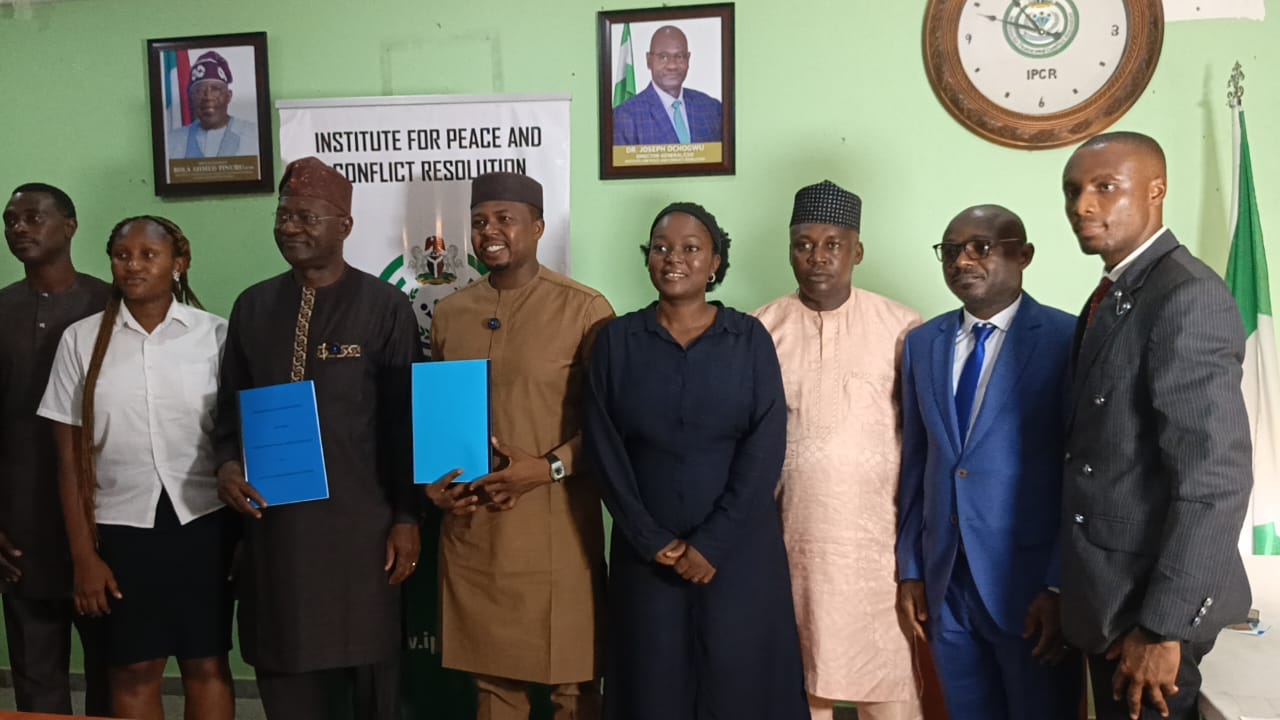
Dr. Joseph Ochogwu, the Director-General of the Institute for Peace and Conflict Resolution (IPCR), has said that the Institute is still dedicated to strengthening peace-building efforts through strategic partnerships. This was shown when it signed Memoranda of Understanding (MoUs) with five non-governmental organizations in Abuja.
Dr. Ochogwu said during the ceremony that the event was a “fruitful and significant step” toward bringing together the efforts of many people to deal with Nigeria’s complicated and changing conflict situation.
He says that IPCR is still committed to providing valuable services to the Nigerian government, its people, and the rest of Africa through research, policy advocacy, and direct action.
He said that the ever-changing nature of human society keeps creating new problems that need more thought and new ways to solve them.
“Conflicts and societal issues are always changing and, in some circumstances, changing shape. This requires critical thinking and plans that look ahead to find long-term solutions.
He stated, “The Institute is committed and dedicated to the work we do, which includes providing services through research, advocacy, direct interventions, and capacity building for a wide range of stakeholders.”
The DG stressed that IPCR works together with government agencies, international organizations, non-governmental organizations, community-based groups, and anyone who want to establish peace.
He also told the different NGOs to make sure that the MoUs be followed in both spirit and word. He stressed that the new MoUs are more than just formalities, and that implementation and demonstrable impact are very important.
“We sign these MoUs today because we believe you will do the work and change lives.” We don’t just believe in signing MoUs; we believe in bringing the spirit behind them to life. Ochogwu said, “Our focus is on working together in a practical way, using our strengths to their fullest, and making sure these partnerships provide real value to society.”
Some of the organizations who signed MoUs with IPCR are:
Faith Ayegba, the Director of Programs for the Carl-Maji Foundation, was there. The Carl Maji Foundation is a non-profit group that started in 2015 that works to give women and young people more authority.
The organization works to improve gender equality and youth development in Nigerian communities by making education, job opportunities, and policies that include everyone more accessible.
Chijoke Nnanna Ibeku is the Principal Partner of 3C’s Met International Institute. The institute is a specialized Alternative Dispute Resolution (ADR) group. It offers professional training and certification in mediation, negotiation, counseling, and conciliation, giving people and organizations the skills they need to settle disputes in homes, businesses, and communities.
The Executive Director of the Ihotu Children and Women Support Initiative (ICAWSI) is Emmanuel Grace Eki. Founded in 2013, ICAWSI works with women and children who are at risk, especially in rural and conflict-affected areas. It helps people by providing education, mentorship, health care, and human rights activism to promote dignity and self-sufficiency.
The respected Hub Foundation is led by Princess Doosugh Agbadu Adu. This group works in many states in Nigeria and is focused on young people. It leads efforts to empower young people, fight for mental health, take action on climate change, promote gender equality, and support sustainable development, with a strong focus on helping young people become more resilient.
Ambassador Moses Abolade spoke for the Peace Education and Practice Network (PEPNET). PEPNET is a group that works to foster peace by teaching people about it. It trains peace ambassadors and seeks to teach people how to deal with violence in schools and communities. It also works to address the core causes of insecurity through education-driven programs.
The signing of the MoU is a strategic move by IPCR to work more closely with civil society and professional organizations. This strengthens a multi-stakeholder approach to building peace, preventing conflict, and achieving sustainable development in Nigeria.
About the Author