
Some Nigerians living in India have sounded the alarm over what they say is more racial profiling and violence by the Indian police.
They complained about the difficulties of getting a visa and the exorbitant renewal fees, which they said made life in the Asian country miserable, according to Saturday PUNCH.
Some of the homeowners who talked to our reporter said that some Nigerian students were attacked physically and that reporting it to the police did not help.
The accusations are coming at a time when student groups are becoming more vocal about their calls for immediate diplomatic action.
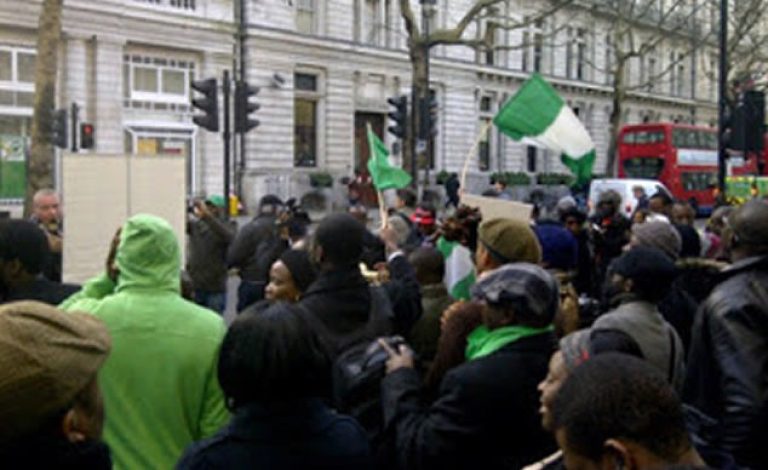
Recently, the National Association of Nigerian Students held a peaceful demonstration at the Indian High Commission in Abuja. They were upset over what they called “alarming reports” of Nigerian students being treated badly in India.
NANS gave the Federal Government a week to start serious diplomatic talks, saying that it would step up its advocacy efforts across the country if the problems were not fixed.
During the protest, NANS Vice President (Special Duties) Abubakar Mallawa told reporters that Nigerians were being treated badly. He also said that the group had received many distress reports from students in Indian cities, especially Mumbai, about problems with visas, unfair treatment, and systematic profiling.
He said that the students and other Nigerians who were affected had trouble renewing their visas, were arrested in large numbers because of their immigration status, were denied rental housing just because of their nationality, had their shops closed, had their goods taken, and in some cases, were forced into their homes and held in degrading conditions.
The group also had problems with the visa application process, saying that Nigerian candidates typically had to pay for interviews and processing but were rejected visas without clear reasons.
Anzaku Shedrack, the National Secretary of NANS, stated in a recent interview on Arise TV that the group had been getting alarming recordings of Nigerians being beaten up in different regions of India. He asked the Ministry of Foreign Affairs to step in.
The TV station presented a video that showed some people who were thought to be Indian hitting and stoning a person on the ground, who was reported to be Nigerian.
Abisola Williams, the Education Coordinator for the Rajasthan chapter of the Association of African Students in India, told our reporter that Nigerians were having a hard time in India.
Williams also said that regularization problems had a big effect on Nigerian students.
A third-year physiotherapy student said that India does not let international students live there permanently.
“It’s either you’re a student or you have a work visa and are a professional.” “We have to renew our visas every year, whether we’re students or professionals,” she remarked.
Williams said that Indian officials may reject visa extensions to students who didn’t keep up with their schoolwork or pay their bills.
Another Nigerian student in Delhi, who asked to remain anonymous, said that Nigerians have to spend 10,000 rupees (approximately N146,000) every three months to renew their visas. She said that this charge is lower for students from other African countries.
“Students from other African countries don’t have to pay for it.” We were told that the Indian and Nigerian governments had agreed that students would pay every three months. I know Zimbabweans who aren’t paying to renew their visas, but Ghanaians spend up to 500 rupees, which is around N8,000. This isn’t fair. That’s the cross that Nigerians have to face to stay in India legally. We don’t have enough time to get the money together. The student replied, “But for people from other countries, like Zimbabweans, they have about eight months before their next visa runs out.”
She also said that the price was not made clear throughout the visa procedure in Nigeria and that a lot of students only found out about it once they got to India.
The student further said that Indian police deliberately look for Nigerians whose visas have expired, which leads to arrests, threats, and deportation.
“When my visa was about to run out, I went to get it renewed, but I was shocked to find out it cost 10,000 rupees. The cops came seeking for me after that since I hadn’t renewed my visa.
“I’ve seen boys get bullied and harassed because of this.” They don’t think we follow the rules. People blame Nigerians for everything that goes wrong, which is not fair.
“These officers have done major wrongs to some persons. Some were sent to camps where they were deported. She responded, “I knew someone who was sent back to Nigeria for this.”
Drug-related crimes in India
It is thought that at least 50,000 Nigerians live in India.
Analysts think that the Nigerian community is being targeted since more people from Nigeria are being arrested for drug trafficking.
In 2024, Indian law enforcement detained 660 foreigners for drug-related crimes.
At least 106 of the suspects were said to be Nigerians, which is the second most. Nepal came in first with 203 citizens.
India also sent back 2,356 Nigerians between 2019 and 2024. The number of deportations rose from 339 in 2021 to 1,470 in the 2023–2024 fiscal year.
A diplomat says that Nigerians are police informants.
But a diplomat in India reported that the Indian authorities were using some Nigerians as informants.
The official, who didn’t want to be named, said that people like that were normally paid to do what they did.
“When Nigerians have problems with each other, they call the police. They become informants because the police pay them. The police take money from Nigerians when they are caught, and the informants get a portion. The insider remarked, “These actions make the country look bad.”
The ambassador told the federal government to pursue reciprocity so that Indian students in Nigeria would have the same visa terms.
“People sometimes think that any black person who is involved in a crime is Nigerian, but that’s not always true. Before making any decisions, you need to do your due diligence.
The source also told Nigerians to follow the law in their own country.
The official went on to say, “People should ask why Nigerians are being treated badly.” What crime did they commit? You are in a different country, thus you have to follow their rules. Some people have stayed for years without a legal visa. There may be penalties if you get caught.
The official stated that the problem also affects Nigerian diplomats and called for actions that would be the same on both sides.
“As diplomats, our families get new visas every year. We have talked about it at the highest levels, but nothing has been done. The greatest way to do things is to give and take. We should make sure their families get similar terms as we think about shorter periods for their students.
NIDCOM says Flag can’t decide for India.
The Nigerians in Diaspora Commission responded in response that it was not aware of any official complaints about visa issues impacting Nigerians. It also stressed that the Federal Government could not intervene with the immigration policies of other nations.
Abdur-Rahman Balogun, who is in charge of the Media, Public Relations, and Protocols Unit at NIDCOM, claimed that the commission had not heard from any other students who were affected other than the ones who contacted Saturday PUNCH.
“No, I don’t know.” “Students haven’t complained about that to us, other than you,” Balogun remarked.
He said that Nigeria’s role in these kinds of things was restricted by international diplomacy and that each country had the right to set its own visa rules.
“The only thing Nigeria can do is what they call giving back. That’s it. He went on to say, “You can’t beg them to lower visa fees in international diplomacy.”
In the meantime, attempts to gather more information from the Indian High Commission in Nigeria didn’t get very far. Shri Narendra Garg, the commission’s spokesperson for press and information, refused to comment on the situation.
He answered, “I don’t know what you’re talking about.” I am not the one who will answer these inquiries.
The same goes for Kimiebi Ebienfa, the Ministry of Foreign Affairs’ spokesperson, who did not answer calls or messages asking for an official response at the time this article was filed.
Former ambassadors want action
In response to the situation, former Nigerian diplomats appealed for quick diplomatic action and self-control, asking for both government assistance and responsible behavior among Nigerians living overseas.
Sola Abolurin, a retired career diplomat, told our correspondent that the Ministry of Foreign Affairs should ask the Nigerian ambassador to India to explain what happened and work with Indian officials to resolve the issue.
Abolurin, who is the General Secretary of the Association of Retired Career Ambassadors of Nigeria, said that the ambassador should then work with India’s Ministry of External Affairs to officially tell Nigeria’s concerns and push for better security measures to keep Nigerian citizens and their property safe.
The former ambassador also said that both the Nigerian and Indian governments should work together to fully look into the alleged attacks.
He asked the Nigerian Head of Mission in India to work with Nigerian community leaders to assist keep the peace.
Abolurin stated, “We also need to know why these attacks are happening. The federal government would work with the Indian government to look into the situation and find out why the attacks are still happening.”
He went on to stress the importance of diplomacy, saying that calling in the ambassador would be a formal way for Nigeria to protest the events.
Dr. Yemi Farounbi, who used to be Nigeria’s ambassador to the Philippines, said that Nigeria’s High Commission in India needs to act right away, starting with talking directly to Nigerian students and residents.
Farounbi added, “Our High Commission in India needs to step in, starting with the students and Nigerians there.”
He said that Nigerians living abroad ought to follow the laws and customs of their host country. This makes it easier for the government to protect them when they need to.
“You have to follow the rules and respect the culture of the people who live there.” He remarked, “The Nigerian government will be able to protect you better if you are on the right side of the law.”
Farounbi said that even though a small number of Nigerians might break the law, the majority are law-abiding and shouldn’t be judged based on the activities of a few.
“Because of a few bad apples, the host society may make generalizations, but that doesn’t really represent Nigerians.” He said, “Most Nigerian students are focused and follow the law.”
The former ambassador told Nigerian officials to work with Indian law enforcement to make sure that Nigerians aren’t unfairly targeted or called criminals.
He said, “The Indian government should not think of the minority as all Nigerians.”
The ambassador also mentioned other underlying causes, like prejudice and competition in the economy.
“Some people may think Nigerians are taking advantage of opportunities or see them through a racist lens.” Farounbi said, “Nigerians work hard and often succeed, which can make others jealous and sometimes lead to mob action.”
He said that these kinds of attacks weren’t completely new, but he was sure that the problem could be solved by coordinated diplomatic efforts.
About the Author