

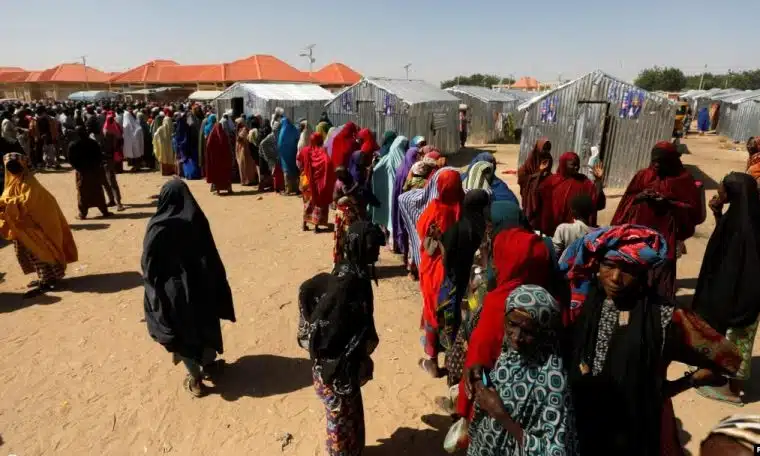
The sum of almost N160 million spent on snakebites among internally displaced persons in Benue State in seven months is a statistic that calls for a closer examination. The question is not whether victims should be treated, they must be treated.
The question is: how many people needed treatment, how much did each case cost and why has the public not been given a comprehensive breakdown of the expense.
James Iorpuu, the Executive Secretary of the Benue State Emergency Management Agency (SEMA), reported the cost in response to complaints concerning the care of displaced people. He claimed that the agency got him treatment at Benue State University Teaching Hospital, Makurdi, due to lack of help from humanitarian partners.
The money might be for legitimate medical needs, but the declaration leaves key issues unanswered. How many people were they treating? During the seven months, how many incidents of snakebite were registered? What was the average cost of therapy and how much was spent on drugs, antivenom, hospital bills and other interventions?
Without these information, the public can not adequately assess the magnitude of the problem or comprehend how the government arrived at the amount.
The issues are not exactly new. In September 2025, PUNCH had reported that 12 IDPs in Agagbe were bitten by snakes since January of the year. The report also detailed worries regarding access to treatment, with one case describing a 14-year-old kid whose condition was said to have deteriorated.
Vanguard further reported on October 8, 2026, that the Campaign for Equal Rights and Opportunities for all Nigerians had charged that there had been over 14 snakebite incidences in IDP camps and host towns in three weeks. The organization called on the state government to fumigate the affected areas.
These reports pose the crucial subject of prevention. Are the snakebite instances reoccurring and what actions have been made by the government to identify the danger locations, improve the shelter conditions and decrease the exposure of the residents?
Displaced individuals are already losing their homes, their livelihoods and access to basic services. They can be at greater danger due to poor shelter, inadequate sanitation and unmanaged surroundings. The World Health Organization lists housing, sanitation and environmental conditions as one of the variables influencing snakebite risk.
But it would be a mistake to assume that all snakebites happened within a camp, or that the instances were the result of inadequate management alone. Authorities need to release information as to where the bites took place and the circumstances.
You might want to look into fumigation as part of a professional environmental assessment, but it’s not a guarantyd fix. Practical protection could also involve removing dangerous plants surrounding shelters, controlling rubbish and rats, blocking holes through which snakes can enter buildings and educating inhabitants on what to do if they meet snakes.
The bigger question is whether there are enough health-care arrangements in the camps to start with.
In September 2026, Premium Times released an investigation that documented major health care concerns in the Anyiin IDP camp, including a closed clinic and difficulties getting medical care. That research doesn’t look at circumstances in all Benue camps, but it does raise worries about the consistency of basic healthcare for displaced families.
If the state spent ₦160 million just on snakebite treatment, how much did it spend on malaria, childhood ailments, maternal care, injuries and other basic medical requirements between March and September? SEMA has not released those data in the report detailing the snakebite spending.
Benue IDPs: How Many Snakebite Victims Cost Gov’t N160m?
There is also a need for transparency, not assumptions. There is nothing in the available reports to show that the amount of ₦160 million is overstated or that money was diverted. But such a large public spending needs a breakdown of the number of patients, the cost of treatments and the payments paid to hospitals.
The government should tell what preventive measures have been taken and whether the frequency of snakebite incidents has changed over time.
Displaced persons should not have to wait for another medical emergency before their living conditions are addressed. “It is necessary to treat snakebite victims but it’s equally important to prevent avoidable incidents.
The Benue authorities must answer a simple question: What is being done to guarantee fewer people get bitten in the first place, beyond spending money after individuals are bitten?
About the Author