
The federal government’s intention to give Nigerians a 30-day discount on gas has rekindled an age-old argument: how can a hell-bent government on terminating fuel subsidies offer relief without derailing its own economic reforms? The solution may lay less in the discount itself than in what occurs when the 30 days are up.
There’s a certain irony in the latest federal government involvement in Nigeria’s problematic petrol market.
Three years after President Bola Tinubu announced the removal of gasoline subsidy, his administration has announced a temporary discount on petrol supplied at Nigerian National Petroleum Company Limited (NNPC) filling stations.
The discount will be available for an initial 30 days and will be rolled out first to public transit operators.
The action was announced Thursday, October 8, by the Minister of Finance and Coordinating Minister of the Economy, Taiwo Oyedele, who maintained that it was not a return of subsidies. Instead the government would be selling petrol at cost, forsaking its profit for short-term comfort, he said.
That could be economically important. But for millions of Nigerians struggling with the expense of travel, food prices and the general cost of living, the nomenclature is unlikely to matter as much as real savings.
The questions are simple, how much will petrol be cheaper? Who will profit? Will transit fares go down? And, perhaps most crucially, what happens after 30 days?
THE POINT OF THE DISCOUNT
First, the government’s judgement should be considered on its merits. Fuel costs have risen successively for Nigerians since the withdrawal of petrol subsidies in May 2023, with effects that go far beyond the filling station.
Petrol is more than a commodity drunk by motorists. It is a major input for transport, trade, small-scale industrial and residential energy generation.
Transport operators raise fares when petrol prices go up. Distribution costs are higher for traders. Small businesses are spending more on generators. For the same amount of income, households realise they can get a lot less.
The government’s current involvement thus signals acceptance that macroeconomic reforms, however vital, cannot be evaluated exclusively on budgetary effects. They should also be judged on what they do to people’s lives.
There are at least three good reasons for the discount.
One, it could give instant assistance to customers. Any cut in pump prices, however little, would provide some relief, especially for commercial transport companies that consume large volumes of petrol on a daily basis.
Second, it is rational to give priority to public transport. The potential benefit to a far broader population from lower operating expenses for buses, taxis and other commercial vehicles than a general discount used mostly by private drivers.
Third, the fact that the intervention is temporary could make it more economically sustainable than the open-ended subsidy scheme that Nigeria battled to sustain for decades. If NNPC is truly decreasing its retail margin, rather than dumping petrol below full economic cost, this arrangement may provide some relief without repeating the huge budgetary burdens of the old subsidy regime.
This is, in principle, a justifiable approach: intervene judiciously, provide brief help and avoid making commitments that the public treasury cannot sustain. But sound ideals may not necessarily translate into successful policies.
THE PROBLEMS UNDER THE PROMISE
The first problem is just the time restricted nature of the deal. Thirty days of respite could be helpful, but Nigeria’s cost-of-living crisis isn’t a 30-day problem. All through the past few years transport charges, food prices and household expenses have gone up. A little petrol discount won’t undo the accumulated loss of buying power.
Then there is the question of size. The government has not yet set out exactly how much the discount will save consumers per litre. Without this information it is difficult to evaluate the real benefit for households or transit operators.
Imagine a scenario where the discount is ₦50 per litre.
A business driver buying 50 litres daily will save ₦2,500 daily. This can be 75,000 Naira in 30 days if the driver buys that much everyday and gets the full discount. That is not “nothing”. But would it be effective enough to convince the driver to cut passenger fares? And if fares do drop, will the cuts last beyond the end of the discount?
The difficulty is that in Nigeria, when expenses go up, prices tend to go up fast, but when costs go down, they respond a lot slower.
The transport operator may applaud cheaper petrol but not pass on the benefit to the passengers. In such case the proposal would enhance transport operators’ incomes without necessarily decreasing the burden on commuters.
That is why the government’s decision to accord priority to public transporters must be complemented by a realistic system to ensure that regular passengers benefit. Otherwise the petrol station might get the relief that is desired.
IS THIS A SUBSIDY BY ANOTHER NAME?
The most contentious point perhaps is whether the new arrangement is tantamount to a partial return to fuel subsidy.
The government says it doesn’t.
It is vital to differentiate between selling petrol at less than its economic cost and selling it at cost but with no commercial profit margin.
In the first place someone has to pay the difference between the selling price and the real cost. In the latter case, the seller gives up some or all of its profit. But the second arrangement has an economic cost, too. NNPC is a National Oil Company with a commercial aspect. Any fall in its earnings could impact its profitability, dividends or revenue to the Exchequer.
So, while the discount may not be a typical petrol subsidy, it is not certainly free either. The public is entitled to know exactly who is paying the price, how much income is being lost and whether the deal has any impact on the national coffers.
Transparency is vital because Nigeria’s former subsidy regime was based on murky accounting, contested consumption data and poor accountability. The country cannot afford to have those problems under a different name.
THE BROADER PETROL PRICE INTERVENTION
The 30-day discount is merely one part of a bigger government reaction. The Finance Minister also disclosed ideas for a price-modulation system based on a projected ₦1,350 per litre cap on the ex-gantry or landing cost of petrol. What is more, this is not a suggested retail pump price of ₦1,350. The proposed deal would have refiners and importers take the hit above the ceiling initially and recoup it when market conditions improve. The ceiling will be reviewed monthly.
The goal is clear.
Frequent petrol price swings generate uncertainty for transporters, businesses and households. A more predictable pricing environment would assist planning, and help to avoid transient spikes in fuel prices translating into permanent rises in other goods and services.
But this method creates hard questions. What if worldwide oil prices remain high for several months? What if the naira falls significantly? And if prices do not subsequently fall, how will refiners and importers recover their losses?
Companies that are forced to endure protracted periods of losses may cut supplies, raise financing costs or strive to make up for the losses elsewhere.
And if these losses are ultimately borne by the government, a price-stabilisation mechanism could in effect constitute a subsidy obligation.
Thus the problem is to reconcile price stability with commercial sustainability of the downstream petroleum business.
THE RISK OF DISTORTING THE MARKET
Another issue is the competitive effect of providing discounts only at NNPC retail stores.
Nigeria has spent years trying to open up its downstream petroleum industry, attract private investment and reduce reliance on government-controlled prices.
Temporarily discounting NNPC filling stations could defeat the purpose if the discounts decrease prices to such an extent that the privately-run stations can’t compete.
Consumers will naturally go toward cheaper NNPC stations producing long lineups, uneven distribution and prospects for diversion.
At the same time, private marketers may see a decline in sales even when they are buying their items at the existing market prices. The repercussions for competition could become more significant if the arrangement is repeated.
There is also a geographic component. Distribution of NNPC retail locations around the country is not uniform. Nigerians who are far away from the participating stations may get little or no benefit.
It is imperative that a policy being pitched as a statewide relief does not end up as a benefit that is disproportionately enjoyed by residents of big cities and towns with convenient access to NNPC stations.
THE POLITICAL CALCULATIONS
It is not reasonable to overlook the political consequences of this action. Nigeria is drawing closer to the 2027 general elections. Economic difficulty continues to be among the most pressing problems facing the Tinubu administration.
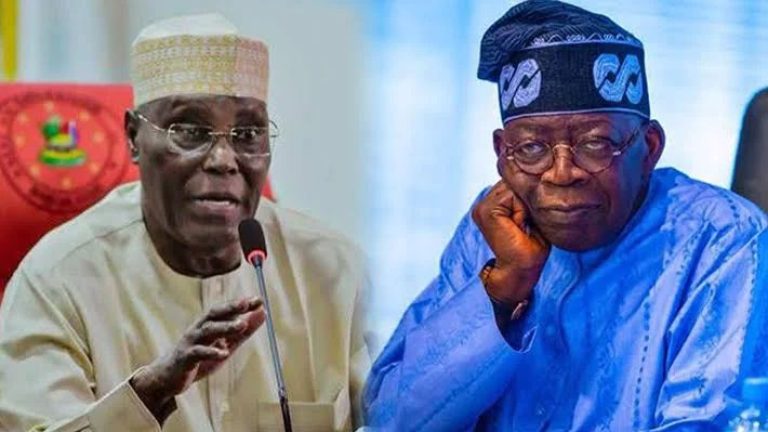
The opposition has already seized upon the announcement. Former Vise President Atiku Abubakar has described the discount as a transitory political act, asking what happens when the 30-day time lapses. Other opposition parties have voiced similar reservations over the adequacy and timeliness of the intervention.
The complaints are politically expected, but they pose valid policy questions. But it would be wrong to disregard every government effort to lessen hardship merely because an election is on the horizon. Governments are responsible for responding to economic pressure, all the time, not only when an election is due.
The key question is whether the intervention is visible, economically defensible and able to provide verifiable benefits.
The politics is at risk for the Tinubu administration.
Its defining early decision was to remove petrol subsidy. The government justified the strategy as an essential measure to restore fiscal discipline, remove distortions and divert funds toward development.
That reform need not be inconsistent with a carefully planned temporary discount. But frequent interventions that blur the line between market pricing and government support could erode the legitimacy of the initial program.
The administration will have to explain not just why the discount is necessary, but how it fits into its broader economic agenda.
WHAT THE GOVERNMENT SHOULD DO DIFFERENT
If the aim is to relieve the burden on Nigerians, the petrol discount should be viewed as a bridge to more sustainable solutions and not an end in itself.
The government should specify the amount of the discount per litre, the cost, the stations that will participate and who will be eligible for the discount for public transport providers.
It should also provide a mechanism to track whether commercial transport fares are responsive to decreased fuel prices.
“Beyond that, there needs to be more focus on structural solutions.
More sustained gains would come from accelerating the availability of compressed natural gas vehicles, enhancing public transportation, fixing logistics bottlenecks, and promoting efficient domestic refining.
Targeted help to low-income households might also be a fairer way of helping than general cuts in petrol prices.
The World Bank has noted the regressive nature of universal petrol subsidies in the past, noting that wealthier households tend to take a disproportionate share of the direct benefits since they consume more petrol.
That’s why the government’s focus on public transport is potentially useful. The success will be in the implementation though.
A clear, time-limited intervention with measurable consequences is different from an open-ended commitment to keep prices artificially low.
Nigeria needs more of the latter and must not revert to the former.
THE 31st DAY IS THE REAL TEST
The federal government’s petrol discount is neither the economic achievement its advocates would like to portray nor the policy reversal its critics would claim. It’s a modest strategy with potentially valuable short term advantages and considerable implementation challenges.
Its virtues are plain: instant alleviation, possible savings in transport expenses and an understanding that economic transformation must be humane.
But its drawbacks are just as apparent: unknown savings, restricted coverage, potential market distortions, and so far, no clear path beyond the initial 30 days.
It will not be the amount of litres sold at a discount or the number of filling stations that participate that would be the most crucial measure of success for Nigerians.
That will be whether the policy makes life more inexpensive day to day. Which gets us to the primary question.
WHAT OCCURS ON DAY 31?
If petrol prices return to their prior levels, and transit fares do not change, and household costs continue to climb, then the reduction may well be regarded as little more than a reprieve.
But if the government utilises the period as a legitimate attempt to stabilise prices, boost public transportation and hasten longer-term energy reforms, the effort could be a valuable tweak in economic policy.
“Nigeria doesn’t have to choose between budgetary discipline and compassion. A competent government should be able to do both. Shop African Art
The problem is to provide assistance, without reproducing the fundamental distortions that made subsidy withdrawal essential in the first place.
Thirty days of inexpensive petrol would offer some relief to Nigerians. What the government now has to show is how it’s going to deliver something considerably more valuable: enduring affordability.
Note from the Editors:
This research is based on announcements and reported reactions as of Thursday evening, October 8, 2026. In the reports analysed, the exact per-litre discount, final implementation restrictions and fiscal cost had not been fully determined.
About the Author