
The Federal Government has announced a confirmed case of Ebola disease in the Federal Capital Territory (FCT), leading to an emergency public health response involving contact tracing and improved disease surveillance.
This was revealed by the Coordinating Minister of Health and Social Welfare, Prof. Muhammad Ali Pate, in a statement on Tuesday, October 20, 2026.
The patient is a female who recently flew to Nigeria from Uganda on an international aircraft. She was admitted to a private hospital in the FCT where she was treated for many days before laboratory tests revealed the virus.
The woman is now isolated and is receiving medical treatment.
The Federal Ministry of Health and Social Welfare and the Nigeria Center for Disease Control and Prevention (NCDC) are collaborating with the FCT Health Services Secretariat and other relevant agencies to control the infection and prevent further transmission.
The ministry stated contact tracking has been initiated with 44 close contacts identified to date.
Public health experts are working to identify and monitor those who may have been exposed to the virus including healthcare professionals, patients, carers and travel contacts.
Surveillance has also been increased as the hospital where the patient was treated is being supported to boost infection prevention and control procedures.
The Federal Government has urged all public and private healthcare facilities across the country to be on high alert, asking healthcare professionals to maintain a high index of suspicion, to detect and isolate suspected cases promptly and to report them immediately to public health authorities.
See also Iran tells US to accept deal to reopen Strait of Hormuz within seven days
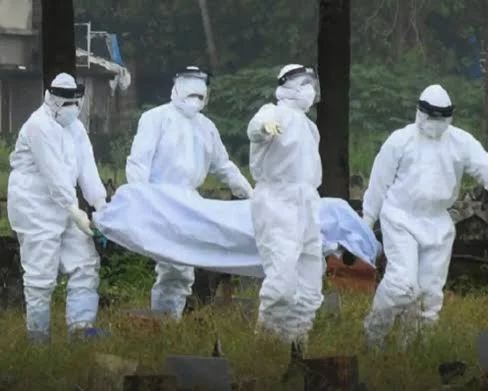
The statement stressed that Ebola is transferred by direct touch with the blood or body fluids of a symptomatic person or someone who has died of the disease, and contact with contaminated materials.
People infected with Ebola cannot spread the disease before symptoms develop, it added.
They were warned to exercise proper hand hygiene, avoid contact with the body fluids of anyone suspected of having Ebola and check for symptoms such as fever, extreme weakness, headache, vomiting and diarrhoea, especially after possible exposure.
The authorities encouraged anyone who believes they may have been exposed to notify promptly even if they felt healthy.
Anyone who developed symptoms was told to avoid others and contact public health officials for instructions before going to a health care institution.
Other persons contacted during the tracing process, including relevant airline passengers, were also encouraged to submit the essential information and comply with public health recommendations.
The government warned against the spread of misinformation or stigmatisation of sick persons, and called on Nigerians to rely on credible information from official health agencies.
Pate reassured the public that Nigeria had suppressed an Ebola outbreak in 2014 and had the experience and public health infrastructure to respond to this case.
But he highlighted that early detection and timely reporting and public participation were necessary to stop further transmission.
The government announced that investigations are ongoing and promised to give accurate and timely updates through the Presidential Taskforce on Ebola Virus Disease and the NCDC.
Nigerians can call the NCDC toll-free contact center on 6232 for information or to report suspicious cases. The center is available 24 hours a day, seven days a week.
About the Author