
Legal practitioner and political commentator, Ifeanyi Ejiofor, has accused members of the Charismatic Bishops Conference of Nigeria (CBCN) of endorsing President Bola Ahmed Tinubu of the All Progressives Congress (APC) for a second term in power.
“The infusion of religion into the political space is dangerous, particularly in an already fragile political space,” Sunday Vanguard quoted Ejiofor as saying.
In a statement issued at the weekend titled, “The Auction of Ecclesiastical Imprimatur: A Disturbing Show of Shame and the Urgent Need to Quarantine Religious Authority from the 2027 Electioneering Campaigns,” he urged Nigerians, especially Christians, to build rather than destroy democratic institutions.
According to him, the Church should be a conscience to power and not an instrument for political mobilisation.

“The Church ought to be a conscience to power, not a loudhailer for power. “A bishop must be able to criticise the government today and praise it tomorrow without either being interpreted as a sign of political purchase,” he said.
Ejiofor highlighted that his concern was not Christians or clergy participating in politics or civic rights, but the politicisation of Christianity and the use of collective spiritual authority as a means of electoral endorsement.
“The 2027 elections should not therefore be fought on the altar of religious solidarity but on issues, records and competing visions for Nigeria. And frankly, our democracy deserves better than an electoral contest in episcopal regalia,” he said.
He noted the recent pronouncements by the Chairman of Arise Media Group, Chief Nduka Obaigbena, who had called for politicians, especially presidential contenders, to partake in issue-based campaigns and eschew religion politics.
Ejiofor said the warning was relevant considering what he called the perilous convergence of religion and politics in Nigeria.
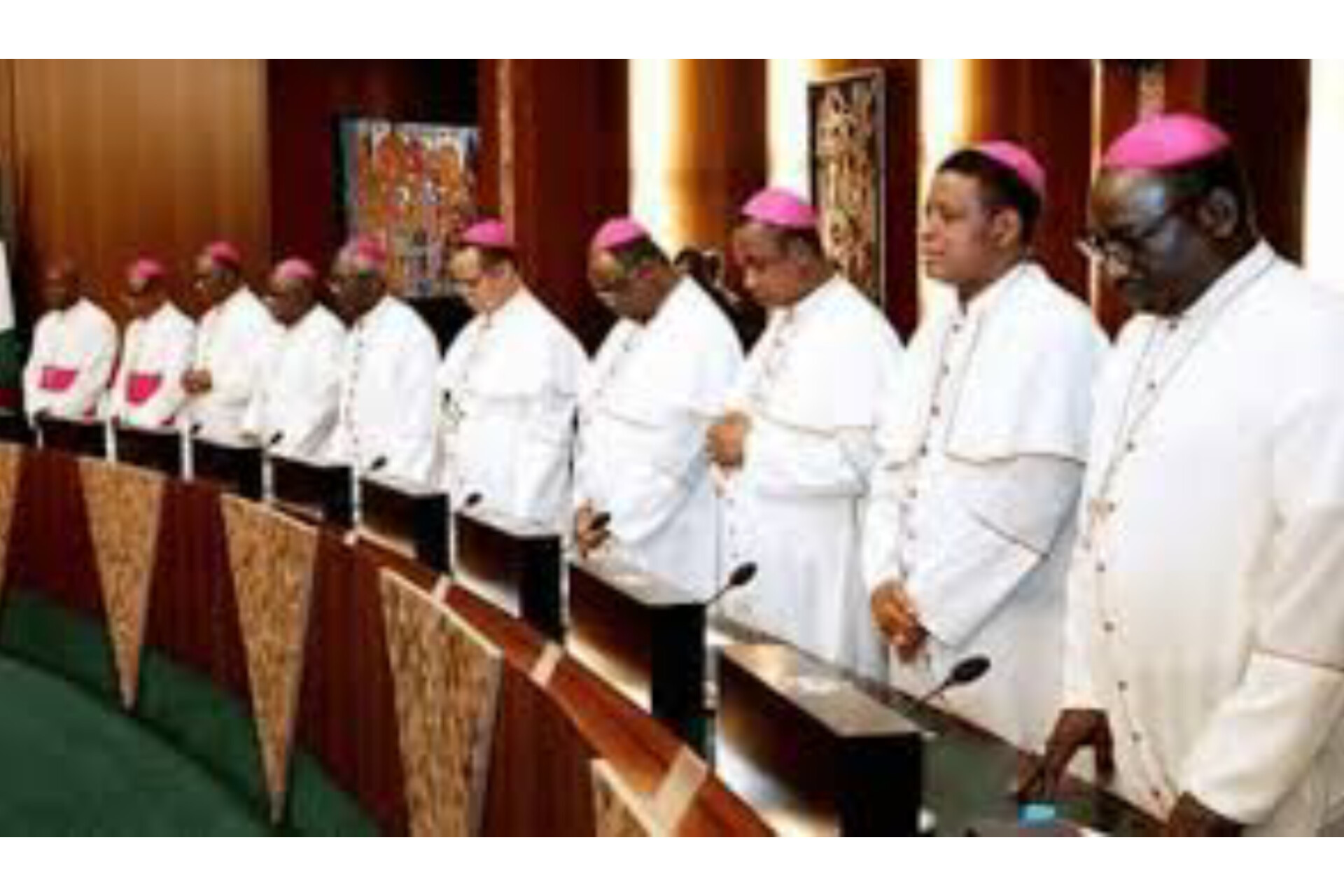
But he denounced what he termed as the “curious theatrical deployment of ecclesiastical authority” during the Abuja meeting of the organization.
He said the CBCN in episcopal regalia gathered in what looked like a planned fashion and made political remarks in support of their preferred presidential candidate in the presence of government officials.
Ejiofor said he did not challenge the constitutional right of any Nigerian, including clergy, to support or vote for a candidate of their choosing.
“But what I find deeply disturbing is the way in which ecclesiastical identity and the symbolic authority of the episcopacy were apparently used and deployed as an instrument of partisan political endorsement, especially at a time when the formal electioneering campaign has not even begun,” he said.
He claimed he could not see any real religious objective at the occasion apart than what seemed to be the adoption and public endorsement of the APC presidential candidate for the 2027 election, along with recognition of the administration’s achievements.
“While the participants are entitled to their assessment of the government,” Ejiofor said, “there is a difference between individual Christians exercising their civic rights and an ecclesiastical institution or persons presenting themselves with episcopal authority to wield the influence of the Church for partisan political mobilisation.”
Some of those attending the meeting were also questioned about their ecclesiastical credentials, with him declaring that he did not identify any fully ordained bishops from established and internationally recognised ecclesiastical traditions.
He was informed that episcopal regalia had been purportedly distributed in advance of the ceremony, however he emphasised that he did not directly observe such a happening.
The trend, he argued, raised problems about the use of episcopal identity and authority for political ends.
“Well, if I had to give unqualified praise to one thing, it is that the tailor knew his job. He joked about the looks of some of the participants, saying: “Some of the regalia looked like they had a very good finishing on them.”
But the problem, he continued, was not simply the appearance of the regalia but the more serious matter of what would happen to the moral authority of the church if it became available for partisan political use.
The Church holds a unique moral position in society. It draws its power not from political office, government patronage, party structures or electoral arithmetic. “Its influence is mainly due to the confidence which is reposed in it as a moral and spiritual institution,” he remarked.
Ejiofor said: “As citizens with civic rights, clergy members have the right to their personal political preferences.
“But the pulpit is not a political rally. Episcopal vestments are not uniforms of a party. The altar is not a campaign platform and spiritual power must never be a substitute for democratic persuasion,” he said.
He cautioned that Nigeria was on the path to another fiercely contested electoral season, and that the scars from the weaponization of ethnicity and religion in earlier political confrontations had not yet completely healed.
He therefore encouraged political and religious leaders to be cautious and not do anything that would divide the country further ahead of 2027 elections.
About the Author