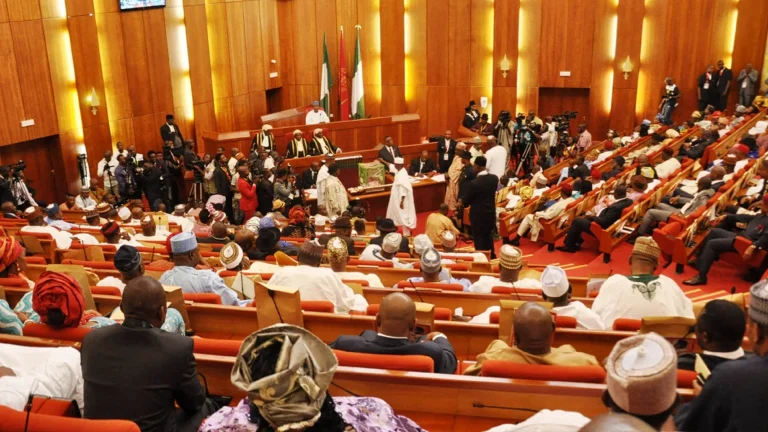

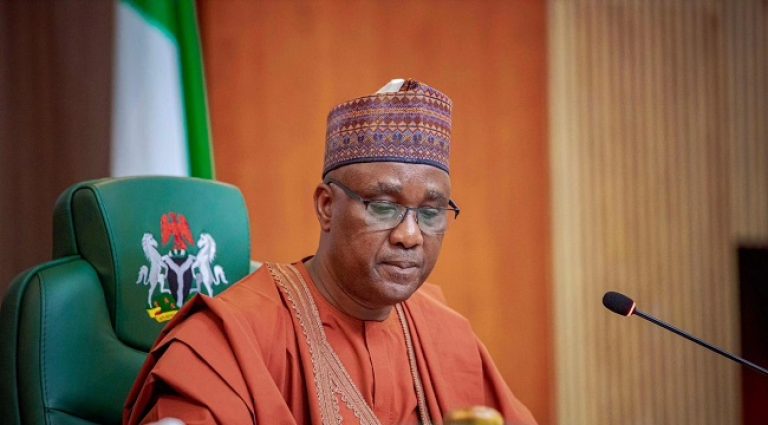
Speaker of the House of Representatives, Tajudeen Abbas, has urged stricter action against drug traffickers and greater support for those battling drug addiction, saying drug usage posed a severe threat to society.
We have to penalise the drug profiteers. We also have to deal with people who have been caught by them. The law needs the dealer. “The dependent person needs care,” added Abbas.
“The government is here. He said, “ The law is out there. The public needs to be involved too.”
The Speaker yesterday addressed at the end of a three-day sensitisation session on drug misuse and domestic violence in Kaduna, Channels TV reports.
The program was put together in partnership with the National Orientation Agency (NOA) as part of Abbas’ constituency outreach.
He stated to solve the drug abuse there was need for a concerted effort by families, schools, communities and law enforcement organisations.
“Parents should be watchful for sudden changes in behaviour. Schools should give counselling and disclose warning flags. Pharmacists and pharmaceutical sellers should not sell controlled substances illegally.
“Traditional and religious leaders must break the silence around addiction and abuse. Violence must be reported by neighbours. Market and transport unions ordered to report any suspected transit of drugs. Young people need to resist pressure and ask for support when they need it.
Victims should seek safety, obtain medical care, preserve evidence and report the abuse. “They need to be protected by communities, not punished with blame or shame.”
Abbas also linked drug trafficking with Nigeria’s wider security concerns, including banditry and kidnapping in the Northwest. Africans & the Diaspora
‘Drugs can cloud judgement, promote violence and entrench poverty. But the use of narcotics is never an excuse for violence. Each person is responsible for himself or herself. Domestic abuse is not discipline, it’s not culture. That’s abuse. “It hurts the victim, it scares children, and it makes the community weaker,” he said.
Drug trafficking, he said, generates income for criminal organisations and may also help enable the transit of other illegal goods and criminal members.
Drug devastation does not end at the household door. It is everywhere in our streets, schools, markets and security system. Money from drug trafficking supports criminal networks. Drugs, illicit guns, criminal money and violent offenders travel the same clandestine pathways.
“Drugs are not the causative agent of every crime but they are part of Nigeria’s bigger security problem,” he stated.
So disrupting drug supply chains is an important part of the fight against violent crime, according to the Speaker.
“Every shipment stopped can deny criminals money for weapons and recruitment,” he continued, “and every person rescued from addiction is one less person exposed to violent groups.”
Drug control must be integrated into broader security operations in the North West where villages are still battling banditry and kidnapping, Abbas added.
“Security forces could clear the camps. Communities must cut off the supply lines.
The shipment stops the enforcement. The less education, the less demand. Treatment gets the person back. “Community watch protects the neighbourhood,” he stated.
The Speaker remembered that the last version of the program, held in February 2025, was followed by a four-month campaign in the Northwest.
“We promised to take the message out of conference rooms. “We said we would work with traditional leaders, religious leaders, teachers, parents, young people and community organisations,” he said.
“The program yesterday demonstrated that the commitment had been sustained,” Abbas added, stressing that NOA had carried the campaign to Kaduna’s streets and neighbourhoods.
NOA officials had been engaging market leaders, transit workers, youth groups and traditional institutions “because prevention starts with proper information,” he said.
He commended the efforts of the Director-General, NOA, Lanre Issa Onilu and his team, as well as the National Drug Law Enforcement Agency (NDLEA), Nigeria Police Force, Nigeria Immigration Service, Federal Road Safety Corps, Nigerian Correctional Service, National Youth Service Corps and relevant state agencies. Africans & the Diaspora
Abbas also praised President Bola Tinubu for keeping Brigadier-General Mohammed Marwa (rtd.) as NDLEA Director-General and backing enforcement, international cooperation, public education and treatment programs, including a new 50-bed rehabilitation center in Maiduguri.
The National Assembly had also taken steps to improve Nigeria’s response to drug usage and accompanying violence, he said.
“The National Assembly has always played its part. The House in 2024 asked for a preventive drug testing program in secondary schools and for NOA and NDLEA to raise awareness among students.
“The House also took action against the indiscriminate sale of prescription drugs. We wanted illegal shops shut down and more cooperative enforcement by the concerned agencies.
We have reviewed bills to strengthen the NDLEA Act. The House in 2025 asked for faster investigation and prosecution of femicide, homicide and related crimes.
“We will keep funding enforcement and treatment, close loopholes in the law and demand results through oversight. The Speaker called on Nigerians to do their bit in reducing drug misuse, fighting domestic violence and safeguarding the vulnerable elements of society,” he said; Africans & Diaspora
About the Author