
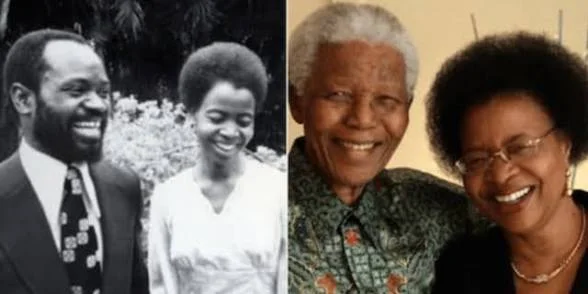
Graça Machel holds a unique position in African political history as the first woman to have been First Lady in two countries, first in Mozambique and then in South Africa.
Her incredible path has led her from Mozambique’s independence fight, through the country’s education ministry to the presidential palace and marriage to South African liberation icon and former President Nelson Mandela.
Machel became the country’s First Lady when she married Mozambique’s first president, Samora Moisés Machel, just after the country’s independence from Portuguese colonial authority on September 7, 1975.
Yet her impact was far greater than that of the president’s wife.
As Minister of Education she fought for increased access to education, especially for girls and women, and she initiated changes to change the education system in Mozambique.
Her free-education policy led to a substantial increase in school enrolment. Available accounts suggest that in 1973, there were 588,868 pupils attending Mozambican schools, and the number more than doubled in five years.
Machel also advocated for more chances for women, promoting their entry into traditionally male-dominated sectors and calling for greater access to postsecondary education.
Later large numbers of women were among Mozambican students going to Cuba to train as engineers, medics, dentists and teachers.
She was a strong advocate of public health. She advocated national immunisation initiatives against diseases like as measles, smallpox and tetanus. Within two years the campaign reportedly covered around 90 per cent of Mozambique’s population and helped to reduce infant mortality.
First Lady to Freedom Struggle
Machel’s rise took happened against the background of the independence fight in Mozambique.
Samora Machel had risen to prominence in Frelimo, the movement that fought against Portuguese colonial control. Mozambique’s first president, he took office in June 1975 after the transition to independence.
Graça and Samora had travelled in similar circles before their paths crossed again in the independence war. Their relationship culminated in marriage shortly after independence.
As First Lady, she also had to deal with the issues of trying to manage a blended presidential family. Samora has children from prior relationships and this made for a complicated family situation at the presidential palace.
During the first years of independent Mozambique, there were ambitious socialist reforms such as nationalising vital industries, farms and other strategic economic assets.
The government was also facing mounting opposition from Renamo, backed by regional powers opposed to the Frelimo regime.
The war put Samora Machel and his family under tremendous pressure.
The Tragedy That Changed Her Life
On October 20, 1986 Graça received news that would change her life forever.
Samora Machel had died in the accident of his presidential aeroplane in the Lebombo Mountains near the Mozambique-South Africa border.
The tragedy created an unlikely link between Graça and another giant of Africa’s liberation history – Nelson Mandela.
While imprisoned on Robben Island, Mandela is said to have asked for permission to visit to pay tribute to fellow liberation leader Samora but was denied.
Through subsequent correspondence Mandela and Graça built a close bond.
Mandela was released from jail in 1990 and became South Africa’s first democratically elected president in 1994.
Eventually their relationship blossomed and on Mandela’s 80th birthday in 1998, the two got hitched in Johannesburg.
The marriage put Machel in a position he had never been in before.
She was the First Lady of South Africa but also kept the historic distinction of being the first lady of Mozambique.
An African Heritage Uniquely
So the biography of Graça Machel goes beyond her marriages to two presidents.
Her career illustrates the linked histories of African freedom, education, women’s rights and political development.
From Mozambique’s struggle against colonialism to South Africa’s transition from apartheid to democracy, she witnessed and participated in some of the continent’s key political moments.
It is one of the most striking chapters in contemporary African political history that she has the distinction of becoming First Lady in two countries.
More crucially, her legacy has been forged not just by the men she married, but by her own decades of work in education, public health, women’s empowerment and humanitarian activism.
About the Author