
The economic reforms of the Tinubu-led federal government may have generated additional resources and strengthened some key macroeconomic indicators. But the real test of the program is whether the gains can translate into lower living costs, better incomes and improved living standards for Nigerians, economists and policy experts have stated. Africans & Diaspora
The reactions follow the presentation of the Reform Scorecard by the Minister of Finance and Coordinating Minister of the Economy, Taiwo Oyedele, in Abuja, on Wednesday, where the government revealed that the reforms had yielded N15.8 trillion additional resources for the Federation between June 2023 and December 2025, reports Sunday Independent.
“The Federal Government got N5.4 trillion of the additional resources, while states and local governments got N10.4 trillion through the Federation Account, Oyedele said.
The federal government also earned N3.1 trillion more independent revenue and borrowed N11.9 trillion in the time, bringing its incremental resources to N20.4 trillion.
But the government faced expenditure pressures of N30.64 trillion against additional resources of N20.4 trillion.
According to Oyedele, N9.39 trillion was spent on salary adjustments, minimum wage rises and allowances while N9.37 trillion went into the increased naira cost of servicing external debt following the devaluation of the currency. Another N6.5 trillion was allocated to vital infrastructure .
Reacting to this, a Public Affairs Analyst, Jide Ojo, said the data raise more issues on the management of public finances and the extent to which the additional resources have improved the welfare of the residents.
Learn more Executive Branch Governor News
He asked why the cost of living was still high for Nigerians and why the government was still borrowing and financing deficit in spite of the extra resources generated via the reforms.
“The question is, have we been very prudent in the management of our public finance?” he said, saying that the government’s explanation of the resources generated must be followed by evidence of judicious expenditure and demonstrable outcomes.
Ojo said that certain initiatives on infrastructure had been undertaken but there were concerns regarding the transparency surrounding some of the projects, including the real cost of construction and the financing arrangements.
He said Nigerians required more clarity on big infrastructure projects including whether they were being delivered under public-private partnerships, subsidised by government directly or structured under build-operate-and-transfer arrangements. Africans & Diaspora
Government Learn More
Newspapers Africa & Diaspora
For him, the question is not how much money the government claims to have saved or created, but whether these resources have been transformed into better living conditions.
“Why are we poorer in our lives?” They will judge us by how well we deliver on our promises to them’, said Ojo, adding that Nigerians will eventually judge the administration by their capacity to pay bills, afford transit, pay rent and satisfy other basic requirements.
He criticises at a time when the administration is arguing that the reforms should not be judged merely by the immediate pain they caused but by the economic distortions they helped address and the damage they prevented.
Oyedele said the scorecard was meant to give a summary of the “benefits, costs and harms prevented” by the reforms, not a clean-cut picture of them being a success.
Learn more.
History Politics
Government.
But Ojo maintained that macroeconomic successes would have little political and social value if these did not result in commensurate improvements at the household level. Politics
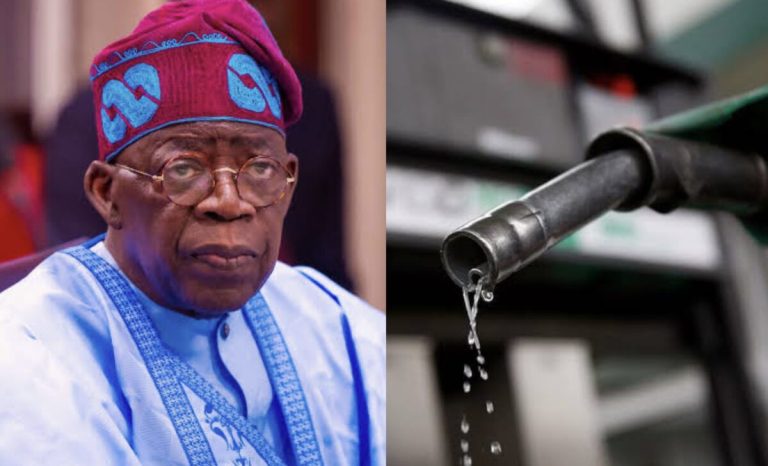
He said that there was still pressure on the cost of rent, transport and other requirements, claiming that the withdrawal of the petrol subsidy and the introduction of compressed natural gas had not yet brought enough relief to transport users.
He questioned the availability of CNG infrastructure, namely the quantity and geographical distribution of filling stations, saying the advantages of cheaper gasoline will be limited if motorists cannot easily get CNG.
He said the billions of naira committed to the Presidential Compressed Natural Gas Initiative should ultimately be judged by the impact on transport costs than the magnitude of government expenditure.
Read More newspaper governor Gov.
“The question is not what you said, it is the impact of what the macroeconomic policies of this administration have been,” he added, adding that so far the impact has been “less than satisfactory.”
His views echo those of other economists and policy experts who evaluated the government’s rating.
MACRO-ECONOMIC STABILISATION
Dr Ifediora Amobi, a former International Monetary Fund and World Bank expert said the measures were important to reposition the economy, but warned that the immediate effect on consumers and companies should not be disregarded.
He said the government needed to continue the changes while proposing measures that would be able to stimulate economic activity, create employment, improve infrastructure and reduce the burden on people.
Proshare Research however warned that the scorecard should be seen as indication of macroeconomic stabilisation, not confirmation that Nigeria had completed its economic transformation. Africans and the Diaspora
It noted positive developments in the areas of foreign reserves, foreign exchange market, capital importation, market capitalisation and economic growth but stressed the need for the next challenge of turning improved fiscal space and investor confidence into productive investment, employment and real income growth.
Find out more
Governor News
FLYING (FLYING)
The argument has also centred on the resources that are available to state and local governments. The changes earned N15.8 trillion of which N10.4 trillion was split between the two tiers.
But the question is whether bigger allocations have translated into improved public services.
Development economist, Prof. Chiwuike Uba, warned that increased revenues could promote waste where governments see larger allocations as just more money to spend without accompanying fiscal discipline.
He referred to the situation as “fiscal illusion”, emphasising the need for more transparency, audited accounts and better control of public expenditure.
Federal Government has proposed a central transparency platform for Nigerians to monitor allocations, budgets, development plans and audited accounts of the 774 local government areas. Africans & Diaspora
But for Ojo, transparency and macroeconomic indicators will have to be checked against the daily experiences of the public.
If the reforms do not show visible improvement in living standards before the next election cycle, he cautioned, the administration could face a public outcry.
“The problem isn’t only the rhetoric that people will be listening to. I will be looking at: Can I pay my bills? What can I afford to pay my bills? he asked.
Find out more
History News Africans and the Diaspora
With headline inflation reducing but food prices and family spending still creating pressure, the reform argument is now shifting from how much money the government has created to how well it has been utilised.
The administration now faces the challenge of showing that fiscal advantages can be converted into household gains — in the form of greater purchasing power, jobs, inexpensive transport, dependable infrastructure and better public services.
For Ojo and other critics, the scorecard may shed light on the state of government finances. The harder test is can ordinary Nigerians tell the difference. Africans & Diasporas
QUESTIONS ON SAVINGS DISCREPANCY
In the meantime, the Allied Peoples’ Movement (APM) has called on the Economic and Financial Crimes Commission (EFCC) and the National Assembly to investigate an alleged N12 trillion savings discrepancy from the removal of petroleum subsidy and urged for a full accounting of every naira realised from the policy.
The party’s demand came after contradicting estimates released by government officials on the amount saved by scrapping the subsidy.
The APM recently put the subsidy-removal savings of the Minister of Finance and Coordinating Minister of the Economy, Taiwo Oyedele, at N15.8 trillion.
But the party stated numbers formerly provided by the former Finance Minister, Wale Edun, showed that as of November 2024, around $20 billion, or N27 trillion, had been saved.
In a statement issued yesterday in Abuja by its National Publicity Secretary, Abubakar Yusuf, the APM said the gap of almost N12 trillion raised significant problems and needed urgent clarifications by the appropriate government institutions.
The party said the difference increased the worry of the people over the handling of the savings from the removal of subsidy and that the government owed Nigerians a proper account of the money. Africans & Diaspora
The APM, for example, stated N12 trillion, if correctly allocated, could have financed massive infrastructure projects that might have transformed the Nigerian economy including the establishment of a new large scale petroleum refinery with a capacity of between 250,000 and 300,000 barrels per day.
The party said such an investment could create significant jobs, encourage ancillary businesses and increase local refining capacity, which may reduce pressure on petroleum prices.
The money may also pay for about 1,000 kilometres of conventional railway infrastructure, linking major commercial and political centers and boosting the movement of people and products across the country, it added.
The party said such infrastructure will create jobs, stimulate trade and industrialisation, relieve pressure on the nation’s highways, lower dependence on road transport and contribute to higher living conditions.
It raised worries that Nigerians were still experiencing economic hardship, as uncertainties lingered over the administration of cash accruing from the elimination of the petroleum subsidy.
It therefore called on the EFCC to immediately investigate the alleged N12 trillion discrepancy and invite the Minister of Finance and Coordinating Minister for the Economy, Taiwo Oyedele, former Finance Minister Wale Edun, as well as relevant officials of the Ministry of Petroleum Resources, to clarify.
The party also urged the National Assembly to conduct an open and transparent probe into the savings from the subsidy withdrawal and make its findings known to Nigerians.
About the Author