
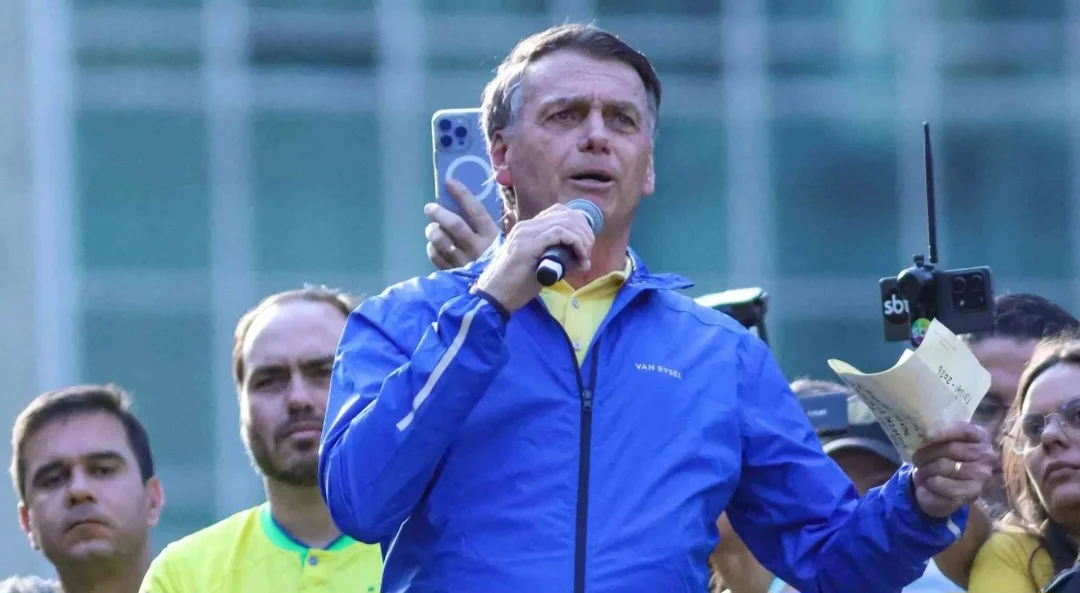
Former Brazilian President Jair Bolsonaro’s political associates are investigating if artificial intelligence may help maintain his power through a digital avatar since he is prohibited from running in this year’s presidential race. In Brazil, the concept has sparked a heated legal and moral discussion on how AI-generated politicians ought to be controlled during election campaigns.
After Brazil’s Superior Electoral Court (TSE) determined that Bolsonaro had misused his political power by disseminating false information regarding the nation’s electronic voting system prior to the 2022 election, Bolsonaro was declared ineligible to run for public office until 2030. Millions of voters continue to strongly support the conservative leader, who is still one of Brazil’s most powerful political leaders despite not being able to stand on the ballot.
Advisors have been experimenting with AI technology that can produce lifelike films and speeches that closely resemble the former president, according to sources familiar with conversations within Bolsonaro’s political team. Without Bolsonaro physically participating in campaign events, the proposed digital avatar might show up in campaign materials, internet broadcasts, and social media content to support supported candidates or convey political statements.
However, legal experts have questioned whether the proposal would be compliant with Brazil’s electoral regulations. Candidates who have been ruled ineligible are not allowed to actively participate in campaign activities under the nation’s election procedures. Whether an AI-generated version of Bolsonaro would be considered political participation or just protected political expression is still up for debate among lawyers.
Some of the strictest regulations pertaining to artificial intelligence in elections have already been implemented by Brazil’s electoral authorities. AI-generated images, audio, or videos used in campaign ads must explicitly state that they were produced using artificial intelligence. Additionally, the regulations forbid the use of altered media used to mislead voters or disseminate false information; infractions result in severe penalties.
Bolsonaro’s supporters contend that even though he is prohibited from pursuing public office, an AI avatar would merely enable him to keep voicing his political opinions. They maintain that his views and endorsements should be available to voters, especially as conservative parties get ready for the next election.
However, detractors caution that permitting an AI-generated Bolsonaro to run for office may overturn the court’s decision and set a risky precedent for upcoming elections. Additionally, they worry that voters may find it challenging to discern between digitally generated content and genuine political communication as a result of increasingly advanced AI technology, which might spread false information and erode public confidence in democratic institutions.
The discussion takes place as governments all around the world struggle with the quick development of generative AI in politics. Regulations aimed at restricting misleading AI-generated campaign material while preserving freedom of expression have been introduced or proposed by nations such as the United States, members of the European Union, and India.
The Bolsonaro case may be one of the first significant legal examinations of the relationship between artificial intelligence and election law in Brazil. In the end, electoral courts may determine whether a politician who is prohibited from running can nevertheless influence others by using a digital version of themselves or whether this technology successfully gets around the spirit of the court’s ruling. As AI becomes a more potent political tool, the result is anticipated to influence future campaign tactics not only in Brazil but in democracies across the globe.
About the Author