
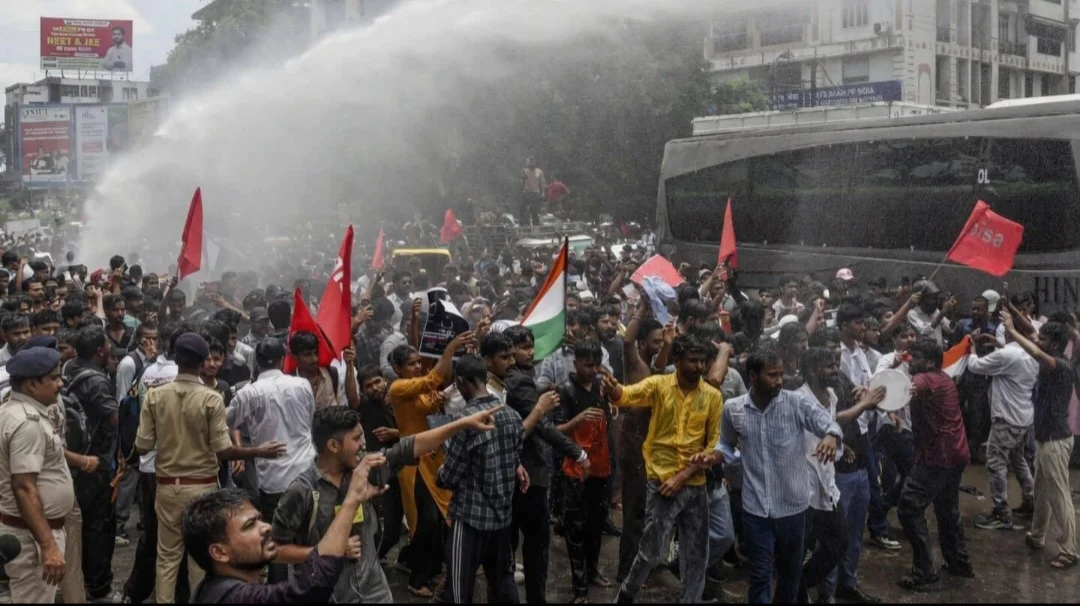
Indian authorities have suspended a police constable after he was filmed firing an AK-47 assault rifle in the air as he sought to disperse student protesters in the eastern state of Bihar, an incident that has increased criticism of the government’s handling of nationwide youth demonstrations. The suspension comes amid rising public indignation over the alleged disproportionate force used against students protesting the release of a national medical entrance exam paper.
The event took place on Saturday in Siwan district where thousands of students had assembled in larger rallies demanding accountability over the leak of the National Eligibility cum Entrance Test (NEET) exam paper. Videos spread extensively on social media, subsequently verified by police, showing the officer in riot gear racing toward protestors and firing at least three shots into the air from an AK-47 weapon. No one was wounded in the incident, authorities added.
The officer’s actions were unwarranted, senior Bihar police official Nilesh Kumar said. The assault rifle was given since the policeman was part of an intelligence team that usually deals with dangerous criminals rather than crowd control, he said. Kumar said there was no need for the firearm to be used against student demonstrators, confirming that the officer had been suspended awaiting disciplinary proceedings and a comprehensive investigation.
The latest incident follows a wave of student protests that have swept India after the release of question papers for the NEET examination, taken by more than two million students. The scandal led to requests for a re-test and finally the resignation of India’s federal education minister following weeks of protests and political pressure. Protesters have also expressed concerns over youth unemployment and mounting concerns about the impact of artificial intelligence on future jobs.
Opposition parties have decried what they say is an increasingly heavy-handed police response. Opposition leader Mallikarjun Kharge accused the administration of carrying out one of the most serious attacks on democratic liberties in Parliament, citing reports of students being assaulted with batons, tear-gassed and subjected to excessive force during rallies in numerous locations. Parliamentary business was interrupted as legislators argued about the government’s response to the uprising.
The event has also raised worry among India’s legal community. Supreme Court Justice Ujjal Bhuyan, addressing at a public gathering, said the room for peaceful dissent and free expression seems to be narrowing in India. His statements come as discussion heats up over how to handle student protestors and the balance between defending constitutional rights and ensuring public order, though he did not specifically reference the Siwan episode.
Bihar authorities have initiated an internal inquiry to determine whether to pursue further disciplinary or criminal proceedings against the suspended officer. Meanwhile, student groups have promised to continue their protests, saying their main demand is for accountability for the exam scandal and alleged police brutality.
The officer’s punishment has done nothing to placate public fury, with civil society groups and opposition lawmakers pressing for wider reforms to how public demonstrations are policed. With protests still continuing in numerous regions of the country, the episode is likely to remain a flashpoint in the greater debate in India over education, governance and the right to peaceful dissent.
About the Author